
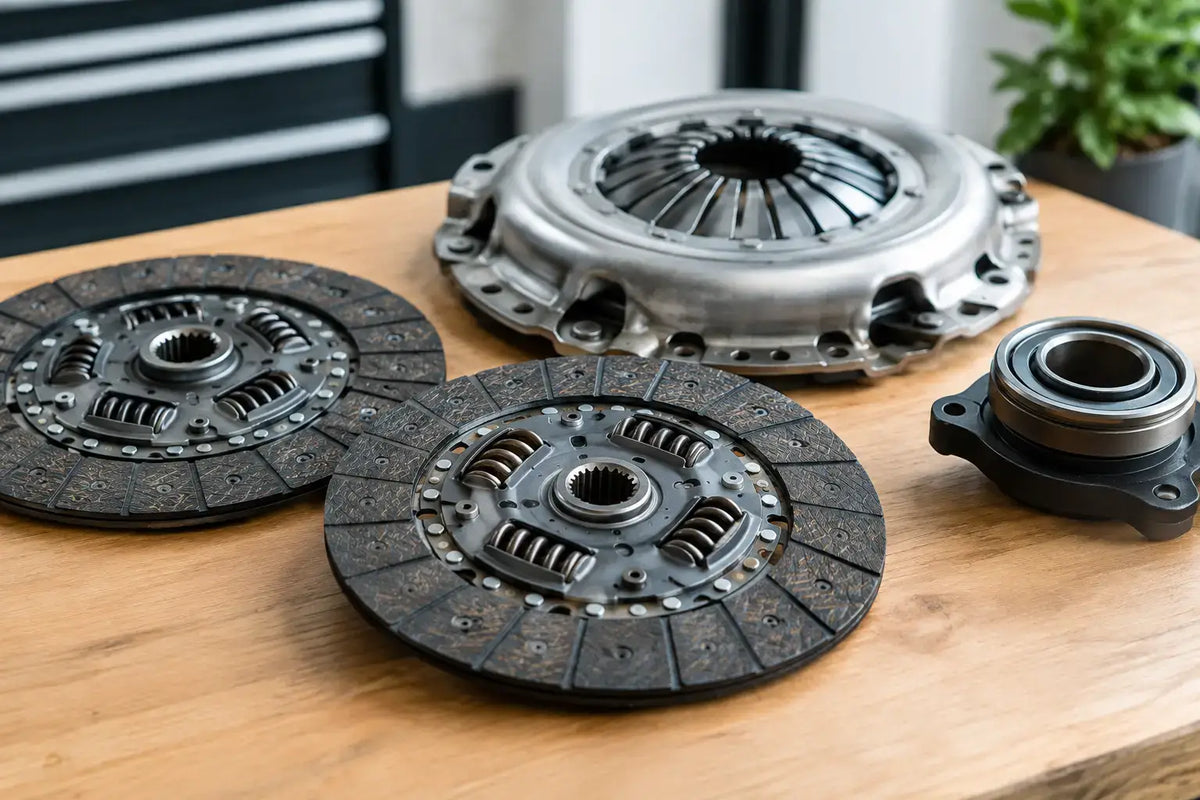
A clutch that holds big power but makes every junction miserable is not a performance upgrade for most builds. Knowing how to choose clutch compounds means matching the friction material to how the car is actually driven, not simply buying the most aggressive disc in the catalogue.
Clutch compounds determine how the disc deals with torque, heat and repeated engagement. They also influence pedal behaviour, take-up, noise, flywheel wear and how forgiving the car feels when pulling away. The right answer for a 600 bhp drag build is very different from the right answer for a 300 bhp turbo road car that sees the occasional track day.
Start with torque, not peak horsepower
Clutches are rated for torque because torque is what tries to overcome the clamp load and make the disc slip. Peak horsepower is useful context, but it is not enough on its own. A turbocharged engine with a hard mid-range torque spike can overwhelm a clutch that appears suitable when judged by bhp alone.
Use the engine's expected peak torque after tuning, then leave sensible headroom. Around 15 to 25 per cent is a sensible target for a road or fast-road car, particularly if you value progressive engagement. A car run constantly at a clutch's claimed limit will generate more heat, wear more quickly and may slip when conditions are least convenient.
Do not treat a manufacturer torque rating as interchangeable across every setup. Ratings may assume a particular flywheel, pressure plate, bedding process and intended duty cycle. A clutch that survives occasional full-load pulls is not necessarily happy with repeated standing starts, launches or long sessions on circuit.
Understand the main clutch compound options
The compound is only one part of the package, but it sets the character of the clutch. Most performance builds will fall into one of four broad material types.
Organic: best for strong road manners
Organic friction material is the closest choice to a factory-style clutch, although quality performance organic discs can hold significantly more torque than standard. It provides smooth, progressive engagement and is generally kind to the flywheel. That makes it a strong fit for daily-driven hot hatches, quick road cars and lower-output fast-road builds.
Its limitation is heat. Repeated launches, heavy towing, aggressive circuit use and substantial torque increases can overheat an organic disc. Once overheated, the surface can glaze, reducing bite and encouraging slip. If your car regularly sees hard launches or sustained track use, an organic disc may be too polite for the job.
Kevlar: smooth engagement with a longer bedding period
Kevlar-faced discs are often chosen by drivers who want civilised engagement with greater durability than a typical organic setup. They can work well in road cars that cover real mileage and do not spend every weekend doing launch control starts.
The trade-off is bedding. Kevlar generally needs a careful, extended bedding period to develop its best friction characteristics. It is also not the first choice for extreme heat and repeated clutch abuse. If you need immediate hard bite for motorsport, look elsewhere.
Ceramic and sintered metallic: high torque, sharper manners
Ceramic, often described as sintered metallic, is a common answer for high-torque turbo builds, drift cars and track-focused projects. It handles heat far better than organic material and delivers high friction in a compact package. That allows strong torque capacity without moving immediately to a multi-plate clutch.
The compromise is obvious from the driver's seat. Ceramic discs tend to engage more abruptly, especially in puck-style configurations. Low-speed manoeuvres can need more care, and the drivetrain may chatter or transmit more noise. They can also be harder on the flywheel surface, particularly when paired with a light single-mass flywheel.
That does not make ceramic wrong for the road. A sprung-hub, six-puck ceramic disc paired with the correct pressure plate can be perfectly usable in a focused weekend car. It simply will not feel like the factory clutch in stop-start traffic.
Carbon and specialist race materials: purpose-built solutions
Carbon-carbon and other specialist race compounds are designed around extreme temperature stability, low rotating mass or specific competition regulations. They can be exceptional in the right motorsport environment, but they are not automatically an upgrade for a road car.
Some race materials need heat before they perform consistently, cost more and demand a matched system. Unless your build has genuine competition requirements, a proven organic, Kevlar or ceramic setup is usually the smarter spend.
Puck count changes the driving experience
Two ceramic discs can behave very differently. A full-face disc has a larger friction area and typically offers smoother engagement. A puck disc uses separate friction pads, often four, five or six, to concentrate clamp force and shed heat efficiently.
Fewer, more aggressive pucks generally mean a more abrupt bite. A six-puck disc usually gives a better balance of torque capacity and road usability than a very aggressive four-puck design. For a car that still visits petrol stations, city centres and wet car parks, that difference matters.
The hub matters too. A sprung centre disc uses damper springs to soften torsional shock through the drivetrain. It is usually the better option for a road or fast-road car. A rigid hub gives a more direct connection and suits serious competition use, but it can make gearbox rattle, clutch chatter and driveline shock more pronounced.
Choose the full clutch system, not just the disc
A clutch disc does not work in isolation. Torque capacity comes from the relationship between the friction material, pressure plate clamp load, disc diameter and flywheel surface. Fitting a high-friction disc under an unsuitable standard pressure plate may not solve a slipping problem.
Higher clamp load can increase capacity, but it often raises pedal effort. On a track-only car that may be a minor compromise. On a daily driver, a heavy pedal becomes tiresome quickly, especially in traffic. Good clutch kits are designed as systems, so favour a matched kit rather than assembling parts based on one impressive specification.
Consider the flywheel at the same time. A fresh clutch on a heat-spotted, cracked or glazed flywheel is false economy. Some flywheels can be resurfaced within specification; others should be replaced. The friction surface, step height and compatibility with the chosen disc all need checking before assembly.
A lightweight single-mass flywheel can improve engine response, but it may amplify gearbox noise and make engagement less forgiving. On some platforms, retaining a healthy dual-mass flywheel with a correctly rated clutch is the better road-car choice. For hard track or drift use, a single-mass conversion may make more sense, provided you accept the refinement trade-off.
Match the compound to how the car earns its keep
For a lightly modified road car, start with a performance organic kit. It is usually the best way to gain holding power without sacrificing the smoothness that makes the car enjoyable every day.
For a fast-road turbo build with torque beyond the factory clutch's comfort zone, a high-capacity organic or Kevlar setup can work if launches are occasional and circuit use is limited. Where the torque curve is particularly aggressive, a sprung six-puck ceramic kit may be the safer call.
For frequent track days, drifting, drag launches or high-output builds, ceramic or sintered metallic material is normally the practical choice. Once torque and thermal load go beyond what a single-disc arrangement can comfortably manage, step up to a twin-plate clutch rather than forcing an ultra-aggressive single disc to do everything.
A twin plate increases friction area and torque capacity without relying solely on extreme clamp load. It can be the better solution for a powerful car, though it may bring more noise, cost and a sharper engagement point. Again, the best setup depends on whether the car is trailered to events or driven across the country to them.
Avoid the common buying mistakes
The biggest mistake is over-clutching the car. An aggressive race disc may hold the power, but it can turn a well-built road car into a chore and place unnecessary stress on gearbox internals, driveshafts and differential components.
The second is ignoring the release system. Check the release bearing or concentric slave cylinder, clutch fork, pivot point and hydraulic system while the gearbox is out. A worn release component can spoil the feel and reliability of an otherwise excellent clutch installation.
Finally, bed the clutch in correctly. Unless the manufacturer states otherwise, avoid repeated hard launches and full-load shifts for the initial bedding mileage. Controlled road use allows the disc and flywheel surfaces to mate evenly. Skipping that process can cause hot spots, glazing and inconsistent engagement before the clutch has had a fair chance.
The right clutch compound should support the way you use the car, not dictate it. Build around real torque, real heat and real road miles, then choose the most civilised setup that will reliably hold the load. That is how a drivetrain upgrade feels fast every time you drive it, not just on the specification sheet.