
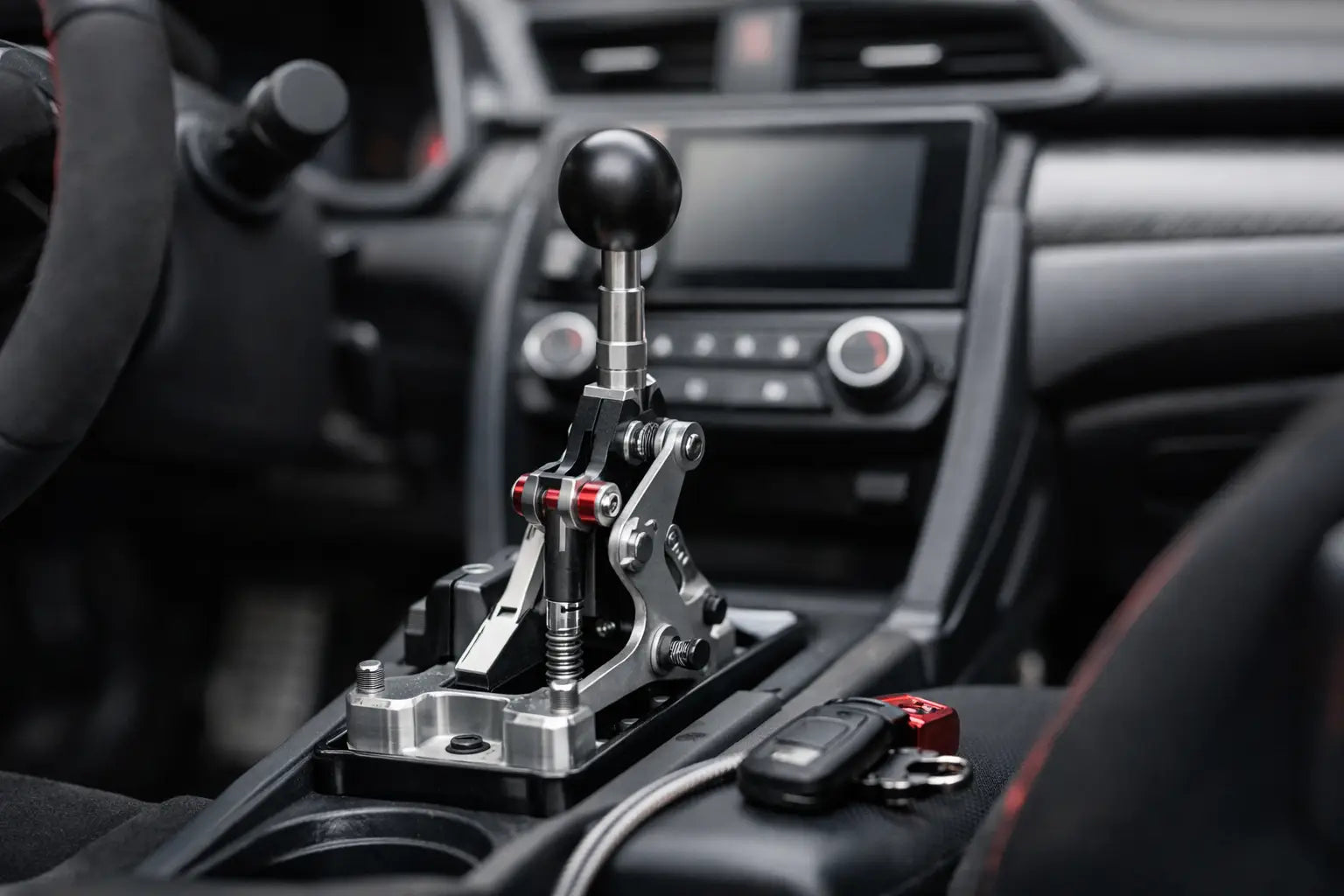
Missed 3rd on a hard pull or fumbled a 2-3 upshift at an autocross? That usually tells you the same thing - your factory linkage and shifter setup are the weak point. A hybrid racing shifter upgrade is one of those mods that does not add horsepower, but it can make the car feel faster, cleaner, and far more precise every time you grab the next gear.
For Honda builders in particular, this upgrade sits in that sweet spot between driver feel and actual performance benefit. It changes the quality of every shift, reduces slop, and gives you a more mechanical connection to the drivetrain. That said, not every car needs one, and not every setup should be configured the same way.
What a hybrid racing shifter upgrade actually changes
A quality performance shifter assembly does more than shorten throw. That is the headline feature most people look for, but the bigger change is usually precision. The stock unit in many older Hondas and K-swapped cars can feel vague, rubbery, or inconsistent, especially once bushings, cables, and chassis mounts have seen some age.
A hybrid racing shifter upgrade typically replaces that softer, more isolated factory feel with a stiffer and more direct mechanism. You get more defined gates, less lateral play, and better confidence when shifting quickly. On track or during aggressive street driving, that matters more than people think. A missed shift costs time. A bad shift can cost an engine.
The design of the assembly also plays a role. Better materials, tighter tolerances, improved pivot geometry, and stronger hardware all contribute to a cleaner action. The result is not just a shorter movement from gear to gear. It is a more deliberate shift event with less ambiguity.
Why enthusiasts buy one
Most buyers are chasing one of three things. The first is feel. They want the car to stop feeling loose and start feeling sorted. The second is speed. A shorter, more positive shift can help you move through the gears quicker once you are used to it. The third is compatibility with a swap or more serious build.
That last point matters. On many K-swap platforms, the shifter is not just a nice extra. It is part of building a package that works correctly. When you are piecing together engine mounts, axles, linkage, and supporting drivetrain hardware, the shifter becomes a critical control point rather than a cosmetic mod.
For grassroots motorsport drivers, consistency is often the real selling point. A car that shifts the same way every lap is easier to trust. If you are heel-toeing into a braking zone or grabbing the next gear while loaded up in a corner exit, a vague stock setup gets old fast.
Who will notice the difference most
If your car is mostly a commuter and you shift casually, the value depends on how much you care about mechanical feel. You will still notice the improvement, but the urgency is lower. If the car sees canyon runs, autocross, drag racing, or track days, the benefit becomes a lot easier to justify.
Older Hondas are the obvious candidates because factory wear tends to exaggerate slop over time. Swapped cars also benefit heavily, especially when the rest of the drivetrain is already upgraded. If you have already installed firmer engine mounts, better clutch components, and more capable suspension, a loose shifter starts to feel out of place.
Drivers who are picky about input quality tend to appreciate this mod most. Steering feel, pedal placement, seat position, and shifter action all shape how connected a car feels. If you care about those details, this upgrade usually lands well.
The trade-off with a shorter, stiffer shifter
There is always a trade-off. A more aggressive shifter setup usually feels more mechanical, but that can also mean more effort, more vibration, and less forgiveness. Some drivers love that. Others install one and realize they preferred a little more compliance in daily traffic.
Shorter throws are great until they are too short for the way you drive. If the geometry gets too aggressive, shifts can start to feel notchy rather than precise. That is why adjustability matters. Being able to fine-tune throw and knob height lets you build a setup around your use case instead of accepting a one-size-fits-all compromise.
Noise, vibration, and harshness can increase too, especially if your car is already running stiffer mounts and solid bushings elsewhere. That is not a flaw. It is just part of moving away from OEM isolation and toward a motorsport-style control feel.
Hybrid racing shifter upgrade fitment matters more than the brand name
Enthusiasts love brand loyalty, but fitment and application should always come first. A hybrid racing shifter upgrade only works properly when the full combination makes sense for the chassis, engine setup, cable routing, and supporting hardware.
That is especially true on swapped Hondas. EG, EK, DC2, and newer chassis conversions all come with their own packaging quirks. Center console clearance, tunnel mounting, cable compatibility, and interior layout can change what fits cleanly and what turns into a headache. A great shifter on the wrong application is still the wrong part.
This is where platform-specific buying matters. The smart move is to treat the shifter as part of the full drivetrain control system. Check the cables, inspect bushings, confirm mounting requirements, and think about the shift knob position you actually want. Too many people buy the centerpiece and ignore the worn or mismatched parts around it.
Don’t ignore the rest of the shift system
A new shifter assembly can only do so much if the cables are tired or the transmission itself has issues. If you still have worn cable ends, old bushings, loose mounting points, or a gearbox with tired synchros, the final result will fall short of the hype.
This is why the best builds approach shifting as a system. Start with transmission health. Then look at cables, bushings, mounts, and fluid. Add the shifter once the basics are under control. When everything works together, the difference is obvious. When one weak link remains, the new part often gets blamed for a bigger problem upstream.
For serious use, pairing a premium shifter with quality drivetrain components makes the most sense. That is the difference between a parts pile and a setup.
Installation and setup are part of the result
Even the best hardware can feel wrong if it is installed poorly. Cable alignment, mounting torque, interior clearance, and adjustment settings all affect the outcome. Rushed installs often lead to binding, uneven gate feel, or gears that feel harder to engage than they should.
Take the time to set knob height and throw position based on how the car is used. A street car may benefit from a slightly less aggressive setting that keeps effort manageable in traffic. A track-biased build may justify the shortest, sharpest setup if the driver wants that crisp mechanical feel.
It is also worth checking your seating position before deciding what feels best. A shifter that looks ideal in photos can feel awkward if it places your hand too high, too far back, or too close to the wheel during quick transitions.
Is it worth the money?
If you are building for driver engagement, yes, often very much so. A hybrid racing shifter upgrade is one of the rare mods you interact with constantly, which makes its value easier to feel than a lot of parts that only show gains in a data log.
If your budget is tight and the car still needs major maintenance, tires, or brake work, handle those first. A great shifter does not outrun bad priorities. But once the fundamentals are covered, this is the kind of upgrade that makes the car feel more serious every time you drive it.
For K-swapped builds, it often moves from optional to highly recommended. For street Hondas, it depends on how much you value shift feel and precision. For cars that see repeated hard use, it can be one of the smartest driver-focused upgrades in the cabin.
Torque Lab’s audience already knows the difference between a cosmetic mod and a functional one. This falls firmly in the second category. It sharpens the connection between driver and gearbox, helps remove guesswork from fast shifts, and gives the car the kind of tactile edge that factory hardware rarely delivers after years of use.
Buy it for the right reason. Not because it is popular, but because you want a drivetrain that feels as sorted as the rest of your build. When the shift action finally matches the intent of the car, every pull, every downshift, and every lap starts to feel that much cleaner.