
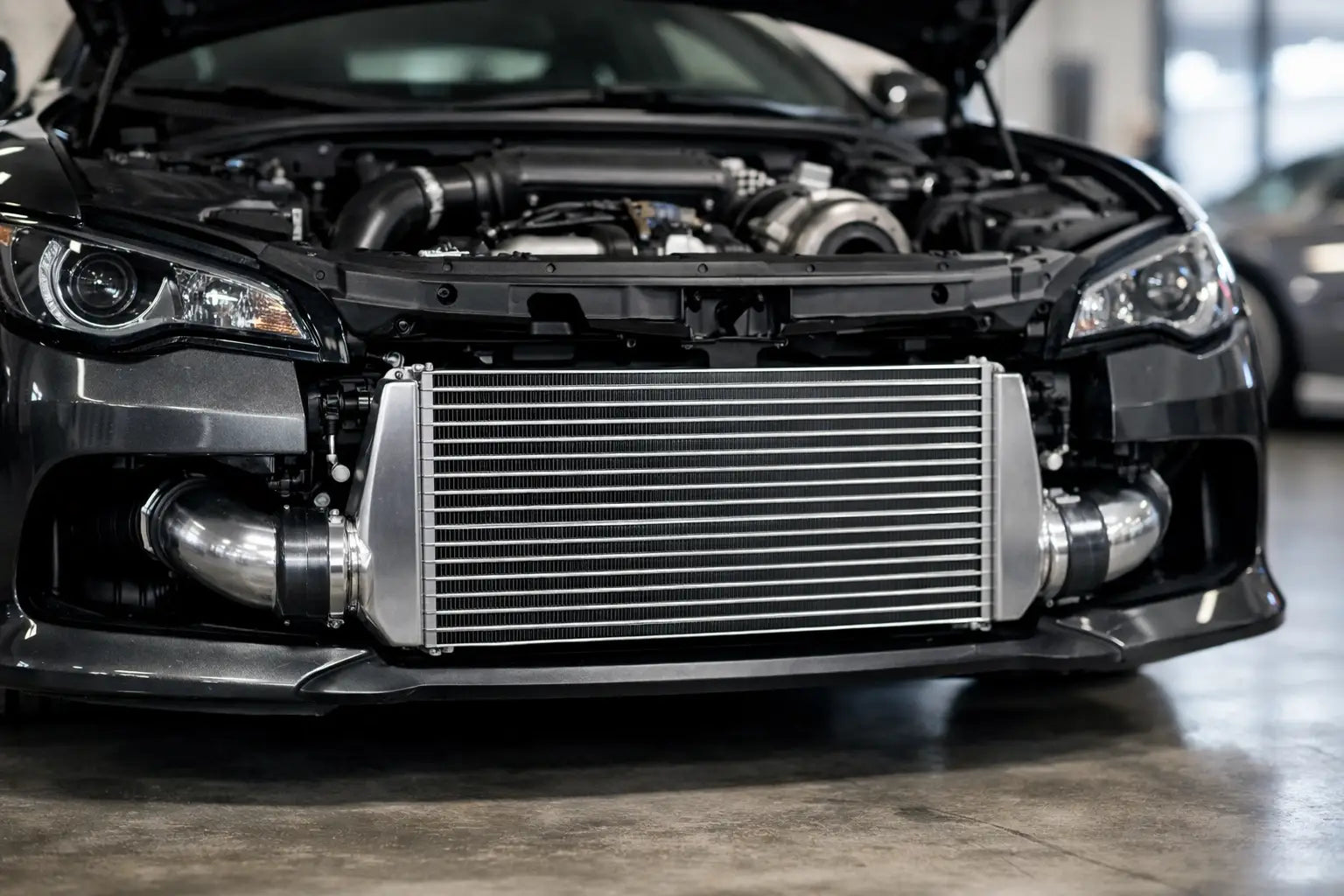
A front mount intercooler can make or break a turbo build. Get it right and you get lower charge temps, more consistent power and better headroom for mapping. Get it wrong and you end up with lag, pressure drop, trimming headaches and a shiny part that looks fast but works harder than it should. That is why the conversation around the best front mount intercoolers matters - not because one core suits every car, but because the right setup depends on power goals, packaging and how the car is actually used.
What makes the best front mount intercoolers?
The best front mount intercoolers are not always the biggest ones on the shelf. Bigger cores can reduce intake temperatures, but they also bring more internal volume, more pipework and sometimes more pressure drop if the design is poor. On a fast road car or a lightly tuned hatchback, an oversized setup can feel softer in transient response than a properly matched kit from a proven brand.
Core design is where the real difference starts. Bar-and-plate intercoolers are common in the aftermarket because they are strong, efficient and well suited to repeated hard use. They tend to be heavier, but for tuned street and track cars that trade-off is usually worth it. Tube-and-fin designs can be lighter and flow well, yet they are often more vulnerable in harsh use and not always the first choice for a car seeing repeated hot laps.
Then there is end tank design. A quality intercooler does not just rely on a thick core. It uses properly shaped end tanks to distribute airflow evenly across the face of the core. Cheap units often miss this point. They can look the part, but uneven flow means some of the core does very little while the rest works overtime.
Why front mount beats side mount for most tuned builds
Once power climbs beyond mild remap territory, the factory intercooler usually starts showing its limits. Side mount setups can work well on some platforms, especially where the OEM system is cleverly packaged, but they have less frontal area to work with and are often affected more by heat soak.
A front mount intercooler sits directly in the airflow, giving it a better chance of shedding heat consistently. That matters on repeated pulls, long motorway runs and track sessions where intake air temperature control is the difference between repeatable performance and a car that feels flat after ten minutes. For many turbocharged VAG, BMW, Renault Sport, Honda and Japanese performance platforms, front mount conversion kits are one of the first serious cooling upgrades worth considering.
That does not mean every car needs one. If your setup is close to standard power and spends its life in traffic, the gains may be modest compared with the cost and installation effort. But once boost, ignition demand and intake temperatures start moving the wrong way, a proper front mount quickly stops being a cosmetic mod and becomes a supporting upgrade.
How to choose the best front mount intercoolers for your car
Fitment comes first. That sounds obvious, but plenty of buyers still start with advertised horsepower figures and ignore whether the kit actually suits the chassis. A good intercooler should fit behind the bumper with sensible trimming, sensible pipe routing and no compromise to essential cooling systems. If the air conditioning condenser, crash bar or radiator airflow suffers badly, you have not gained much.
Power target is the next filter. A 280 bhp daily driver, a 420 bhp fast road build and a 600 bhp drag-focused car need different things. The first may benefit most from a compact, efficient core with low pressure drop and quick spool characteristics. The second needs stronger thermal control without killing response. The third may accept more volume and more aggressive packaging because outright cooling capacity matters more than crisp low-end behaviour.
Use case matters just as much as dyno numbers. Track cars generate heat continuously, so thermal recovery and sustained efficiency matter more than one clean power run. Road cars need a balance of response, reliability and manageable intake temps in mixed driving. If you spend most weekends at sprint events or track days, choose a core proven in repeated load rather than one marketed purely around peak airflow.
Core size, pressure drop and response
This is the part buyers often oversimplify. A larger intercooler core can reduce outlet temperatures, but airflow still has to pass through it efficiently. If the fin density is too restrictive or the core design is poor, pressure drop rises. That means the turbo has to work harder to hit the same manifold pressure, creating more heat upstream and reducing overall efficiency.
The sweet spot is a core that offers enough thermal capacity without introducing avoidable restriction. On many street-driven turbo cars, that means choosing a brand with proper testing data and platform-specific development rather than chasing the largest dimensions available. Real engineering beats catalogue bravado every time.
Pipework also affects response. Long routing, unnecessary bends and poor-quality joiners can add volume and create boost leaks. The best front mount intercoolers are usually part of a complete, well thought-out kit, not just a universal core with a collection of alloy pipes and hope.
Build quality separates proven kits from generic ones
There is no shortage of cheap intercoolers online, and some do work reasonably well for modest setups. But if you care about long-term reliability, consistent charge temps and fitment that does not waste your weekend, build quality matters.
Look at weld consistency, mounting points, hose connections and bracket design. Bead-rolled pipe ends, proper clamps and durable couplers are not glamorous, but they stop boost leaks and blown hoses when the car is working hard. Finishing quality matters less than engineering quality, though a decent protective coating can help with corrosion resistance in real road use.
Brand reputation counts because intercoolers are not judged properly by appearance alone. Established names such as Mishimoto, HKS and other respected cooling specialists have earned trust by testing on actual platforms, not just publishing optimistic airflow claims. That is especially relevant if you are buying for a common tuning base where fitment accuracy and repeatable results are more valuable than saving a few quid upfront.
The trade-offs enthusiasts should be honest about
A front mount intercooler upgrade is not always plug-and-play. Some cars need trimming behind the bumper. Some lose a bit of crash bar convenience. Some require relocation of small components or tighter packaging around the radiator stack. If your goal is a clean OEM-plus install, platform-specific kits are worth paying for.
There is also the question of airflow to other heat exchangers. A huge intercooler sat in front of the radiator may help intake temps while making coolant temperatures harder to manage if the rest of the system is marginal. On a hard-driven turbo car, charge cooling and engine cooling need to be viewed together.
Weight is another factor. It will not ruin a street build, but a large bar-and-plate core and full pipe kit do add mass at the nose. For track-focused cars where front-end balance matters, it is sensible to choose the intercooler you need, not the one with the most dramatic dimensions.
Which buyers need the best front mount intercoolers most?
If you are running more boost than standard, planning a hybrid turbo, chasing consistent power on warm days or trying to keep intake temperatures under control during repeated sessions, this upgrade is firmly in the worthwhile category. The same applies if your factory intercooler setup is known to heat soak badly, which is common on several modern turbo platforms.
If your car is only lightly tuned and used mostly for normal road driving, brakes, tyres or maintenance may deliver a more noticeable improvement first. That is not glamorous, but it is honest. Cooling mods make the most sense when the rest of the build is already asking more from the induction system.
For buyers comparing options, the safest route is to shop by vehicle, by power goal and by trusted brand. That is usually how enthusiasts avoid universal-fit compromises and end up with a setup that actually suits the car. A specialist retailer such as Torque Lab makes that process easier because the shortlist is already biased toward recognised performance parts rather than generic catalogue filler.
A smarter way to buy
Ignore the loud marketing claims and focus on what the kit is designed to do on your platform. Ask whether it keeps intake temps stable under repeated load, whether pressure drop stays sensible, whether the fitment is proven and whether the brand has a decent track record with tuned cars like yours.
The best front mount intercoolers are the ones that support the whole build - turbo, map, fuelling and real-world use - without creating new problems. Buy for the car you have, the power you are actually building for and the driving you genuinely do. That is how you end up with cooler charge temps and a setup that still feels sharp every time you lean on it.