
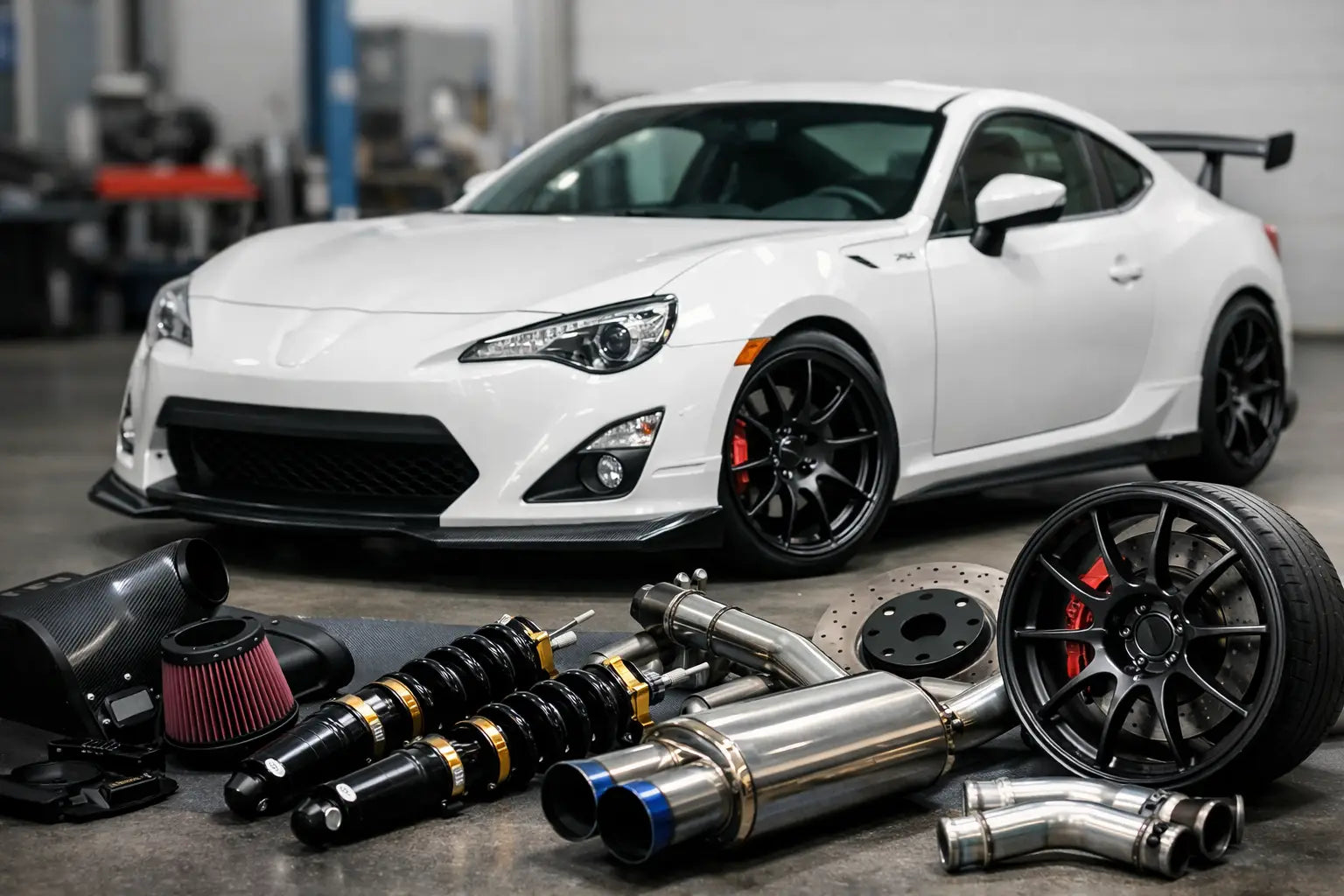
The Toyota 86 responds to mods the way a proper driver’s car should. Small, well-chosen changes make a real difference, and that is exactly why the best aftermarket parts for Toyota 86 owners are not always the flashiest or most expensive. On this platform, balance matters. A car that feels sharp on a B-road can feel miserable if you chase numbers and ignore the chassis.
That makes the 86 a brilliant platform to build, but also an easy one to get wrong. The FA20 is not a torque monster from the factory, the standard suspension is competent but soft if you push on, and the stock braking setup starts to show its limits once you add grip or track time. The smart route is to modify in stages, with each part supporting the next.
Best aftermarket parts for Toyota 86 by priority
If you are starting from scratch, suspension, tyres and brakes usually deliver more real-world pace than an intake and a loud back box. That is not a glamorous answer, but it is the honest one. The 86 already has a playful chassis. Your job is to tighten it up without killing the car’s feedback.
For most road and occasional track builds, coilovers or a matched spring and damper package belong near the top of the list. A quality setup from a proven brand can reduce float, improve front-end bite and give you better control over ride height. BC Racing is a common choice on this platform for a reason. You get a wide adjustment range and a setup that suits enthusiasts who actually use the car hard. The trade-off is simple - go too stiff and the car stops working on broken roads.
Wheels and tyres are the next place where the 86 wakes up. Lightweight wheels help steering feel and response, while a better tyre transforms braking and mid-corner confidence. This is also where people overdo it. Huge wheel widths and ultra-sticky tyres can make the car feel less progressive and more expensive to run. A sensible fitment keeps the car lively without turning every drive into a fight against tramlining.
Brakes deserve the same practical approach. Unless you are chasing repeated heavy track use, you may not need a big brake kit straight away. High-quality pads, uprated brake fluid and better discs can be enough for a fast road car or light track work. Brands such as EBC Brakes and Ferodo are popular because they offer real performance gains without forcing you into a full system change. The pedal feel improvement alone is often worth it.
Suspension upgrades that actually suit the 86
The Toyota 86 does not need suspension parts chosen for social media fitment. It needs control, compliance and geometry that works. That means buying with a clear goal. If your car is mainly for road use, a mild drop and a quality damper setup often make more sense than a slammed coilover build.
Coilovers are still one of the best aftermarket parts for Toyota 86 owners because they let you fine-tune the car around your driving. Ride height, damping and corner balance matter on a lightweight coupe. Done properly, the car feels more alert on turn-in and more settled through fast changes of direction. Done badly, it skips over bumps and loses the friendliness that makes the 86 worth owning in the first place.
Supporting parts matter too. Adjustable rear lower arms, front top mounts and anti-roll bars can help you dial in alignment and improve consistency. If you lower the car and ignore geometry correction, you leave performance on the table. A clean alignment with sensible camber and toe settings can make a bigger difference than another shiny bolt-on part.
Brake upgrades for road and track
Toyota got the basics right, but enthusiastic driving exposes the limits quickly. The stock setup can feel fine on a Sunday blast, then soft and hot after a few committed laps. That is why brake upgrades are usually one of the smartest first modifications.
Start with pads and fluid. For a road-biased 86, a fast road pad gives you stronger initial bite and better fade resistance without making daily driving miserable. For track users, stepping up to a more aggressive compound is worth it, but expect more dust, more noise and sometimes less warmth on a cold morning. There is always a compromise.
Braided brake lines can help pedal consistency, while uprated discs improve heat management. A full big brake kit makes sense if you run repeated track sessions, wider grippier tyres or extra power. If not, spend that money elsewhere first. On this platform, balanced braking is more valuable than chasing oversized calipers for appearance.
Engine breathing and exhaust mods
The 86 community has spent years chasing a better answer to the stock torque dip. Naturally aspirated mods can help, but expectations need to stay realistic. An intake, manifold, exhaust and proper remap can sharpen throttle response and improve the mid-range, but this is not a platform where every bolt-on adds dramatic power on its own.
The exhaust is often the first change owners make, and with good reason. A quality cat-back gives the car the note it should have had from factory and can trim some weight at the same time. HKS and Milltek are both well-regarded names because they combine fitment quality with a sound profile that suits the car rather than overwhelming it.
The key point is choosing a complete setup that works together. A loud system with poor drone gets old quickly on long journeys. An intake that mostly adds noise is not a performance upgrade just because it sounds faster. If your target is usable gains, the combination of a well-designed manifold, freer-flowing exhaust and proper tuning matters far more than buying random parts one at a time.
Cooling and reliability upgrades worth doing
If you use the Toyota 86 hard, cooling is not optional for long. Even on standard power, repeated track sessions raise oil temperatures enough to make reliability upgrades a sensible move. An oil cooler is one of the best-value functional mods on this platform if the car sees circuit use.
Improved engine cooling and better fluids also help keep performance consistent. Heat soak and rising temperatures do not just affect long-term durability - they make the car feel weaker when you are pushing. Mishimoto is a familiar name here for enthusiasts building dependable street and track cars because cooling parts are one area where proven design matters.
This is also where you need to be honest about usage. A road-only car in a mild climate may not need the same level of cooling support as a car doing summer track days. Spend where the use case demands it, not where forum hype tells you to.
Drivetrain and chassis upgrades
The standard drivetrain is part of the 86’s charm, but there is room to tighten things up. A lighter clutch setup, improved shifter components and drivetrain mounts can make the car feel more direct, though too much stiffness brings extra noise and vibration into the cabin. Again, it depends on how much compromise you can live with.
A limited-slip differential upgrade can be a game changer if your car is seeing serious track work, drifting or sticky tyre setups. The factory diff is decent, but more aggressive configurations can improve traction and consistency when the car is pushed harder. That said, not every road car needs it. For plenty of owners, tyres and alignment will deliver more value first.
Chassis bracing sits in a similar category. Some braces sharpen response, others mostly add weight and clutter the underside. On the 86, suspension tuning and alignment usually bring more obvious gains than bolting on every brace in the catalogue.
How to choose the best aftermarket parts for Toyota 86 builds
The right parts package depends on whether your 86 is a road car, a track-day tool or something in between. If it is mainly for fast road driving, focus on suspension, tyres, brake pads and a tasteful exhaust. If you are building for regular circuit use, move cooling and brake endurance much higher up the list.
Brand quality matters because fitment, durability and consistency matter. Cheap parts can ruin a car that is otherwise brilliant. The 86 is too well balanced to waste on guesswork. Stick with recognised manufacturers, buy parts that suit each other, and plan the build in stages rather than treating the catalogue like a shopping challenge.
A strong 86 build is rarely about one hero mod. It is about choosing parts that make the whole car work harder and feel better. Get that right, and every drive home takes the long way for a reason.