
You feel it the first time you push harder into a fast on-ramp - the factory suspension leans, compresses, and reminds you exactly where the OEM compromise lives. That is where the coilovers vs lowering springs question starts for most enthusiasts. Not on a spec sheet, but in that moment when you want less body roll, a better stance, and more control without wasting money on the wrong setup.
For some builds, lowering springs are the smart move. For others, coilovers are the only answer. The right choice depends on how you use the car, how far you want to tune the chassis, and whether you are after a mild street upgrade or a suspension package that can handle repeated hard driving.
Coilovers vs lowering springs: the real difference
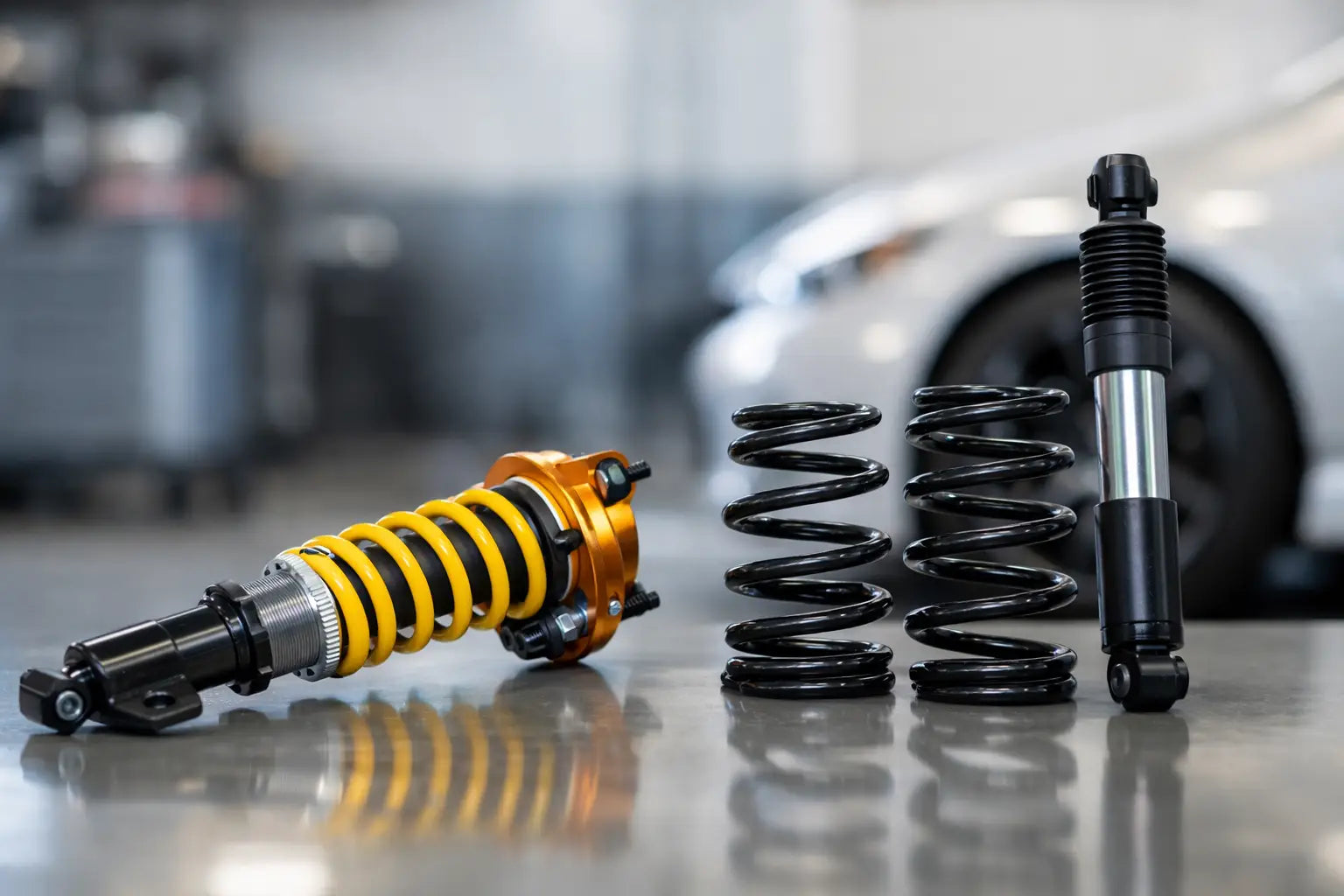
Lowering springs replace your factory springs with shorter, usually stiffer units designed to reduce ride height and sharpen handling. They work with your existing shocks or struts unless you pair them with upgraded dampers. This makes them the simpler and usually cheaper route.
Coilovers are a full suspension assembly that combines spring and damper into a matched package. Most aftermarket coilovers also give you height adjustment, and many add damping adjustment as well. That changes the conversation completely, because now you are not just lowering the car - you are tuning how it behaves.
That difference matters. Springs mainly change ride height and spring rate. Coilovers change ride height, damping behavior, chassis balance, and in many cases how far you can tailor the setup to street or track use.
When lowering springs make sense
If your goal is a better stance, a lower center of gravity, and a modest bump in handling for street driving, lowering springs are hard to ignore. They are a common first suspension mod for a reason. On the right car, with the right spring design, they can clean up wheel gap and make turn-in feel tighter without pushing the budget into full track-build territory.
For daily-driven cars, that can be enough. A Volkswagen GTI, BMW 3 Series, Honda Civic, or Toyota GR86 running quality lowering springs often feels more planted and more responsive than stock while staying comfortable enough for commuting and long drives.
The catch is that springs are only half the system. Factory dampers are tuned around factory spring rates and travel. Once you install shorter, stiffer springs, the stock shocks can become the weak link. Some cars tolerate this better than others, but it is common to see reduced damper life, a choppier ride, or less control over rough pavement.
That is why lowering springs make the most sense when you want a mild to moderate drop, you are realistic about performance gains, and you are not trying to fine-tune the chassis corner by corner.
Where coilovers pull ahead
Coilovers are for the enthusiast who wants more than a cosmetic drop. If you care about dialing in ride height, balancing comfort against grip, or setting the car up for canyon runs, autocross, or track days, coilovers give you a much wider operating window.
A good coilover kit is engineered as a matched spring and damper package. That alone can produce a more controlled ride than mismatched lowering springs on tired OEM dampers. The car may sit lower, but if the damping is right, it can actually feel more composed rather than simply stiffer.
Height adjustment is the obvious selling point, but damping adjustment is where many drivers start to appreciate the value. Being able to soften the setup for daily use or add control for harder driving makes a real difference, especially on platforms with strong aftermarket support.
For track-day regulars and aggressive street builds, coilovers also offer better control over weight transfer. That can improve braking stability, turn-in, and corner exit confidence. You still need alignment, tire, and sway bar choices to match, but coilovers give the suspension a stronger foundation.
Ride quality is not as simple as softer or stiffer
A lot of buyers assume lowering springs preserve comfort and coilovers ruin it. That is not always true.
Cheap coilovers can absolutely ride badly. Too much spring rate, poor damping calibration, and low-quality internals can make the car skittish and harsh. But quality coilovers from proven brands often ride better than spring-only setups because the dampers are designed for the spring rates and lowered travel.
On the other side, some lowering springs feel fine at first and then get worse as the factory shocks struggle to keep up. That is especially noticeable on rough roads where the car can bounce or crash into bumps instead of settling quickly.
So if ride quality matters, do not compare categories in the abstract. Compare complete setups. High-quality lowering springs with matched sport dampers can ride very well. Well-developed coilovers can too. Budget parts in either category tend to expose themselves fast.
Cost: the short answer and the real answer
If you only look at upfront price, lowering springs usually win. They cost less to buy, and for many owners that is enough to settle the debate.
But total cost is where things get more interesting. If lowering springs wear out your factory shocks sooner, you may end up paying for dampers and labor later. If you install springs now and then upgrade to coilovers later, you have effectively bought suspension parts twice.
Coilovers cost more on day one, but they can be the better value if your end goal already includes adjustability, track use, or a more serious handling setup. It is cheaper to buy once than to step through multiple half-measures.
The best question is not which option is cheaper. It is whether the cheaper option actually supports the build you want six months from now.
Fitment, alignment, and daily usability
This is where a lot of builds go wrong. Suspension is never just springs or coilovers in isolation. Ride height affects alignment, tire wear, fender clearance, and how the car behaves under load.
A conservative drop on lowering springs is usually easier to live with. Less chance of scraping, fewer clearance issues, and often less drama with steep driveways or poor roads. For a daily driver that needs to work every day, that simplicity matters.
Coilovers add flexibility, but they also add responsibility. If you slam the car for looks without thinking about suspension travel, geometry, and tire clearance, you can end up with worse grip and worse drivability than stock. Height adjustability is a tool, not a free pass.
Whatever route you choose, alignment is not optional. A proper alignment after installation is one of the biggest factors in how good the car feels afterward.
Coilovers vs lowering springs for different builds
For a daily street car that mostly sees commuting, weekend drives, and the occasional spirited run, lowering springs can be the right answer if you want an affordable, straightforward upgrade. They sharpen the look and improve response without turning the car into a project.
For a street car that also sees hard backroad driving, aggressive tire setups, or occasional track days, coilovers usually make more sense. The extra control and adjustment justify the price once you start pushing the chassis harder.
For dedicated performance builds, dual-purpose street and track cars, or drivers chasing setup precision, coilovers are the stronger move. At that point, adjustability is not a luxury. It is part of building the car correctly.
For owners who care mainly about appearance and do not plan to tune the suspension further, lowering springs remain the more practical buy. Just be honest about that goal. Not every car needs a motorsport-style suspension package.
How to choose without second-guessing it later
Think about the car on its busiest month, not its calmest one. If it is going to live on the street, carry passengers, deal with rough roads, and only occasionally get pushed, a spring setup may be all you need. If you are already planning wheels, sticky tires, brake upgrades, and track events, coilovers fit the direction of the build much better.
Also think in terms of parts matching. A suspension upgrade works best when spring rate, damping, wheel and tire setup, and alignment all support the same goal. That is why enthusiasts who want a complete chassis package often land on coilovers from established brands rather than piecing together a compromise.
There is no automatic winner in the coilovers vs lowering springs debate. There is only the setup that matches your use case, your standards, and your budget. If you build with a clear target in mind, the suspension choice gets easier fast.
The right setup should make you want to take the long way home - and trust the car more every time you turn in.