
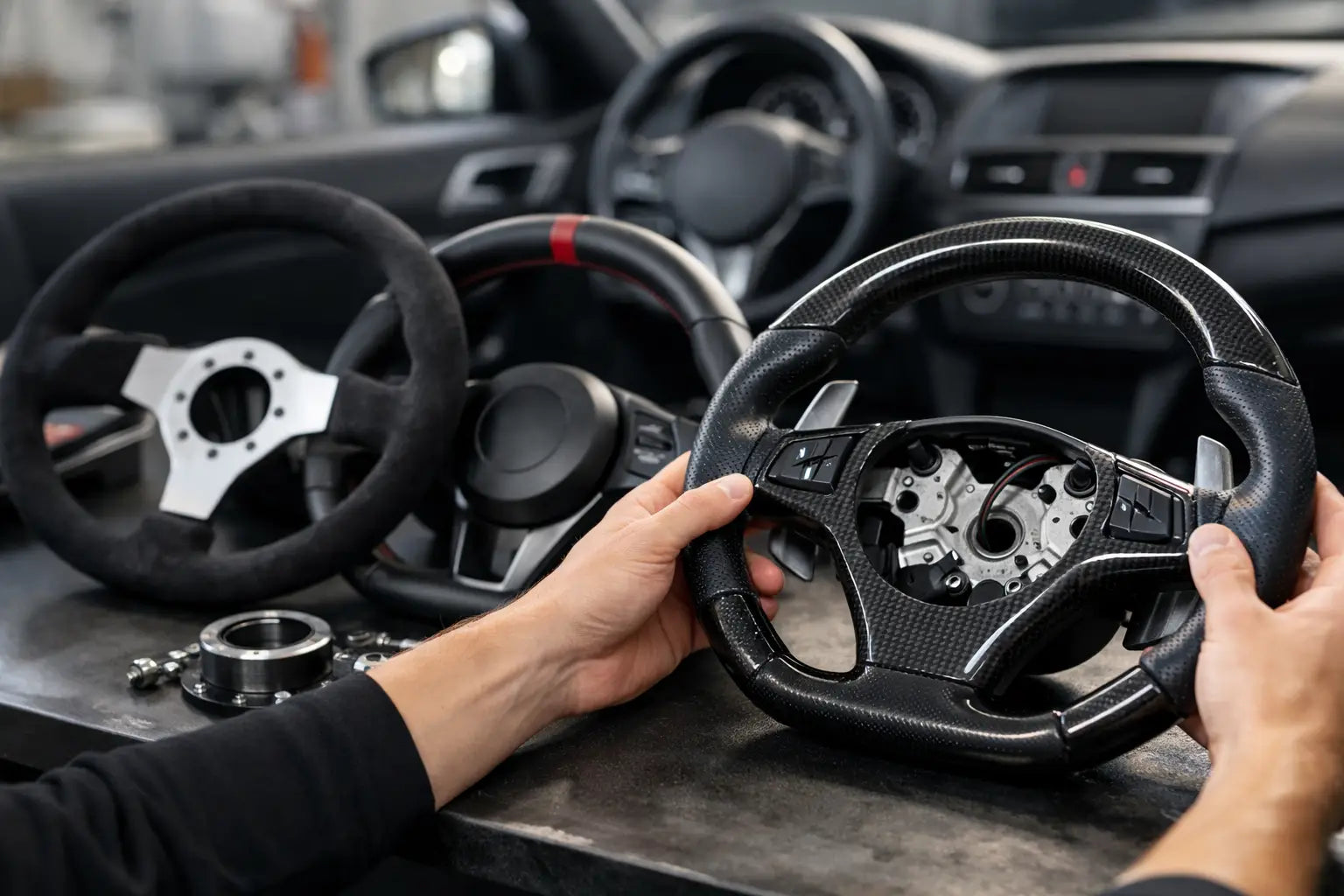
A steering wheel can make your car feel sharper before you even leave the driveway. Get the size, dish, and hub setup right, and the whole driving position tightens up. Get it wrong, and you end up with blocked gauges, awkward arm angles, and a car that feels worse than stock. If you are figuring out how to pick aftermarket steering wheel options for your build, the smart move is to treat it like a fitment and function upgrade first, style upgrade second.
Start with the job the wheel needs to do
The right steering wheel for a street-driven GTI is not always the right wheel for a caged E36 track car or a drift-built 350Z. Before you look at suede, spokes, or center stripe colors, decide what the car actually does.
If it is mostly a street car, comfort matters. You will want a wheel that feels good on longer drives, works with your normal seating position, and does not make daily use annoying. A full-on track wheel with aggressive dish and thick suede can look perfect in photos and feel out of place in traffic.
If the car sees autocross, drift, or track days, driver input matters more than OEM-like comfort. In that case, wheel diameter, grip material, and hand position become much more important than matching the interior trim. A good steering wheel should help you place the car more precisely, not just change the vibe of the cabin.
How to pick aftermarket steering wheel size
Size is where most buyers should start. Diameter changes steering feel immediately.
A smaller wheel, usually around 330mm to 350mm, feels quicker because your hands travel less from lock to lock. That makes sense in a performance build where fast corrections matter. It can also improve leg clearance in tighter cockpits, especially if you are running a bucket seat and lower seating position.
The trade-off is leverage. The smaller the wheel, the heavier the steering can feel, especially in older cars with weak power steering or no assist at all. On the street, that can get old fast. On the track, plenty of drivers accept it because the response feels more direct.
A larger wheel, around 350mm to 380mm, gives you more leverage and a slightly more relaxed feel. That tends to suit classics, hydraulic-steering cars, and builds that still spend serious time on public roads. If you are not sure where to start, 350mm is usually the safe middle ground for a performance street car.
Dish and offset matter more than most people expect
Dish refers to how far the wheel sits toward the driver. A flat wheel keeps things closer to the factory position. A deep-dish wheel pulls the rim toward you, which can be useful if your seat sits far back, your arms are too extended, or your cockpit has been changed with buckets and rails.
But more dish is not always better. Pull the wheel too close and you can crowd your chest, make turn-signal access annoying, or create clearance issues with your knees. In some cars, dish also changes how well you can see the cluster. That is why hub depth and quick-release thickness need to be considered at the same time, not as separate parts.
Pick the right material for how you drive
Material is not just about looks. It changes grip, wear, and how much maintenance the wheel needs.
Leather is the best all-around choice for most street cars. It wears well, handles bare hands better than suede, and generally looks right in a mixed-use build. If the car is driven regularly, leather is usually the practical answer.
Suede and Alcantara-style finishes are popular in motorsport because they offer excellent grip, especially with gloves. They also give the cabin a more focused feel. The downside is wear. If you drive bare-handed all the time, sweat and skin oils will flatten and age the surface quickly. For a dedicated track or drift car, that may be an acceptable trade. For a daily, it usually is not.
Wood and polished finishes have their place in retro builds, but they are a niche choice in a modern performance setup. They look great in the right cabin and completely wrong in the wrong one.
Shape changes hand position
Most aftermarket steering wheels are round, and for good reason. A round wheel gives consistent grip and control through the full range of steering input, which is ideal for track driving, drifting, and spirited road use.
Flat-bottom wheels can improve thigh clearance and bring a more modern appearance, but they are not always the best functional choice if you are making large steering inputs. They suit some street builds well, yet for serious motorsport use, a classic round wheel is still the benchmark.
Hub, boss kit, and quick release compatibility
This is where enthusiasm needs to meet common sense. A steering wheel is not a universal bolt-on part by itself. You need the correct hub or boss kit for your vehicle, and you need to know the bolt pattern of the wheel you are buying.
Many performance wheels use common six-bolt patterns, but not all brands match each other. If you mix parts carelessly, you can end up with hardware that does not line up or a horn setup that does not work correctly.
If you are adding a quick release, remember that it changes wheel position too. Some quick releases are slim, others add noticeable depth. That affects reach, gauge visibility, and stalk access. On some builds, the wheel, hub, and quick release combination ends up sitting much closer than expected.
A good rule is to mock up the driving position on paper before you buy. Measure the stock wheel diameter, note how far it sits from the column trim, and compare that to the aftermarket wheel, hub, and quick release stack height.
Airbag and legal considerations are not optional
A lot of buyers skip straight to aesthetics and forget the biggest decision in the whole process. Many aftermarket steering wheels delete the factory airbag.
That may be acceptable on a dedicated race car or a build that is not road driven. On a street car, it is a real safety and legal consideration. Depending on where the car is registered and how it is used, removing the airbag may create inspection, insurance, or liability problems. It can also change how comfortable you are using the car at speed on public roads.
If your build still sees regular street use, think carefully before deleting factory safety systems just for appearance. There are cases where it makes sense, but there are also plenty where keeping the OEM wheel is the smarter move.
Don’t buy on looks alone
A steering wheel is one of the most visible parts in the cabin, so yes, style matters. But the best wheel for your car should still match the build itself.
A time-attack-style suede wheel in a stock-interior commuter can feel forced. A thin retro wheel in a stripped track build can feel just as off. The spoke design, stitching, center marker, and material should fit the car’s direction, but they should not override function.
Brand quality matters here too. This is not the part of the build to cheap out on. The wheel takes constant load every time you drive, and questionable materials or poor manufacturing are not worth the risk. Recognized motorsport and tuning brands usually cost more because the finish, rigidity, and hardware quality are better.
How to pick aftermarket steering wheel for your seating setup
Your seat and steering wheel need to work as one system. If you have changed to fixed-back buckets, lower rails, or a different pedal position, the stock wheel location may no longer make sense. That is often why an aftermarket wheel feels like such a big upgrade - not because the wheel itself adds performance, but because it helps correct the driver triangle.
You want a slight bend in your elbows, clear sightlines to the gauges you actually use, and enough clearance for your legs during heel-toe work or aggressive steering input. If your seating position is still stock, a mild change in diameter and a low-offset hub may be all you need. If the interior has been reworked for motorsport, wheel depth becomes a much bigger factor.
For buyers sorting through platform-specific parts, this is where a specialist catalog helps. Matching the right wheel with the correct hub, hardware, and fitment for your chassis saves time and avoids a pile of incompatible parts.
The best choice is usually the balanced one
Most enthusiasts do not need the wildest option in the catalog. They need the wheel that suits how the car is actually used. For a street and weekend build, that usually means a quality 350mm round wheel, modest dish, durable material, and a proper hub from a trusted brand. For track-focused cars, a smaller diameter, gloved-hand-friendly material, and a cockpit-specific offset can make more sense.
The smartest upgrade is the one that improves control without creating new compromises you will hate a week later. Choose the wheel that fits your hands, your car, and your driving position, and every corner after that feels more intentional.