
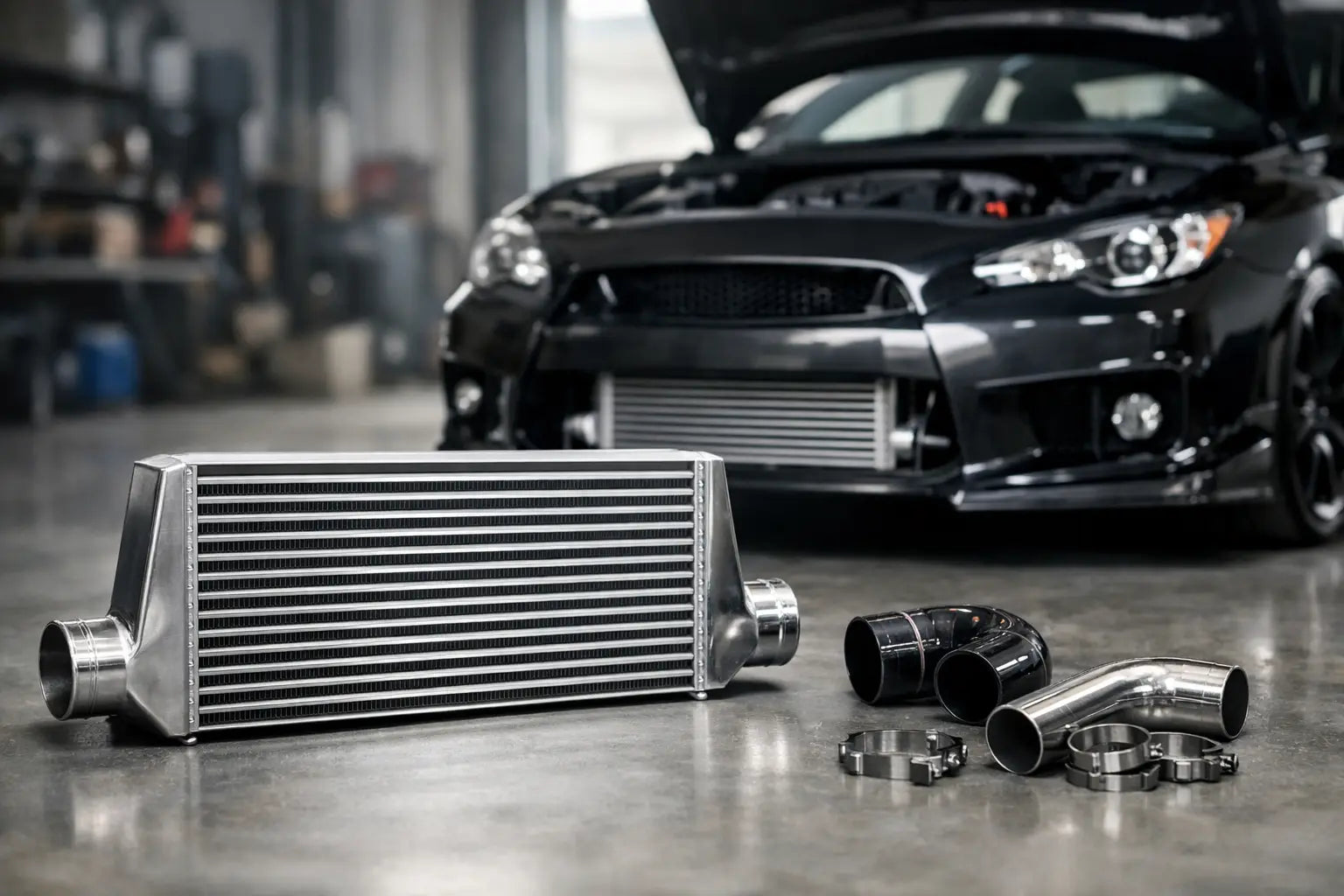
Heat soak shows up fast on a street car. One hard pull feels great, the next feels softer, and by the third your tune is fighting intake temps instead of making clean, repeatable power. That is why choosing the best intercooler for street build goals is less about chasing the biggest core on the market and more about matching the intercooler to the car, turbo setup, and how you actually drive.
A proper street setup needs balance. You want lower intake air temps, stable performance in traffic and on back roads, and minimal impact on spool, throttle response, and fitment. Go too small and the car heat soaks. Go too big and you can add pressure drop, block airflow, or create packaging headaches that make the rest of the cooling system work harder.
What makes the best intercooler for street build use?
For most enthusiast cars, the best intercooler for street build use is not the one with the most aggressive marketing claims. It is the one that delivers repeatable charge air cooling without turning the front end into a compromise. Street cars live in stop-and-go traffic, short pulls, highway rolls, warm restarts, and long periods without the constant airflow a track car sees. That changes what matters.
Core efficiency is the first big factor. A quality bar-and-plate core usually gives strong cooling performance and durability, which is why it is common on higher-powered turbo street builds. The trade-off is weight, and in some cases slightly less ideal airflow to the radiator compared with lighter tube-and-fin designs. Tube-and-fin can work very well on milder setups where response and low weight matter, but cheap versions often miss the mark when the boost and ambient temps go up.
Pressure drop matters just as much as temperature control. If an intercooler cools well but forces the turbo to work significantly harder to reach target boost, you are not really getting a free upgrade. On a street build, that can translate to slower transient response and extra strain on the system. The sweet spot is an efficient core with sensible end tank design, not simply maximum frontal area.
Fitment is where good builds separate from frustrating ones. A street car still needs proper bumper fit, decent ground clearance, functional crash bar solutions where applicable, and enough airflow left for the radiator and condenser. If the install requires heavy cutting, relocation of multiple systems, or creates constant rubbing issues, it may not be the right part for a daily-driven car.
Bigger is not always better
A lot of owners assume they need the largest front-mount available. Sometimes that is true, especially on builds aiming for serious power with upgraded turbochargers and sustained boost. For many street cars, though, oversized intercoolers can dull the car in the exact RPM range where it spends most of its life.
If you are running a stock turbo or a small hybrid, the goal is usually fast spool with lower intake temps during repeated pulls. That points toward a well-designed intercooler sized for your actual power target, not your dream setup three years from now. A giant core can make sense on a 600-horsepower project. On a lightly modified GTI, Civic, WRX, or B58 street car making moderate gains, it can be unnecessary.
This is where platform-specific kits earn their keep. Reputable brands engineer around the car’s airflow path, bumper support, charge piping length, and mounting points. That usually gives better real-world results than trying to universal-fit something huge because the dimensions looked impressive on paper.
Core design, end tanks, and real-world airflow
The core gets the attention, but end tanks play a major role in how an intercooler performs. Good end tanks distribute air evenly across the core and reduce turbulence. Poorly designed tanks can create uneven flow and wasted cooling area, even if the core itself looks substantial.
Cast end tanks are common on better street kits for a reason. They allow smoother internal shaping and more consistent manufacturing than many budget fabricated options. That does not automatically make every cast-tank intercooler superior, but it is a strong sign the manufacturer paid attention to flow, not just appearance.
Airflow to the rest of the cooling stack matters too. If the intercooler blocks too much air from reaching the radiator, coolant temps can climb when ambient temps are high or the car sits in traffic. On a street build, that is a real concern. There is no point dropping intake temps if the engine cooling system starts struggling every summer.
How to size an intercooler for your build
Start with your current setup, not just your long-term wishlist. Think about turbo size, boost level, target horsepower, fuel type, and climate. A pump-gas street car at moderate boost has different needs than an ethanol-fed setup pushed hard on a hybrid or big turbo.
If the car is mostly daily driven with occasional spirited runs, prioritize fast response and consistent performance over maximum thermal capacity. If it sees mountain roads, autobahn pulls, or regular hot-weather abuse, lean toward a more efficient core with stronger heat rejection. If you do occasional track days, you need to consider the whole cooling package, because intercooler size can affect radiator performance under sustained load.
Piping volume matters here. Long, oversized charge pipes and a very large core can increase total system volume, which can slightly soften response. On many modern turbo platforms, the difference is not dramatic when the parts are well matched, but on smaller turbo setups it is still worth considering.
Best intercooler brands for a street build
When enthusiasts ask for the best intercooler for street build reliability and performance, brand quality matters because the differences are not only in peak temperature numbers. They show up in weld quality, mounting precision, crash bar compatibility, pressure testing, and how well the kit fits behind the bumper without turning install day into a fight.
Mishimoto is a strong option for many street cars because the brand covers a wide range of platforms and usually aims for practical, well-supported performance upgrades. HKS remains a trusted name for Japanese applications where proven tuning pedigree carries real weight. On VAG, BMW, and other European turbo platforms, fitment-specific kits from established manufacturers tend to be the smarter buy than generic cores and homemade brackets.
The budget end of the market is where you need to be honest with yourself. Some cheaper intercoolers work well enough on mild builds. Others come with poor welds, inconsistent dimensions, weak couplers, and optimistic performance claims. If the car matters to you, and especially if you are tuning it aggressively, buying a known brand is usually cheaper than redoing the job.
Street build priorities most buyers miss
One of the biggest mistakes is shopping for dyno bragging rights instead of repeatability. A street car should feel strong on the first pull and the fifth pull. It should not become lazy after sitting at a stoplight with the AC on. Heat management is the real win.
Another common miss is ignoring weight and packaging. A heavier intercooler mounted far forward affects front-end feel more than many owners expect, especially on smaller cars. That does not mean avoid bar-and-plate cores. It means choose one that fits the application instead of treating every build like a drag project.
Then there is installation quality. Even the best core can be let down by boost leaks, poor clamp positioning, misaligned pipes, or couplers rubbing through on bodywork. A clean install is part of the performance equation.
When an intercooler upgrade is actually worth it
If your car pulls timing from heat, feels inconsistent in warm weather, or is moving beyond stock boost levels, an intercooler upgrade usually makes sense. The same goes for cars running ECU tunes where intake temp stability directly affects how hard the calibration can safely work.
If the build is otherwise stock and used for basic commuting, the value depends on the platform. Some factory intercoolers are adequate until you add tune and hardware. Others become a bottleneck almost immediately. Platform knowledge matters, which is why shopping with a performance-focused source like Torque Lab makes more sense than guessing from generic specs alone.
The right choice for your car
The best intercooler for street build use is the one that fits your platform cleanly, matches your turbo and power goals, and keeps temps under control without hurting the way the car drives every day. For most enthusiasts, that means a proven, platform-specific intercooler from a reputable brand, sized for realistic power rather than forum fantasy.
Build the car you actually want to drive. If it starts clean, responds hard, and delivers the same pull after the engine bay gets hot, you chose well.