
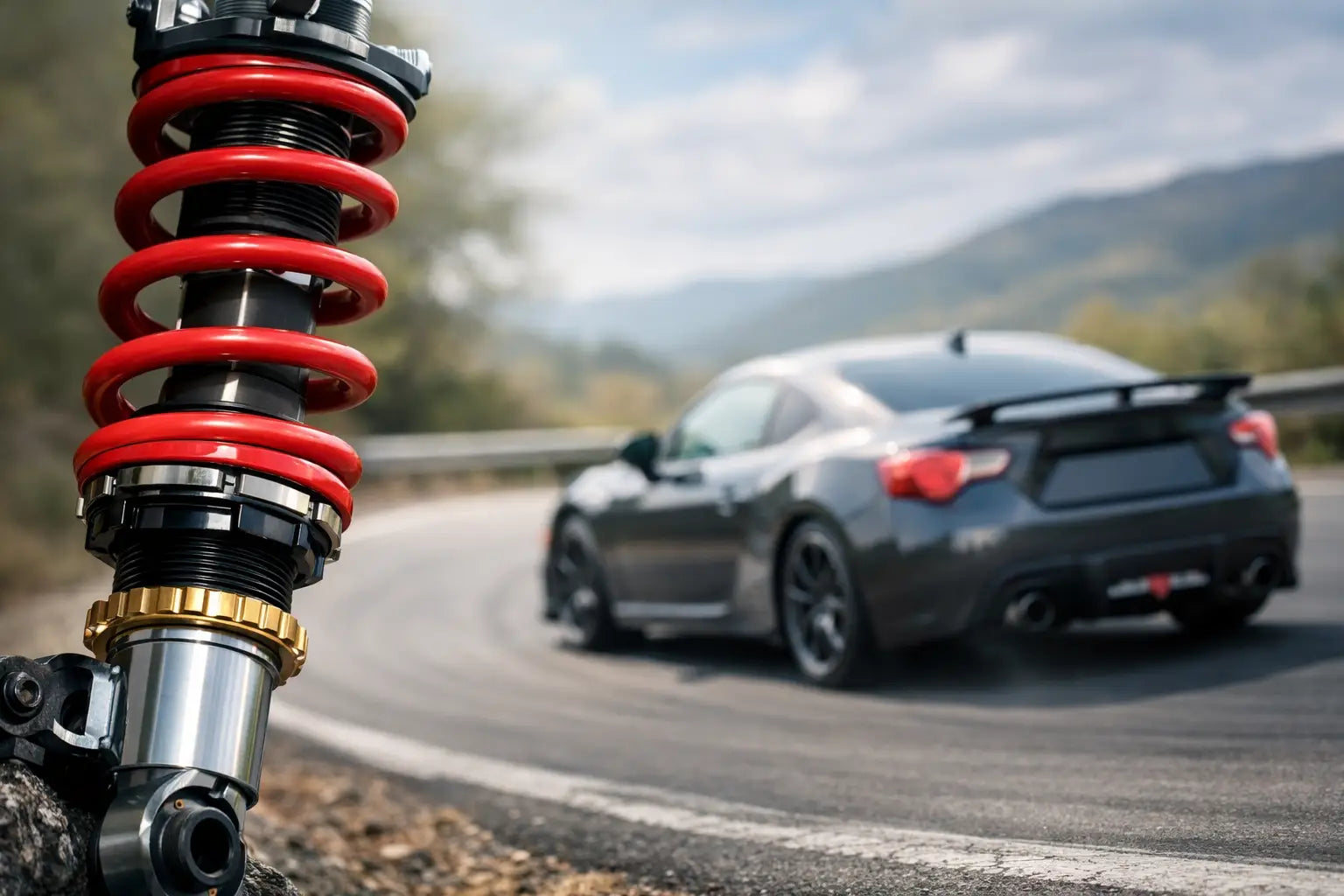
Ask anyone in the paddock what suspension mod changes a car’s character fastest, and coilovers usually come up early. That leads straight to the real question: do coilovers improve handling? The honest answer is yes, they can - sometimes dramatically - but only when the kit, spring rates, damping and setup actually suit the car and the way it is driven.
A lot of people buy coilovers expecting instant track-car sharpness and cleaner lap times. Sometimes that happens. Sometimes the car ends up crashy on the road, nervous over mid-corner bumps and slower because the tyres cannot stay loaded properly. Suspension is one of the easiest places to spend money and still get the wrong result.
Do coilovers improve handling on every car?
Not automatically. Coilovers improve handling by giving you more control over ride height, spring rate and damper behaviour than a standard suspension setup usually allows. That extra control is the whole point. You can reduce body roll, sharpen turn-in, improve weight transfer and tune the car for road use, fast B-road driving or track work.
But adjustability is not the same as better handling. A poor-quality coilover kit with badly matched damping can make a decent OEM setup feel worse. Even a good kit can underperform if it is slammed too low, set too stiff or paired with the wrong alignment.
That is why experienced builders look at the full package. Suspension works with tyres, bushings, anti-roll bars, wheel alignment and the chassis itself. Coilovers are not magic. They are a tuning tool.
What coilovers actually change
The biggest advantage of coilovers is that they let you move beyond the compromises of factory suspension. Standard setups are designed to satisfy a wide range of drivers, road conditions, load scenarios and cost targets. A proper aftermarket coilover kit is built with a narrower goal in mind - usually more control, more consistency and more tuning potential.
Ride height is the most obvious change. Lowering the car can reduce the centre of gravity and cut some body movement, which helps the car feel more tied down in quick direction changes. But there is a limit. Go too low and you start hurting suspension geometry, roll centre position and bump travel. That can reduce grip rather than add it.
Spring rates are another major factor. Stiffer springs can reduce pitch and roll, helping the chassis settle faster under braking and cornering. That often makes the car feel sharper and more responsive. The trade-off is that if the spring rate is too aggressive for the road surface or the damper cannot control it properly, grip suffers over broken tarmac.
Then there is damping. This is where good kits separate themselves from cheap ones. Dampers control how quickly the suspension compresses and rebounds. Get that right and the car feels composed, predictable and planted. Get it wrong and the car skitters across bumps, struggles for traction and feels busy when you want confidence.
Where coilovers make the biggest difference
If your car has soft factory suspension, a lot of body roll and vague front-end response, a quality coilover kit can transform it. Hot hatches, older BMWs, MX-5s, Civics, GT86s and plenty of VAG-platform cars often respond well because there is a clear performance gap between OEM comfort tuning and a more focused aftermarket setup.
Track-day cars also benefit because coilovers let you tune around the tyre, circuit and driver preference. If you are dealing with repeated heavy braking, fast transitions and higher sustained cornering loads, better damping control and more suitable spring rates can bring real gains.
Fast road builds sit somewhere in the middle. Here, the best coilover setup is usually not the stiffest one. A compliant kit with sensible ride height and proper alignment often feels faster because it keeps the tyre working on real roads. British roads are not billiard-table smooth, and neither are many European back roads. Grip comes from contact, not from making the chassis feel hard for the sake of it.
When coilovers do not improve handling
This is the part people skip. Coilovers will not automatically fix a poor chassis setup, bad tyres or worn suspension arms. If the car is on budget rubber, has tired top mounts or is running an alignment that is miles off, even the best suspension kit is working uphill.
They also do not help when the buyer chooses style over function. Dropping a car too far might look right at a meet, but it usually costs bump travel and suspension geometry. That often shows up as tramlining, bump steer, rubbing and reduced composure when the road gets rough.
Cheap kits are another trap. Some low-cost coilovers deliver a lower ride height and not much else. Spring and damper tuning may be crude, corrosion resistance may be poor, and long-term consistency can be questionable. For enthusiasts who actually care about pace and feel, that is false economy.
Spring rates, damping and why quality matters
A good coilover kit is not just a threaded body with adjustable collars. The real value is in how the spring and damper are matched. That pairing determines whether the car settles into a corner cleanly or crashes onto the bump stops and upsets the balance.
Manufacturers with a strong track record tend to offer platform-specific tuning rather than generic stiffness. That matters because a front-heavy turbo hatchback needs different suspension behaviour from a lightweight rear-drive coupe. Weight distribution, suspension design and intended use all shape what works.
Single-adjustable kits can be excellent for fast road and occasional track use if the baseline tuning is good. More advanced setups with separate rebound and compression adjustment offer more scope, but they also make it easier to get lost. More clicks do not guarantee a better result. If anything, they reward drivers who know what the car is doing and why.
Alignment is where the gains show up
If you fit coilovers and skip alignment, you are leaving performance on the table. In some cases, you are making the car worse.
Camber, toe and caster all affect how the tyre contacts the road. A lowered car often needs alignment correction to recover front-end grip and stability. A bit more negative camber can improve cornering support, while sensible toe settings can sharpen response or calm the car down depending on the goal.
This is why two cars with the same coilovers can feel completely different. One has been set up properly. The other has just had parts bolted on.
Road car versus track car expectations
A daily-driven road car needs a wider operating window than a track build. It has to cope with potholes, wet weather, speed humps, passengers and long journeys without becoming tiresome. That means the best handling setup is often one with moderate spring rates, good damping and enough ride height to preserve travel.
A dedicated track car can accept more compromise. Higher spring rates, more aggressive alignment and firmer damping may all make sense when smooth circuits and lap consistency matter more than comfort. Even then, there is still a point where stiffer stops helping.
The best question is not simply do coilovers improve handling. It is improve handling for what? Road compliance, track pace, steering response and driver confidence are related, but they are not identical.
What to look for if you are buying coilovers
Buy for the car and the job, not for the lowest ride height photo. Think about how often the car sees track use, what roads it drives on, whether you want adjustability, and whether you are willing to pay for setup afterwards.
Brand reputation matters here because suspension is one of the areas where engineering shows. Proven names tend to offer better corrosion resistance, rebuild support, realistic spring and damper tuning, and fitment that does not turn installation into a headache. If you are comparing options, look past the headline spec and focus on how the kit is known to behave on your platform.
For many enthusiasts, the smart move is a quality entry or mid-level kit from a recognised manufacturer, paired with fresh top mounts or related hardware where needed, then finished with a proper alignment. That usually delivers a more usable result than overspending on adjustment you will never exploit.
At Torque Lab, that is why platform fitment and brand choice matter so much. The right suspension parts are the ones that suit your build target, not the ones with the loudest spec sheet.
So, do coilovers improve handling?
Yes - when they are well designed, correctly fitted and properly set up for the car’s real use. They can sharpen response, control body movement and make the chassis more consistent under load. They can also make a car worse if the setup ignores ride height, damping balance, alignment and tyre behaviour.
If your goal is a car that feels tighter, more predictable and better sorted when pushed, coilovers can be one of the most worthwhile upgrades you make. Just treat them like a chassis tool, not a styling accessory, and the car will tell you the difference the first time you lean on it through a fast corner.