
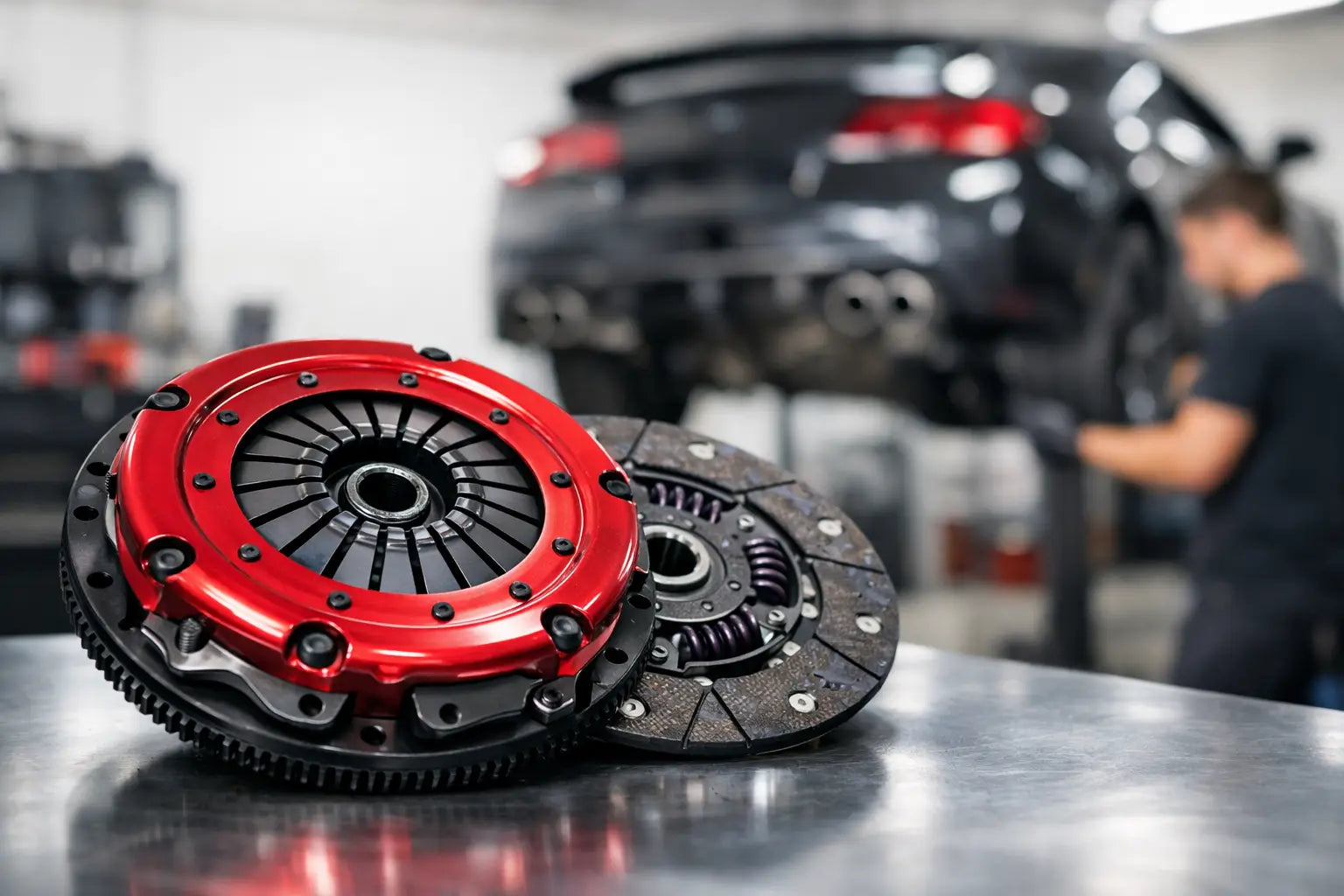
Ask any tuner who has added power without touching the drivetrain what failed first, and the clutch usually comes up early. More boost, a harder launch, sticky tyres, repeated track use - all of it asks more from the clutch than the factory setup was ever designed to handle. That is where performance clutch upgrade benefits become very real, very quickly.
A clutch is easy to ignore when the car still drives, but it sits right at the point where engine output turns into forward motion. If that connection is weak, the rest of your build never delivers properly. A better clutch is not about chasing a flashy mod for the parts list. It is about making sure the drivetrain can actually cope with how the car is used.
What performance clutch upgrade benefits actually mean
The biggest benefit is simple - more holding power. A performance clutch is built to cope with higher torque loads than a standard replacement clutch, which matters once you start tuning beyond factory margins. If your car has had a remap, bigger turbo, intake and exhaust work, or even just sees repeated hard use, the stock clutch can become the limiting factor.
That extra holding power usually comes from changes in friction material, clamp load and disc design. Depending on the setup, that can mean a more aggressive friction surface, a reinforced pressure plate, or a multi-plate arrangement for serious power levels. The result is less slip when the drivetrain is under load, especially in higher gears where weak clutches often show their limits first.
There is also a consistency benefit. A factory clutch can feel fine on the road but start fading once heat builds up. Track sessions, hill climbs and repeated launches expose that quickly. A well-matched performance setup manages heat better and maintains bite when the car is being used properly, not just when it is trundling through traffic.
Why a standard clutch starts to struggle
Manufacturers build OEM clutches around broad usability. That means smooth take-up, light pedal effort, low noise and predictable behaviour in everyday driving. For a standard car, that makes sense. For a modified one, especially a torque-heavy turbo car, it can become a compromise.
A tuned diesel, hot hatch or turbo petrol often makes its peak gains in mid-range torque. That is exactly where a stock clutch gets exposed. The engine pulls harder, the load rises sharply, and the clutch begins to slip under demand. Sometimes it is obvious. Revs flare in higher gears without matching acceleration. Other times it is more subtle - a vague engagement point, a burnt smell after hard use, or worsening bite as temperatures climb.
This is why performance clutch upgrade benefits are not reserved for extreme builds. Even modestly tuned road cars can reach the point where clutch capacity matters more than another small power increase.
Better power transfer changes how the car feels
One of the most underrated gains is how much cleaner the car feels once the clutch is no longer a weak link. When the clutch holds properly, throttle input translates more directly into movement. Gear changes feel more decisive. Hard acceleration feels cleaner because the drivetrain is not bleeding away torque through slip.
On a fast road or track car, that matters more than headline figures. You can have strong dyno numbers, but if the clutch cannot transfer that output reliably, the car never feels sorted. A proper upgrade often makes the whole setup feel tighter and more intentional.
That said, the exact feel depends heavily on the clutch type. Some are only slightly firmer than OEM and suit daily-driven builds well. Others have a more abrupt engagement and are clearly aimed at aggressive driving. There is no universal best option, only the right option for the car’s torque level and use case.
Heat resistance is a major part of the upgrade
Heat is what kills confidence in marginal clutch setups. A road pull is one thing. Repeated laps, standing starts or stop-start abuse are another. As temperature rises, the friction surface and pressure plate are forced to work much harder. Once the clutch gets too hot, engagement quality can drop off fast.
Performance clutches are generally designed with this in mind. Better friction materials and stronger pressure plate designs help the clutch maintain performance under repeated load. For track-day drivers and anyone who enjoys hard mountain-road driving, this is often one of the most valuable gains.
It also matters for heavier cars. A tuned fast saloon or estate can put a serious load through the drivetrain, especially with modern turbo torque. Even if the car is not a dedicated track build, extra thermal capacity can make the difference between a clutch that copes and one that gives up early.
The trade-off - more capability can mean less comfort
This is where honesty matters. Not every clutch upgrade makes the car nicer to drive every day. More clamp load often means a heavier pedal. More aggressive friction materials can make take-up sharper, especially in traffic. Some setups chatter more at idle or low speed, and lightweight flywheel pairings can add drivetrain noise that a standard car owner might hate.
That does not mean you should avoid upgrading. It means you should choose with a clear head. A daily-driven Golf GTI with a stage 1 or stage 2 tune usually needs a different answer from a stripped Civic used for sprint events. Going too aggressive creates its own problems, and a clutch that is miserable in normal use is not a smart buy just because the spec sheet looks impressive.
The sweet spot for most enthusiasts is a clutch that adds headroom without ruining drivability. If the car still sees commuting, weekend blasts and the occasional track day, that middle ground is often where the value is.
Flywheel choices matter as much as the clutch
A clutch upgrade is rarely just about the friction disc. The flywheel has a huge effect on how the car behaves. Some owners retain a dual-mass flywheel for smoother road manners, while others move to a single-mass setup for sharper response and improved durability under hard use.
Single-mass conversions can make the engine feel more eager, and they are often favoured on track-oriented builds. But they can also introduce more noise and vibration. On some platforms that is a perfectly acceptable trade. On others, especially refined road cars, it can make the car feel less polished than the owner expected.
This is why platform-specific choice matters. The right setup for a BMW diesel with a big torque tune is not automatically the right one for a high-revving Honda or a turbocharged RenaultSport. Brand quality, fitment accuracy and real-world use should drive the decision, not just advertised torque numbers.
When the upgrade is worth doing
The right time is usually before the stock clutch fails completely, not after. If you are planning more power and know the factory clutch is close to its limit, upgrading early avoids wasted labour and stops the build from stalling later. It also means you can choose a setup calmly instead of panic-buying when the car starts slipping.
A clutch upgrade makes the most sense when the car has clear signs of outgrowing standard hardware. That could be increased torque from tuning, repeated hard use, towing on a modified vehicle, drag-style launches, or a move into regular track work. It is also worth considering when the gearbox is already coming out for other work, because labour overlap can make the upgrade much more sensible financially.
If the car is standard, lightly used and nowhere near the torque limit of the OEM setup, then a performance clutch may be unnecessary. More expensive does not always mean better. Sometimes the best move is simply replacing tired factory parts with quality OEM-spec components.
Choosing the right setup for your build
The best clutch is the one that matches your actual use. That sounds obvious, but it is where plenty of builds go wrong. Too mild, and the clutch slips once the tune is finished. Too aggressive, and the car becomes tiring to drive on the road.
Think in terms of torque, intended use and how much compromise you will tolerate. A fast road setup should prioritise headroom and drivability. A dual-purpose car can lean further towards heat resistance and stronger bite. A dedicated competition build can accept harsher engagement because comfort is no longer part of the brief.
It is also worth buying from proven performance brands with proper fitment support. On drivetrain parts, quality control matters. So does knowing the kit is actually suited to your engine code, gearbox and power target. That is one area where specialist retailers such as Torque Lab make the process easier for builders who do not want to gamble on generic listings.
A clutch is not the glamorous part of a build, but it is one of the parts that decides whether the rest of the build works. If your car makes more torque than standard, sees repeated hard use or is heading towards serious fast-road or track duty, the benefits are practical rather than theoretical. Pick the setup that suits the car you really drive, not the one that sounds toughest on paper, and the whole package will feel better for it.