
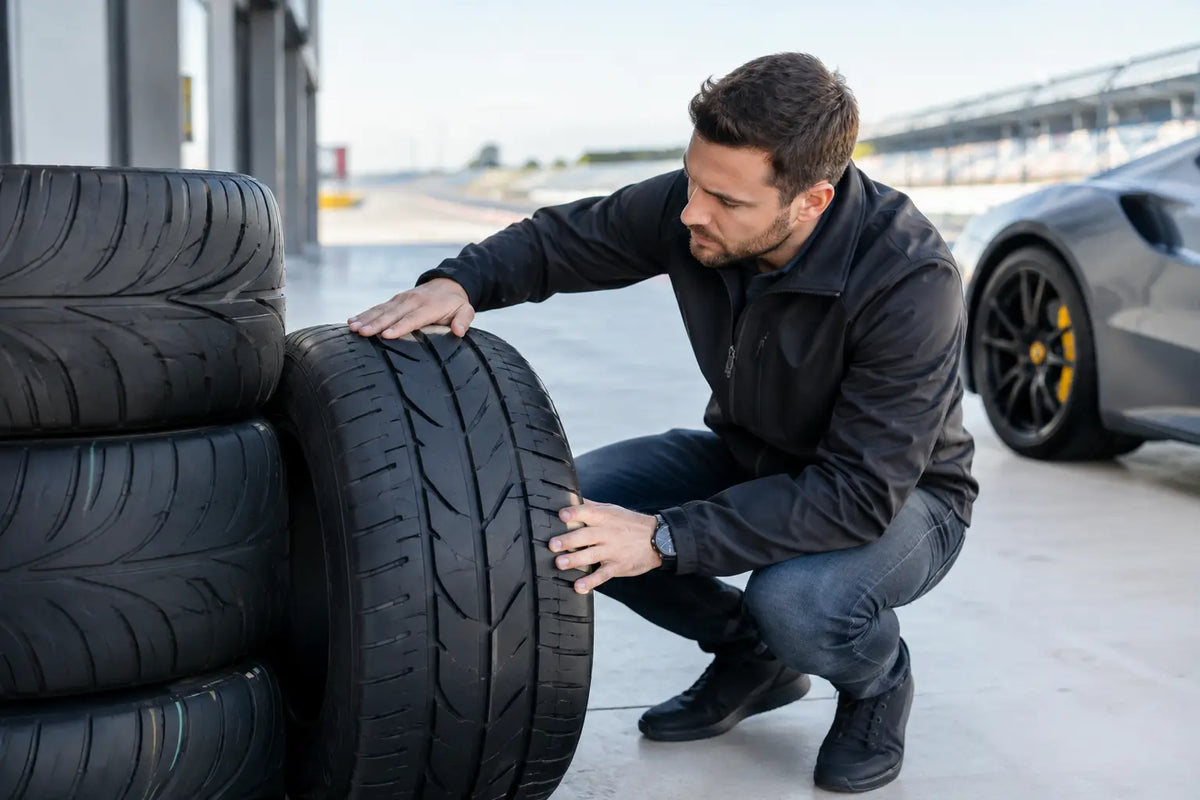
Track tyres can transform a car more dramatically than another modest power upgrade ever will. Fit the right set and your braking points move forward, turn-in sharpens and the car stops leaning on its outer shoulder halfway through a session. Fit the wrong set and you can spend a day chasing vague steering, overheating rubber and lap times that make no sense.
The key is not buying the most aggressive tyre on the shelf. It is matching the construction, compound and size to your car, circuit conditions and how you actually use it. A 300bhp front-wheel-drive hatch driven to track days needs something very different from a caged rear-wheel-drive build arriving on a trailer.
What makes track tyres different?
A track-focused tyre is designed to generate higher grip once it reaches working temperature, resist movement through the tread blocks and tolerate repeated heavy braking and cornering loads. Compared with a conventional road tyre, it usually has a stiffer carcass, larger shoulder blocks and far less tread void. That means more rubber stays in contact with the surface when the car is loaded up.
The trade-off is clear. Track-biased compounds can be noisier, less composed in standing water and quicker to wear on road miles. Some also need a proper warm-up lap before they feel consistent. A tyre that feels exceptional through a dry afternoon at Spa may be a poor choice for a cold, wet commute home.
For most track-day cars that still see road use, an extreme-performance road tyre or road-legal semi-slick is the sensible starting point. Full slicks belong on cars with the setup, support equipment and dry conditions to use them properly. They offer enormous potential, but only when temperatures, camber, pressures and driver commitment are all in the right window.
Choose track tyres around the car, not the marketing
Start with the vehicle’s layout, weight and current chassis specification. Heavy, front-driven cars put extraordinary demand through their front tyres under braking and traction. They tend to reward a durable compound, adequate front camber and a tyre that stays stable as temperatures climb. A lightweight MX-5 or GT86 may be happier on a softer option, but can still overheat it if the alignment is poor or the driver is sliding the car through every exit.
Power matters, but it is not the whole story. A well-driven 180bhp Clio on sticky tyres can punish its front outer shoulders far more consistently than a higher-powered car doing occasional laps. Consider vehicle weight, drivetrain, aero, brake package and your normal session length together.
Your existing suspension setup is just as relevant. More grip increases the loads passed into wheel bearings, bushes, dampers and brake components. If the car dives, rolls or runs out of camber, premium rubber will expose that weakness rather than hide it. There is little value in fitting a serious semi-slick if the outer edge is being destroyed because the front geometry is still set up for supermarket car parks.
Road-legal semi-slicks versus full slicks
Road-legal semi-slicks are the practical choice for the majority of enthusiasts. They provide fast warm-up, predictable breakaway and enough water clearance to manage a damp circuit with care. Their tread pattern also makes them suitable for driving to an event, although that does not make them ideal for heavy rain or winter temperatures.
Full slicks bring a larger contact patch and often a more direct, planted feel. They also demand more from the whole package. You will need to monitor temperatures and pressures closely, use tyre warmers where appropriate, and have a wet-weather plan. Many track-day organisers also restrict slick use, particularly where mixed-experience groups are involved.
Do not select a tyre solely because a faster driver runs it. Their car may be lighter, more aggressively aligned, trailered to every event and supported by data logging. Buy for your current setup, then move up once you are consistently using what you have.
Size, sidewall and wheel width matter
Going wider is not automatically faster. A wider tyre can offer more potential grip, but it can also add weight, alter steering response and create clearance problems at full lock or full compression. On lower-powered cars, an oversized tyre may take longer to reach temperature and feel dull on turn-in.
Stay close to proven fitments for your platform unless you understand the consequences of changing rolling radius. A major diameter change affects gearing, speedometer accuracy, ride height and, on modern cars, the calibration of ABS and stability systems. If you run staggered wheels, preserve a sensible front-to-rear rolling relationship.
Wheel width is equally important. Stretching a track tyre across an overly wide rim reduces sidewall support and can make breakaway harsher. Pinching it onto a narrow rim leaves the shoulders unsupported and encourages excessive tread movement. Manufacturer-approved rim ranges are useful, but the best answer is usually a fitment already proven on your chassis.
Compound choice is about temperature, not bravado
Every performance tyre has a working window. Too cold and it feels hard, vague and reluctant to bite. Too hot and it can go greasy, lose precision and wear rapidly. The correct compound depends on ambient temperature, track surface, car weight and session format.
A softer compound may deliver a strong first lap on a cool day, but it may not survive a 25-minute session in a heavy turbocharged saloon. A medium or endurance-focused compound can be the quicker tyre over a full day because it remains stable rather than falling away after a handful of laps.
Circuit surface changes the equation. Abrasive venues consume rubber quickly, while smoother circuits can make it harder to build enough temperature in a firm compound. If you regularly run both, a second wheel set is more useful than trying to make one tyre cover every condition.
Pressure is a setup tool, not a guess
Tyre pressures should be checked cold before the session and immediately after coming in. The number printed on a door sticker is for road use, fuel economy and general safety. It is not a track target.
Start with the tyre manufacturer’s guidance where available, then work from hot pressures and tyre behaviour. If the car starts precise but becomes vague after several laps, the pressure may be climbing too high. If the tyre rolls onto its shoulder, feels delayed on direction changes or shows heavy edge wear, the pressure may be too low, the camber may be insufficient, or both.
Do not make large changes blindly. Adjust in small increments, write down cold and hot readings, and note ambient conditions. A simple notebook is enough to spot patterns across a day. On a serious build, a probe pyrometer can show whether the inside, centre and outside of the tread are working evenly, which is valuable information for camber and pressure settings.
Read the wear before buying another set
The tyre tells you what the car needs. Feathering across the tread can point to excessive scrub or toe settings. Heavy outer-shoulder wear usually suggests insufficient negative camber, too much roll, or a driver leaning on the tyre for too long. A torn, overheated surface can indicate excessive sliding, pressure problems or a compound being pushed beyond its temperature range.
Avoid blaming the tyre first. A brake imbalance, tired damper or loose bush can create wear patterns no premium compound will cure. Track days are excellent diagnostic sessions when you inspect the car properly between runs.
Wet running changes the priorities
A damp circuit is not simply a dry circuit with less grip. Standing water demands tread depth and channels that can clear it. Semi-slicks with limited grooves can aquaplane surprisingly early, particularly through fast puddles or heavily cambered sections.
If rain is likely, take the tyre’s wet performance seriously. For a road-driven car, it may be worth choosing a slightly less extreme design that remains predictable when conditions turn. For dedicated track cars, a separate wet wheel set is the right answer. It saves your dry tyres, gives you confidence to keep driving and reduces the chance of ending the day in the barriers.
Build the package around the tyre
The fastest tyre choice is often part of a broader upgrade path: suitable brake pads and fluid, alignment that supports the contact patch, suspension that controls body movement and wheels strong enough for kerbs and repeated heat cycles. Torque Lab customers building track-ready Hondas, BMWs, VAG platforms and Japanese project cars should treat tyres as the final connection in that system, not an isolated purchase.
Check clearances before ordering, especially with coilovers, big brake kits and aggressive offsets. Confirm the load and speed rating, road legality where required, and whether the tyre will suit your intended weather conditions. Then give it a proper bedding-in session rather than setting a qualifying lap on the first cold corner.
A well-matched set of track tyres gives you clearer feedback, not just more grip. Use that feedback. Record the pressures, inspect the shoulders, adjust the setup with purpose and let the car tell you what it needs before spending money on the next modification.