
A hard-braking zone, a long loaded corner and sticky tyres can expose an oiling weakness long before an engine sounds unhappy. The wet sump versus dry sump question is not about choosing the most exotic hardware. It is about keeping a reliable supply of oil at the bearings when your car is being used harder than the factory expected.
For most tuned road cars, a properly controlled wet sump is the sensible answer. For serious circuit, endurance, hillclimb or competition builds, a dry sump can turn oil control from a calculated compromise into a proper motorsport system. The right choice comes down to grip, sustained G-load, engine layout, budget and how often the car genuinely sees competition use.
Wet sump versus dry sump: the core difference
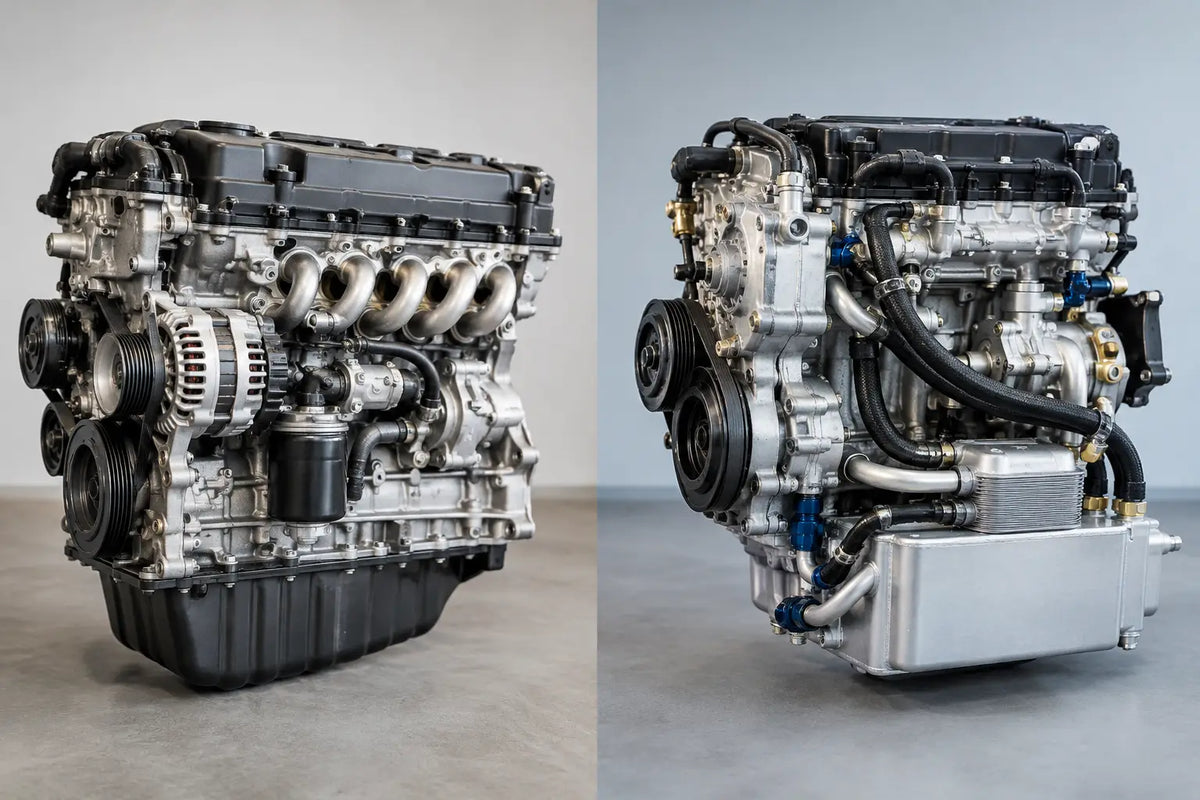
A wet-sump engine stores its oil in the sump pan beneath the crankshaft. A single pump normally draws oil through a pickup pipe, pressurises it and feeds the engine. Once it has done its job, oil drains back into the pan and the cycle repeats. It is compact, cheap to manufacture and fitted to the overwhelming majority of road cars for good reason.
A dry-sump system moves oil storage out of the engine. One or more scavenge pumps pull oil from a shallow pan and send it to a separate tank, where air can separate from the oil. A pressure stage then supplies filtered oil back to the engine. The crankcase is kept comparatively dry, despite the name.
That distinction matters when cornering force pushes oil away from a wet-sump pickup. If the pickup draws air, even briefly, oil pressure can drop. On a road car this may never happen. On a car with semi-slicks, uprated suspension and repeated track sessions, it can happen in precisely the places where you are carrying the most load and revs.
Why a wet sump remains the smart choice for many builds
A wet sump has fewer parts, fewer hoses, less weight outside the engine and far less installation work. It is also easier to service. Check the level on the dipstick, change the oil and filter, inspect the pan when required, and get on with driving. That makes it a strong fit for fast-road projects, occasional track-day cars and many club-level builds.
The key is not to confuse a standard wet sump with a well-prepared one. A quality baffled sump controls oil movement around the pickup using trap doors, plates and shaped internal sections. An extended-capacity pan can add useful reserve volume, while a windage tray helps separate the spinning crank assembly from oil returning to the pan. An accumulator can provide a short pressurised oil reserve during a momentary pressure drop.
For plenty of popular platforms, these upgrades are the right first step before considering a dry sump. They address the actual risk without forcing a major redesign of the engine bay. If your car sees a handful of sessions each year on road tyres or moderate-track compounds, a baffled pan, correct oil grade, healthy pump and a reliable pressure gauge may offer all the protection you need.
That said, baffling has limits. It slows and manages oil movement, but it cannot create oil where prolonged cornering has moved it away from the pickup. If tyres, aero and driving pace keep increasing, the wet sump eventually becomes the restriction.
What can make a wet sump fail on circuit?
Oil surge is usually the headline concern, but it is not the only one. Low oil level, excessive oil temperature, poor drain-back from the cylinder head and aeration can all reduce effective lubrication. Braking and acceleration matter too, especially in cars with a long engine orientation or circuits with steep elevation changes.
The dangerous part is that a dash warning can arrive after the critical moment. Bearing damage may begin in a fraction of the time it takes to glance down, lift off and react. Logging oil pressure against RPM, throttle position and lateral G is invaluable on any serious track car because it replaces guesswork with evidence.
Where a dry sump earns its cost
A dry sump is designed for conditions in which oil control cannot be left to a pan and pickup alone. Multiple scavenge stages can collect oil from different areas of the engine, so sustained lateral and longitudinal load is far less likely to starve the pressure stage. The external tank also gives the oil time and volume to de-aerate before it returns to the engine.
That stability is the biggest benefit. A dry-sumped engine can endure high-G braking, kerb strikes, fast direction changes and long corners with a far greater margin of safety. This is why the system is common in race cars where a single oil-pressure event can write off an expensive engine and ruin an entire weekend.
There are useful secondary gains. Because the pan can be much shallower, the engine may sit lower in the chassis. That can improve bonnet clearance and lower the centre of gravity, although the result depends entirely on the platform. Better crankcase control may also reduce windage losses at high RPM. These are worthwhile performance details, but reliable lubrication is the reason to buy the system.
A dry sump also makes sense where packaging forces the issue. An engine swap with a low ride height, a race chassis with limited clearance beneath the engine, or an application using major aero can all make a shallow pan extremely valuable.
The hardware is only as good as the installation
Dry-sump conversions are not bolt-on magic. They require an appropriate pan, external pump, mounting bracket, drive arrangement, tank, lines, fittings, filter solution and often a thermostat and oil cooler strategy. Every hose route needs heat protection, clearance and secure mounting. Every fitting needs to be compatible with the oil, pressure and temperature involved.
Tank placement matters as much as component choice. It must be mounted securely, positioned to feed the pressure stage correctly and installed with practical access for checking and changing oil. Poor hose routing, an undersized tank or a badly controlled breather system can undermine a premium conversion quickly.
The system also adds service discipline. Oil level is checked with the engine at the specified operating condition, not by treating it like a conventional dipstick setup. Overfilling can be as troublesome as underfilling, causing aeration, excess tank venting or messy catch-tank behaviour.
Cost, complexity and real-world trade-offs
The price gap between a baffled wet sump and a complete dry-sump installation is substantial. The parts are only part of it. Fabrication, mounting, plumbing, heat management and calibration time can turn a dry sump into a major line item in the build budget.
There is also more to inspect. Belts, pulleys, pump drive alignment, hoses and fittings need routine attention. A dry-sump car is not inherently unreliable, but it rewards race-car standards of installation and maintenance. That is a good trade if the car is built for competition. It is needless complication if it spends most weekends commuting or parked at a meet.
For a road-registered performance car, think about the whole package rather than chasing a single impressive component. Before moving to a dry sump, establish whether the engine has a known surge issue, whether your tyre and suspension setup can trigger it, and whether data logs show pressure instability. Spending the difference on brake cooling, tyres, seat time and proper instrumentation may make a faster, safer track-day car.
Choosing the right oiling system for your build
Start with the car's real job. A lightly modified hot hatch, turbo BMW or weekend Honda that attends occasional track days will often thrive with a baffled sump and careful oil management. Keep the oil level correct, use a proven specification, warm the engine properly and monitor pressure rather than relying on a warning lamp.
If you run slicks or aggressive semi-slicks, sustained high-speed corners, significant aero and regular competitive mileage, assess dry sump options early. The faster the car becomes, the more expensive an oiling failure becomes. This is especially true for engines with a documented history of pickup starvation or poor factory pan control.
Fitment should drive the purchase. Confirm the exact engine code, subframe arrangement, exhaust routing, accessory layout and intended oil-cooler configuration before ordering. A motorsport oil system is a package, not a collection of individual upgrades. Torque Lab’s platform-focused performance catalogue helps narrow the search, but a builder should still verify every component against the finished specification.
Do not choose a dry sump because it looks serious in the paddock. Choose it when your grip level, usage and engine value demand dependable oil control beyond what a prepared wet sump can provide. Build around the car you will actually drive, then give its oiling system enough margin to let you push harder with confidence.