
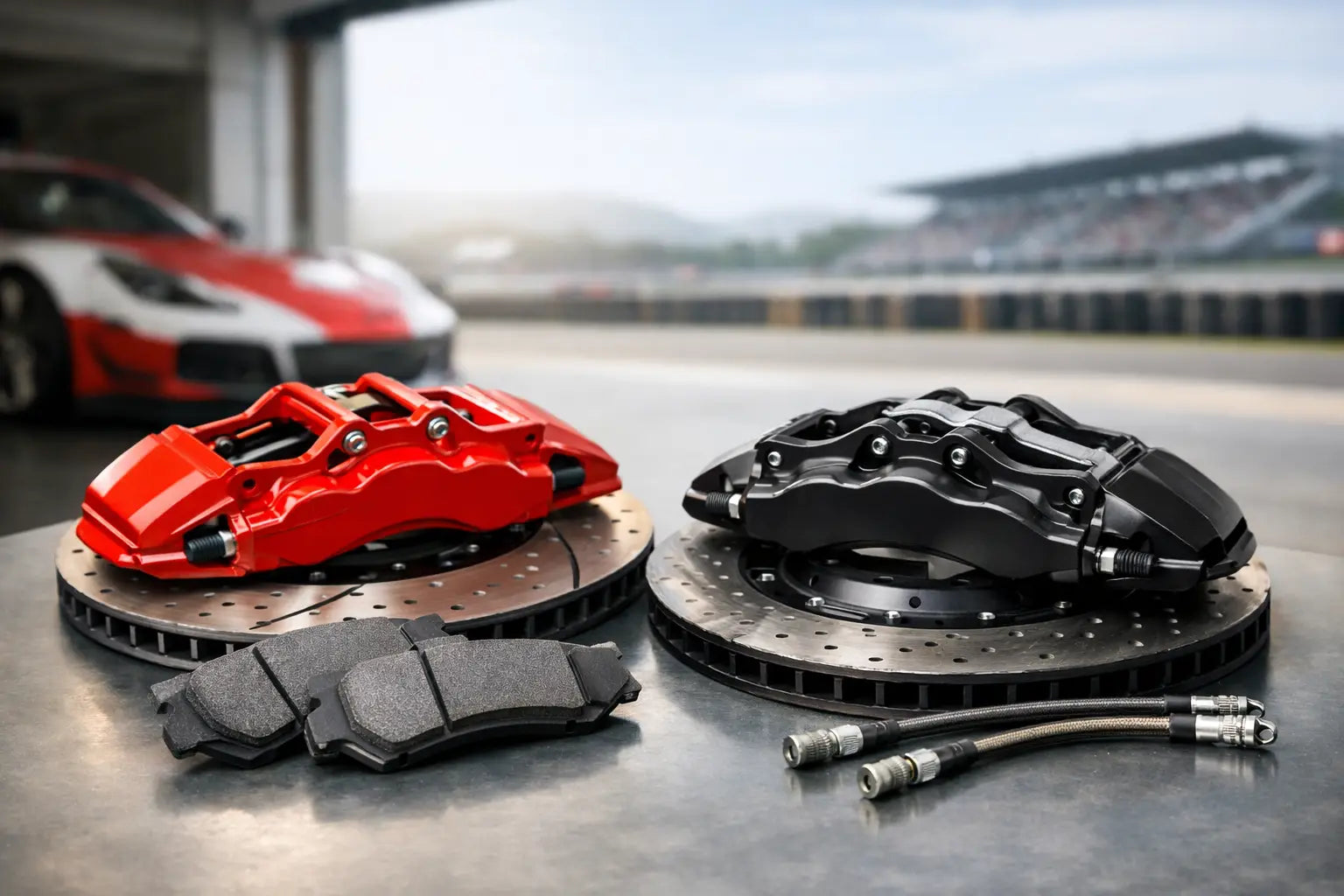
A caliper upgrade can transform pedal confidence at the end of a fast straight, but only when it is matched to the rest of the system. This aftermarket brake caliper buying guide cuts through the big-piston marketing and focuses on the details that decide whether your build gains repeatable stopping power or simply gains an expensive fitment problem.
A brake caliper is not a standalone performance part. Rotor diameter and thickness, pad compound, brake fluid, master cylinder sizing, wheel clearance and front-to-rear balance all matter. Buy the right kit for the job and it is one of the most worthwhile upgrades on a road-and-track car. Buy on piston count alone and you can make the pedal feel worse, upset ABS behaviour or find your favourite wheels no longer fit.
Start With the Job Your Car Actually Does
The first question is not whether a six-pot caliper looks better than a four-pot. It is where the car is being pushed hard enough to expose the limits of the factory brakes.
For a fast road car, the aim is usually firmer, more consistent pedal feel, improved resistance to fade on spirited runs and access to better pad compounds. A quality four-pot kit with the correct rotor and bracket arrangement can be more than enough. Larger calipers and discs add heat capacity, but they also add cost, wheel-clearance restrictions and sometimes unsprung mass.
For track days, heat management becomes the priority. Repeated stops from high speed put far more energy into the system than road driving. You need a caliper that retains stiffness at temperature, a disc with sufficient thermal mass, pads suited to sustained heat and fluid with a high dry boiling point. Cooling ducts often make a bigger difference than moving from one respected caliper brand to another.
Competition use demands a more deliberate approach. Consider serviceability, pad-change speed, availability of spares and whether the brake bias can be tuned around tyre, aero and suspension changes. Motorsport calipers are built for this environment, but their seals, noise levels and maintenance requirements may be less friendly for a daily-driven car.
Fitment Comes Before Piston Count
A vehicle-specific big brake kit is usually the cleanest route because its mounting bracket, disc offset, hardware and hydraulic sizing have been engineered around a particular platform. That does not mean every kit fits every version of the same model. Factory brake options, hub sizes, electronic parking brake arrangements, wheel designs and even production-year changes can alter compatibility.
Check your exact make, model, year, engine and axle before ordering. Then check the wheel template supplied for the kit against the inside face of your actual wheel. Diameter is only one part of the equation. A 19-inch wheel can still foul a caliper if its spoke profile has little barrel clearance, while some 18-inch motorsport-style wheels clear a surprisingly large setup.
Also account for wheel spacers. A spacer may create spoke clearance, but it changes scrub radius and adds another component that must be correctly centred and torqued. It is a solution in some builds, not an automatic fix for a poorly planned brake package.
Do not confuse caliper size with braking power
More pistons do not automatically mean more stopping force. At a basic level, braking torque depends on hydraulic pressure, total piston area, effective disc radius and pad friction. A poorly matched caliper with excessive piston area can increase pedal travel or alter the hydraulic relationship with the master cylinder. It may feel different without being better.
Piston count is useful because several smaller pistons can spread pressure more evenly across a long pad. This supports larger pad shapes and can reduce uneven wear. A well-designed four-pot caliper, however, is often a better choice than a generic six-pot unit with uncertain seals, poor machining and no properly matched disc package.
Choose the Caliper Design Around Heat, Weight and Use
Fixed calipers use opposed pistons on both sides of the disc. They are typically stiffer than sliding factory calipers, which helps create a cleaner pedal response and more consistent pad contact. They are the normal choice for performance brake kits.
Monobloc calipers are machined from a single piece of aluminium, reducing flex and often weight. Two-piece forged calipers can also deliver excellent rigidity while allowing designs that suit specific pad shapes, dust seals and mounting positions. The difference between a quality monobloc and a quality two-piece design is less important than the whole kit's engineering, intended use and support behind it.
Dust seals deserve attention. A road car sees salt, rain and grime, particularly through a British winter. Calipers with proper external dust boots are generally the sensible choice for a daily-driven performance car. Race-oriented calipers may use high-temperature seals or omit dust protection for lower friction and easier servicing. They work brilliantly on circuit, but need more frequent inspection when exposed to road conditions.
Caliper material matters too. Aluminium reduces unsprung weight compared with a heavy cast-iron unit, helping the suspension follow the road surface. But the gain only counts if the disc and mounting hardware do not add excessive mass. Compare the complete corner weight, not the caliper listing in isolation.
The Disc and Pad Are Half the Upgrade
A performance caliper deserves a disc designed to work with it. Larger disc diameter increases leverage, while greater thickness adds thermal capacity. Two-piece floating discs can reduce weight at the hub and manage expansion more effectively under extreme temperatures. They also let you replace the friction ring rather than the entire assembly when worn, although replacement rings are a cost to plan for.
Grooved discs are a proven choice for mixed road and track use. They help clear pad gases and debris while offering a useful visual wear indicator. Drilled discs can work well on properly engineered OEM-style systems, but cheap drilled rotors are a weak point under repeated high-heat use. Cracks around holes are not a badge of honour. They are a sign to inspect closely and replace components before failure.
Pad choice changes the character of the system as much as the caliper itself. A fast-road pad may offer good cold bite and manageable noise, but fade during longer sessions. A track compound will tolerate higher temperatures and sharpen initial response, yet can squeal, create more dust and feel less assured on a cold morning. Pick the compound for the temperature range and driving style you actually use.
For any serious upgrade, make sure replacement pads are readily available in several compounds. A caliper using a common motorsport pad shape gives you far more flexibility as the car evolves.
Protect Brake Balance and Pedal Feel
The front brakes do most of the work under heavy deceleration, but upgrading only the front axle is not always harmless. A front kit can be correctly engineered for the factory rear system, or it can shift the balance too far forward if caliper piston area and disc radius are not considered. Too much front bias can trigger earlier front lock-up and leave rear grip underused. Too much rear bias makes the car unstable under threshold braking.
ABS adds another layer. Modern systems can adapt within limits, but they cannot correct a fundamentally mismatched hydraulic setup. This is why platform-specific brake kits from recognised performance manufacturers are worth the investment. Their brackets may look simple, but their piston sizing and disc offset are where the engineering lives.
Pedal feel is also affected by hoses, fluid and bleeding. Braided lines can improve consistency where old rubber hoses expand, but they will not fix a soft pedal caused by boiled fluid or trapped air. Fresh, high-quality fluid is essential before a track event, and regular fluid changes are part of owning a hard-used brake setup.
What to Check Before You Buy
Before committing to a caliper kit, confirm these practical details:
- Exact vehicle and axle compatibility, including factory brake package and electronic parking brake requirements.
- Wheel diameter, spoke-profile clearance and whether a template has been checked on your wheels.
- Disc size, thickness, construction and the future cost of replacement rings or rotors.
- Available pad compounds, replacement seals, bleed screws and rebuild support.
- Whether the kit is designed to retain sensible brake bias with your standard rear brakes and master cylinder.
Budget for the System, Not Just the Calipers
The lowest-priced caliper option often becomes the most expensive route once you add custom brackets, discs, pads, lines and repeated replacement parts. Proven brands cost more because they bring vehicle testing, machining quality, pad support and spare-part availability. On a component that deals with repeated high-energy stops, that support is not a luxury.
Spend where it improves reliability. Choose a kit with a documented fitment, use suitable fluid and pads, fit it correctly, then bed the pads and discs in exactly as specified. If your current brakes only fade after a few hard laps, better pads, fluid and cooling may be the sharper first move. If the disc is overheating, cracking or running out of thermal capacity, a properly engineered caliper-and-disc package is the next step.
Your best brake upgrade is the one that matches your car, tyres and driving plan without compromising daily use or serviceability. Build the system with the same care you put into power and suspension, and the first heavy braking zone at your next track day will tell you why.