
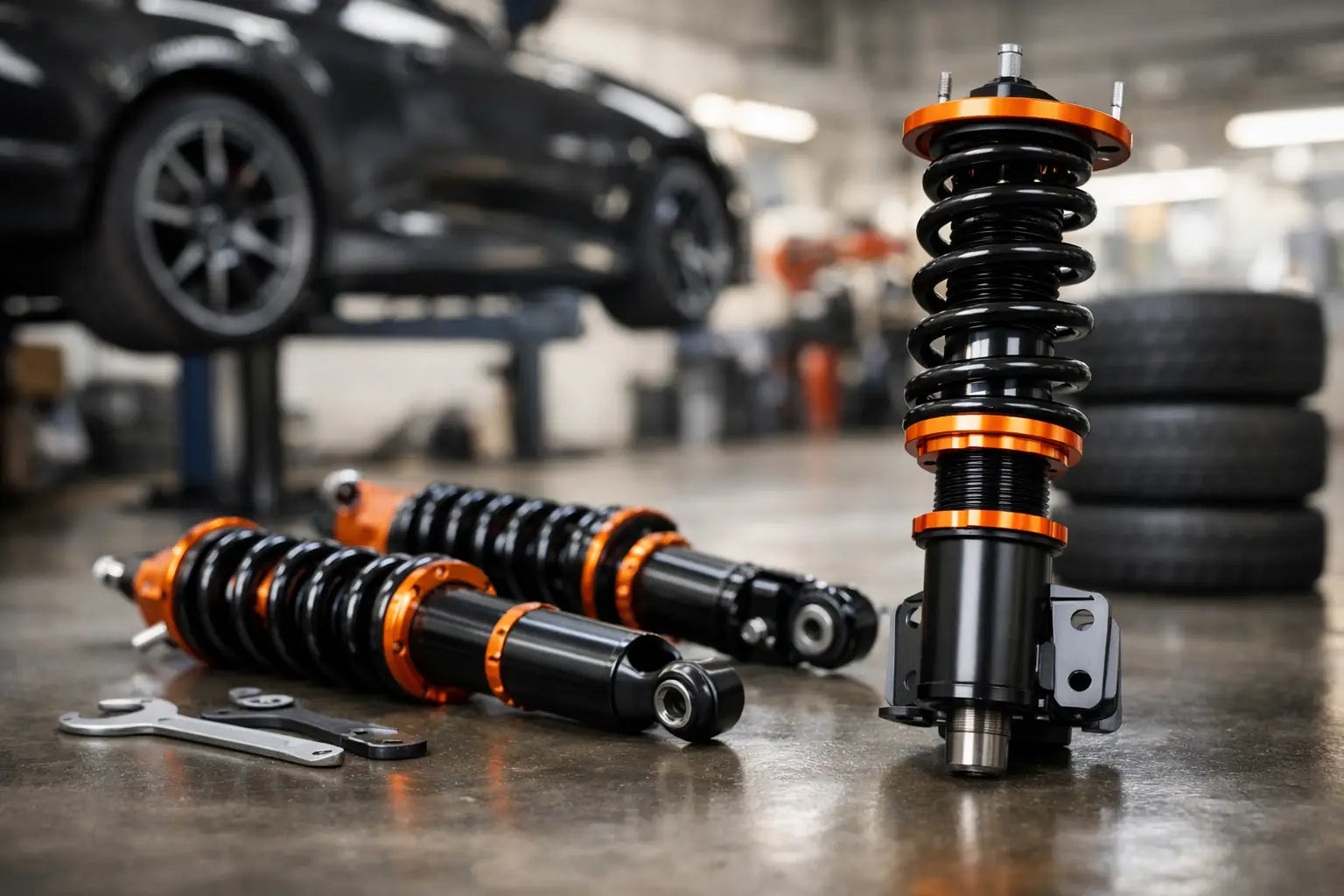
A car on the right suspension tells on itself within the first few corners. Turn-in sharpens, weight transfer settles down, and the chassis starts working with you instead of arguing back. That is why aftermarket coilovers sit near the top of the list for enthusiasts chasing real handling gains, a cleaner stance, or a more focused road and track setup.
The catch is that coilovers are also one of the easiest upgrades to get wrong. Buy on price alone and you can end up with a car that crashes over broken tarmac, runs out of travel, or feels nervous where the standard setup used to be predictable. Buy the right kit, with the right spring rates and damping philosophy for the platform, and the difference is huge.
What aftermarket coilovers actually change
At a basic level, coilovers combine a shock absorber and coil spring into one assembly, usually with threaded height adjustment and, depending on the kit, damping adjustment as well. That sounds straightforward, but the real value is in how much control they give you over the car’s balance.
Ride height is the obvious part. Lowering the car can reduce body roll, improve response, and tighten up the look. But height is only one piece of it. Good aftermarket coilovers also change spring rate, damper valving, and often the overall range of adjustment available. On many platforms, that means you can move beyond the compromise baked into the factory setup.
For a daily-driven hot hatch, that might mean less float and better front-end bite without making the car miserable on rough roads. For a track-biased BMW or Honda build, it can mean more support under braking, more consistency through long corners, and the ability to fine-tune the chassis around tyre choice and alignment.
Not all aftermarket coilovers are built for the same job
This is where plenty of buyers get caught out. Two kits might both be described as performance coilovers, but one is designed for fast road use and the other is aimed at aggressive lowering or track work. The price gap is not just branding. It usually reflects differences in damper quality, internal design, corrosion resistance, and how well the spring and damping package has been matched.
A decent entry-level kit often gives you ride height adjustment and fixed or limited damping adjustment. For many road cars, that is enough. If the valving is well sorted, you get a meaningful step up over tired OE suspension without spending money on adjustability you will never use.
Move up the range and you typically see better damper control, wider adjustment windows, camber-adjustable top mounts on some applications, and hardware that is more likely to survive years of British weather. That matters more than people like to admit. A cheap threaded body that seizes after one winter is not a bargain.
Then there are track-focused kits. These can be excellent, but only if the rest of the car and the use case support them. Stiffer is not automatically faster on the road. On poor surfaces, an over-sprung setup can reduce grip because the tyre spends less time properly loaded against the tarmac.
Road setup versus track setup
If your car spends 90 per cent of its life on B-roads, commuting, and weekend blasts, chasing a full race-style setup rarely makes sense. You want compliance, usable travel, and damping that controls the spring without feeling harsh.
If you are building for track days, time attack, or repeated hard use, the priorities change. Heat management in the dampers, body control at higher speed, and alignment flexibility become more important. That is when stronger top mounts, better monotube dampers, and more serious spring options start earning their keep.
The settings matter as much as the kit
A strong coilover kit badly adjusted will still drive badly. That sounds obvious, yet many issues blamed on the product are really setup problems.
Ride height is the classic example. Wind the car too low and you reduce bump travel, alter suspension geometry, and increase the chance of bottoming out. The result can be worse grip, twitchier responses, and tyre wear that makes no sense until you look at the geometry. Lower does not always mean better.
Damping adjustment gets misunderstood too. People often treat it like a hardness dial. In reality, it controls how the suspension reacts to movement. Too soft and the car can feel loose or underdamped. Too stiff and it skates over uneven surfaces instead of settling into them. The best starting point is always the manufacturer’s baseline, followed by small changes based on what the car is actually doing.
Alignment ties the whole thing together. Fit aftermarket coilovers and skip a proper geometry setup, and you are leaving performance on the table. Camber, toe and caster, where adjustable, all influence how the car turns in, brakes, and uses the tyre contact patch. On some platforms, that alignment work matters as much as the suspension itself.
What to look for before you buy
The smart way to shop coilovers is to start with the car’s real job, not the fantasy version of it. Be honest about whether the build is a daily, a fast-road car, a show-and-go setup, or something that sees regular circuit time.
From there, brand reputation matters. Not because a badge alone guarantees quality, but because established suspension manufacturers tend to have better platform development, more consistent quality control, and clearer support around spring rates, top mounts and rebuild options. In a catalogue full of fitments, that kind of confidence is worth paying for.
Material quality matters too. In the UK and across Europe, road salt and wet weather can turn poor hardware into a maintenance headache. Look for finishes and construction that can handle real-world use, especially if the car is not a summer-only toy.
It is also worth checking what is included. Some kits come with top mounts, some reuse OE mounts, and some offer camber adjustment only on certain axle layouts. The details vary by chassis, so platform-specific fitment is everything.
Spring rates and daily drivability
Spring rate is one of the biggest factors in how a coilover kit feels. Higher rates can sharpen response and reduce roll, but they also demand damper control and enough tyre sidewall and travel to keep the car usable.
That is why the best road kits are not always the stiffest. A well-matched moderate spring rate with quality damping often feels faster and more confidence-inspiring than an aggressive setup that only works on perfect surfaces. If your local roads are uneven, patched and bumpy, that trade-off matters every single drive.
Common mistakes with aftermarket coilovers
One mistake is buying purely for ride height. If the goal is only to get the arches sitting over the wheels, there are cheaper ways to spoil how a car drives. A proper coilover choice should improve the whole package, not just the photos.
Another is ignoring supporting mods. Depending on the platform, uprated drop links, fresh top mounts, adjustable arms, or a better alignment solution may be needed to get the most from the suspension. Fitting coilovers to a car with worn bushes and tired tyres is like fitting sticky pads to warped discs - you are not addressing the whole system.
The third mistake is expecting one setup to do everything perfectly. There is always compromise. A road-friendly setup that deals well with potholes will not feel identical to a dedicated circuit car. A very low street setup may look spot on but give away travel and geometry. Knowing where you are willing to compromise is part of building a car properly.
Are aftermarket coilovers worth it?
For the right owner, absolutely. They are one of the few mods that can change how the car feels every time you drive it, whether that means more confidence on a fast road, a better stance on your chosen wheels, or more control under real performance use.
But they are only worth it when the kit matches the platform and the intended use. That is why fitment-led shopping matters. A coilover setup that works brilliantly on one chassis may feel completely wrong on another, even if the headline features look similar. Choosing from proven brands with proper application coverage saves time, money and frustration.
If you are weighing up options, think beyond the drop figure and the marketing claims. Focus on damping quality, corrosion resistance, adjustment that you will actually use, and whether the setup suits your roads, tyres and goals. That is where the good builds separate themselves from the ones that are all compromise and no payoff.
Get that right, and aftermarket coilovers stop being just another suspension mod. They become the part that makes the whole car feel switched on.