
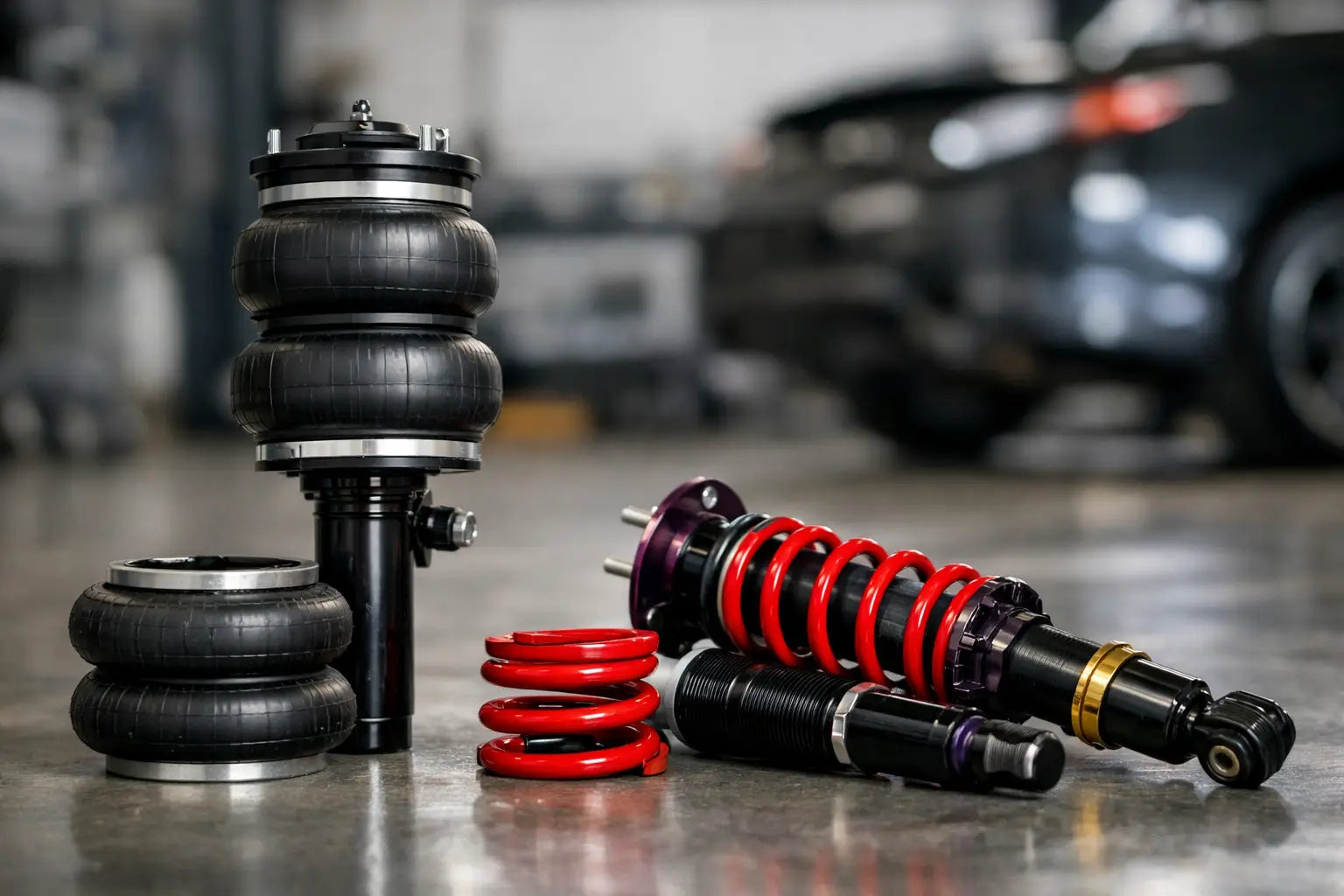
You can spot the wrong suspension choice almost instantly. It is the show car that rides like a shopping trolley, or the track build carrying unnecessary weight and complexity for no lap-time gain. Air suspension vs coilovers is not just a styling debate - it is a proper setup decision that affects handling, ride quality, reliability, adjustability and how you actually use the car.
If you are building with a clear goal, the choice gets easier. If you are chasing stance, daily comfort and on-demand height adjustment, air has a serious case. If you want direct response, mechanical simplicity and proven track performance, coilovers are usually the smarter move. The trick is being honest about the car’s job.
Air suspension vs coilovers: the real difference
At a basic level, coilovers use a coil spring wrapped around a damper, with ride height and often damping adjustment built into one compact unit. Air suspension replaces the conventional spring with an air bag, using pressure to support the vehicle and alter ride height.
That difference changes everything. Coilovers are fundamentally mechanical. Air suspension is a system. It needs bags, lines, fittings, a compressor, a tank, management and electrical control. That does not make it bad. It just means there are more moving parts, more installation variables and more places where quality matters.
For many enthusiasts, this is where the conversation gets muddled. People compare a premium air kit to a budget coilover set and then declare a winner. That is not a fair test. High-end examples of both can perform well. Cheap examples of both can be miserable. The right comparison is good air suspension versus good coilovers, fitted properly, on the right platform.
Where coilovers make the most sense
Coilovers remain the default choice for performance builds because they are straightforward, effective and well understood. If your priority is sharper turn-in, better body control and predictable feedback, a quality coilover package is hard to beat.
That is especially true for track days, fast road driving and grassroots motorsport. A coilover setup gives you a direct mechanical connection between chassis, spring and damper. There is less complexity to tune around, and setup changes are usually more repeatable. If you are corner-weighting a car, adjusting preload, choosing spring rates or fine-tuning damping, coilovers fit naturally into that process.
They also tend to be lighter than a full air setup once you account for compressors, tanks and plumbing. On some builds that matters more than people think. Extra weight is one thing. Extra weight in the wrong place is another.
Cost is another big factor. A decent set of coilovers can deliver a massive improvement over tired OEM suspension without pushing the budget into silly territory. You still need to buy wisely, because bargain-bin suspension usually rides badly and wears quickly, but the entry point for a capable coilover setup is generally lower than a quality air system.
Where air suspension earns its place
Air suspension gets written off by some performance purists far too quickly. Modern systems are much better than the old stereotype suggests. A well-specced setup can offer impressive ride quality, useful handling and proper convenience, especially for cars that need to do more than one job.
The obvious advantage is height adjustability. You can run low for looks, raise the car for ramps, speed bumps or rough roads, then drop it again when parked. If your car sees real street use and you are tired of scraping splitters, undertrays and exhausts, that convenience is not a gimmick. It is practical.
Air also suits builds where aesthetics matter just as much as performance. If wheel fitment is aggressive and the goal is a clean parked stance without living with constant road clearance issues, air suspension solves a problem coilovers cannot. A coilover can set one height. Air can give you options.
For daily-driven premium builds, there is another appeal. A good air kit can deliver a supple ride while still keeping the car composed. It will not magically defy physics, and it still depends heavily on damper quality and system calibration, but the comfort side of the equation is often stronger than many expect.
Handling and performance: what changes on the road and track
This is the part enthusiasts care about most, and rightly so. In pure handling terms, coilovers still have the edge for most serious performance applications. They are simpler to tune, easier to trust at the limit and better suited to repeated hard use.
That does not mean air suspension cannot handle. It can. But there is usually more compromise involved. Spring behaviour in an air bag is not the same as a conventional coil spring, and as pressure changes, the effective spring characteristics can change too. On the road, that can be fine. On track, where consistency matters corner after corner, coilovers generally feel more precise and predictable.
If you are building a Nürburgring toy, sprint car or dedicated track-day machine, the answer is usually coilovers unless there is a very specific reason to go another route. If the car is mainly for meets, weekends and fast-road driving with a strong visual focus, air starts to make more sense.
For mixed-use builds, it depends how much compromise you can live with. Plenty of owners want one car that looks right, drives well and survives British roads without drama. That is where the decision gets interesting.
Ride quality, daily use and real-world roads
British roads are not exactly kind to lowered cars. Expansion joints, potholes, awkward cambers and tired tarmac punish bad suspension fast. That is why this debate is not only about lap times or parked photos.
A quality coilover kit can ride very well, but it needs to be matched properly to the car. Spring rates that are too stiff, poor damper valving or excessive lowering will ruin both comfort and grip. Lower is not automatically better. A smart coilover setup often sits a bit higher than the internet expects and works much better because of it.
Air suspension has a natural advantage if your route includes poor surfaces or awkward access. Being able to raise the car when needed is genuinely useful. For a daily driver that sees city streets, multistorey car parks and uneven B-roads, that flexibility can remove a lot of hassle.
Still, air is not automatically more comfortable. A cheap or badly installed setup can feel vague, bouncy or inconsistent. As with coilovers, quality decides everything.
Cost, maintenance and long-term ownership
If budget is a major factor, coilovers usually win. The upfront spend is lower, installation is less involved and ongoing maintenance is generally simpler. There are still wear items to consider - top mounts, dampers, bushings and adjustment collars all need attention over time - but the system itself is easier to live with.
Air suspension asks for more commitment. The purchase price is higher, fitting is more complex and there are more components that can fail or need troubleshooting. Airlines can leak, fittings can loosen, compressors can wear and electrical gremlins can creep in if the install is rushed.
That sounds harsh, but it is the honest version. A properly installed premium air setup can be reliable. A poorly installed one can become a constant irritation. If you go air, buying quality parts and fitting them properly is non-negotiable.
This is also where platform support matters. Some cars have excellent aftermarket options with proven fitment and support from respected brands. Others have fewer choices, which can make a coilover setup the safer buy.
Air suspension vs coilovers: which one should you buy?
Start with the use case, not the trend. If the car is track-focused, if you value steering feel and consistency, or if you simply want the best performance return for the money, coilovers are usually the right answer. They are lighter on complexity and stronger on driver feedback.
If the car is a street build where stance, versatility and clearance matter every week, air suspension has real advantages. It suits people who want a low visual finish without turning every speed bump into a tactical exercise.
There is also the middle ground. Some owners buy coilovers because the forums told them to, then get fed up with scraping everywhere. Others buy air for the look and later realise they wanted a more focused chassis than a show-oriented setup can deliver. Neither choice is wrong. The mismatch between parts and purpose is the problem.
For many enthusiasts, the cleanest decision looks like this: coilovers for performance first, air for versatility first. That is not a hard law, but it is a useful filter.
When you are choosing between the two, think beyond the first week after fitting. Think about the roads you drive, the events you attend, the pace you enjoy and how much maintenance you are willing to tolerate. The best suspension setup is not the one that wins an argument online. It is the one that makes you want to drive the car more.