
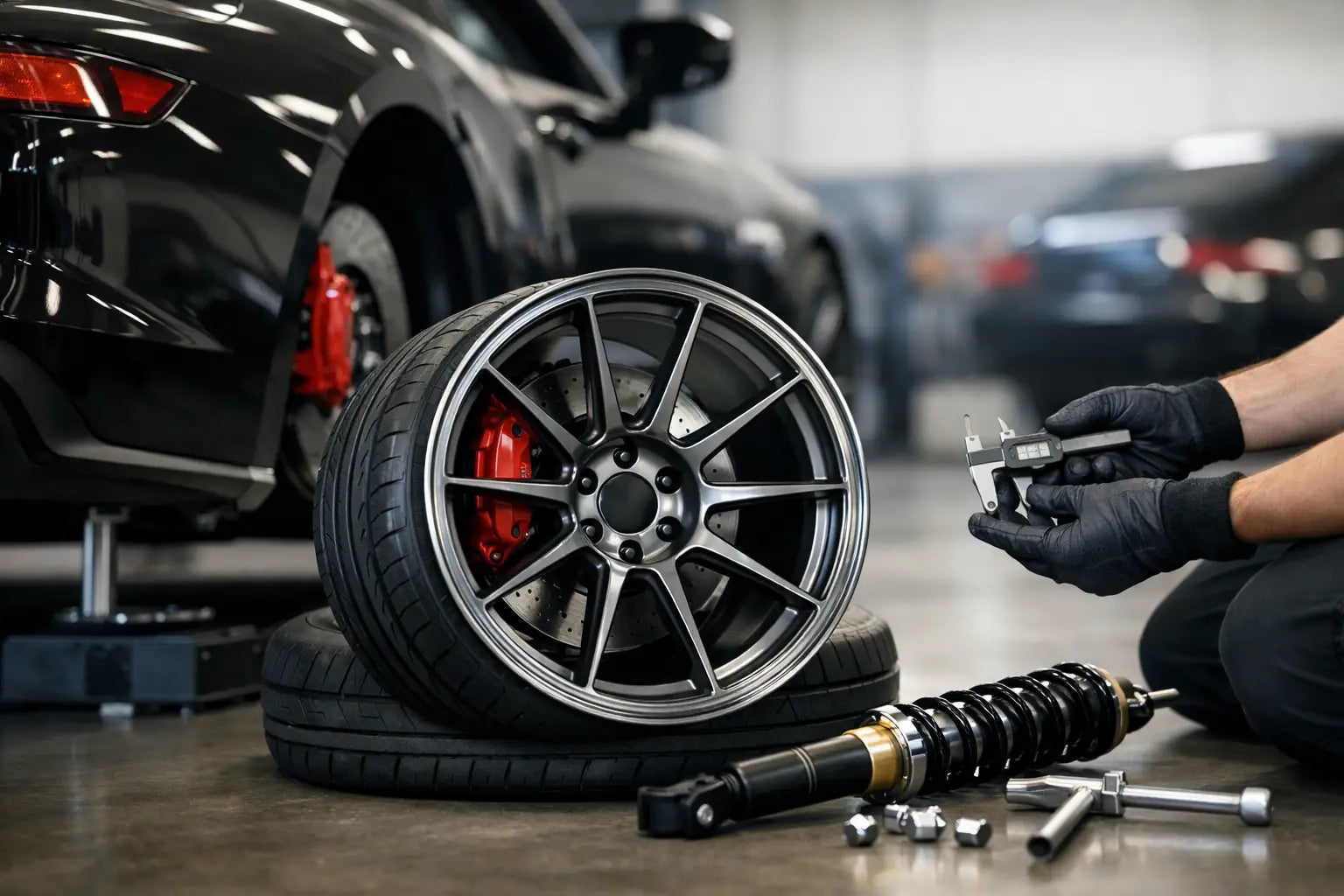
One bad wheel spec can turn an otherwise sorted build into a rubbing, tramlining, arch-chewing headache. A proper performance wheel fitment guide is not about chasing the most aggressive numbers on a forum screenshot. It is about getting the stance, grip, steering response and brake clearance you actually want, without creating problems you will have to fix later.
For a road car with fast-road intent, the right fitment usually feels sharper and more planted without becoming tiring to live with. For a track build, priorities shift towards tyre support, heat management, brake clearance and consistency under load. Same car, different target, different answer. That is why wheel fitment always starts with how you use the car.
What wheel fitment really means
Wheel fitment is the relationship between the wheel, tyre, suspension, brakes, arches and hub. Diameter, width, offset, centre bore and bolt pattern all matter, but they do not matter equally on every platform.
Two wheels can both physically bolt on and still produce very different results. One may clear the strut by a few millimetres but sit too far inboard for the tyre you want. Another may fill the arch perfectly yet clip the front liner on compression. That is the difference between basic compatibility and proper fitment.
If you are building for performance, the goal is simple. You want enough width for the tyre to work properly, enough brake clearance for your setup, enough inner clearance to avoid suspension contact, and an offset that places the wheel where the chassis can use it.
Performance wheel fitment guide - the specs that matter
Diameter
Larger diameter wheels can improve brake clearance and change the car’s look, but bigger is not automatically better. As wheel diameter increases, tyre sidewall usually decreases if you want to keep rolling radius close to standard. That can sharpen steering feel, but it can also reduce compliance over rough roads and make the car more nervous on poor surfaces.
On many performance street builds, one inch up from factory is the sweet spot. On some track-focused cars, staying close to OEM diameter and using a lighter wheel with the right tyre often delivers a better result than jumping to a much larger setup.
Width
Width plays a huge role in how the tyre is supported. A tyre mounted on a wheel that is too narrow can feel vague and roll onto the shoulder. Too wide, and you can compromise sidewall behaviour and make fitment harder than it needs to be.
Wider wheels generally allow wider tyres, which can improve front-end bite and overall grip. But there is a trade-off. More width needs more inner and outer clearance, and on some cars it changes steering feel for the worse if the rest of the setup is not aligned around it.
Offset
Offset is where most fitment mistakes happen. It is the distance between the wheel’s mounting face and its centreline. Lower offset pushes the wheel further out. Higher offset pulls it further in.
Push too far outward and you can get arch contact, extra scrub radius and heavier steering. Go too far inward and you may hit struts, spring perches or brake components. The right offset is not the one that looks wildest. It is the one that works with the chassis geometry and the tyre size you plan to run.
Bolt pattern and centre bore
These are the non-negotiables. The bolt pattern must match the hub, and the centre bore needs to suit the vehicle or use correct spigot rings where appropriate. If either is wrong, stop there. No amount of enthusiasm fixes poor mounting.
Brake clearance
This catches out plenty of buyers, especially when moving to bigger calipers or aftermarket brake kits. Barrel clearance and spoke clearance are separate issues. A wheel may clear the diameter of the brake package but still foul the caliper face because of spoke shape.
That is why wheel design matters as much as size on performance builds. A well-designed 17 can clear brakes that some 18s will not.
Tyre sizing is part of fitment, not an afterthought
A wheel spec on its own tells only half the story. The tyre decides the real-world outer diameter, section width and sidewall shape. A so-called safe wheel fitment can become a rubbing issue as soon as you choose a chunkier tyre model with a broader shoulder.
Not all 235 tyres measure the same. Some run narrow, some run wide, and motorsport-biased tyres often sit differently from everyday road rubber. That matters when the front arch liner is already close or when the rear quarter leaves little room on compression.
If you are trying to preserve gearing, speedometer accuracy and ABS behaviour, keep overall rolling radius close to factory. Small changes are usually manageable. Big jumps are where the compromises start stacking up.
How suspension changes the answer
A lowered car is not just a standard car sitting closer to the ground. Lowering alters camber, bump travel and the path the wheel takes through the arch. Add coilovers, different top mounts or adjustable arms, and your available space can change again.
That is why copying another owner’s setup only works if your car matches theirs closely - same suspension type, same ride height, same brake package, same tyre model, same alignment philosophy. If not, treat their numbers as a reference point, not a guarantee.
Cars built for fast road often benefit from a conservative fitment with enough margin for passengers, luggage and rough roads. Track cars can run tighter, more aggressive setups if alignment, damping and body clearance are all managed properly. The keyword is managed. Guesswork is how tyres meet metal.
Flush, aggressive or functional?
There is nothing wrong with wanting a wheel setup that fills the arches properly. Most enthusiasts do. But flush and functional are not always the same thing.
An aggressive offset can look spot on at static ride height and still rub hard over kerbs, compressions or steering lock. A slightly less dramatic setup with a better tyre and lower unsprung mass will usually make the car faster, calmer and easier to trust.
If the car sees proper use - B-road driving, track evenings, hill climbs, autocross-style events - function should lead and appearance should follow. The good news is that on most performance platforms, the right fitment tends to look right anyway.
Common fitment mistakes enthusiasts still make
The first is buying by diameter alone. An 18-inch wheel tells you very little without width, offset and brake clearance data.
The second is relying on spacers to rescue a poor starting point. Spacers have their place, but they should fine-tune a fitment, not completely rewrite it.
The third is ignoring weight. A heavier wheel can blunt acceleration, braking and damper control, even if the fitment is technically correct. On a performance build, wheel weight matters.
The fourth is forgetting steering lock and dynamic movement. What clears on a ramp may not clear on a road with full lock and compression.
A practical way to choose the right setup
Start with your use case. Road, fast road, mixed road and track, or dedicated circuit work. Then work backwards from the tyre you want to run, because tyre availability and performance often decide the sensible wheel width and diameter.
Next, confirm hard limits on your platform. That means OEM wheel specs, known safe ranges, brake size, current ride height and suspension type. Then compare inner and outer position changes rather than looking only at the headline offset number. A half-inch wider wheel with a small offset change can move much more than people expect.
If you are planning a big brake kit later, account for it now. Buying wheels twice is expensive, and selling the first set usually hurts.
It is also worth being honest about where the car lives. Smooth circuits and polished social media photos tell one story. British roads tell another. A setup that survives potholes, cambers and wet-weather driving without drama is often the smarter choice for a car that actually gets used.
Performance wheel fitment guide for real-world builds
For most enthusiast platforms, the best wheel setup sits in the zone between factory caution and internet bravado. Enough width to support a serious tyre, enough offset to sit properly in the arch, and enough clearance to cope with braking and suspension upgrades.
That usually means choosing proven specs from reputable performance brands rather than gambling on random numbers and hoping a body shop can sort the rest. If you are shopping properly, fitment support matters just as much as finish or spoke style. That is one reason enthusiasts buy from specialist retailers like Torque Lab rather than treating wheels like generic accessories.
The right wheel fitment does more than change the look of the car. It changes how the steering loads up, how the front axle finds grip, how the dampers control the chassis and how confidently you can lean on the car when the pace rises. Get it right and the whole build feels more coherent. Get it wrong and every drive reminds you.
Before you commit, slow down, check the measurements, and build around how the car is actually used. The best setup is not the one that sounds biggest on paper. It is the one that makes the car feel properly sorted every time you turn in.