
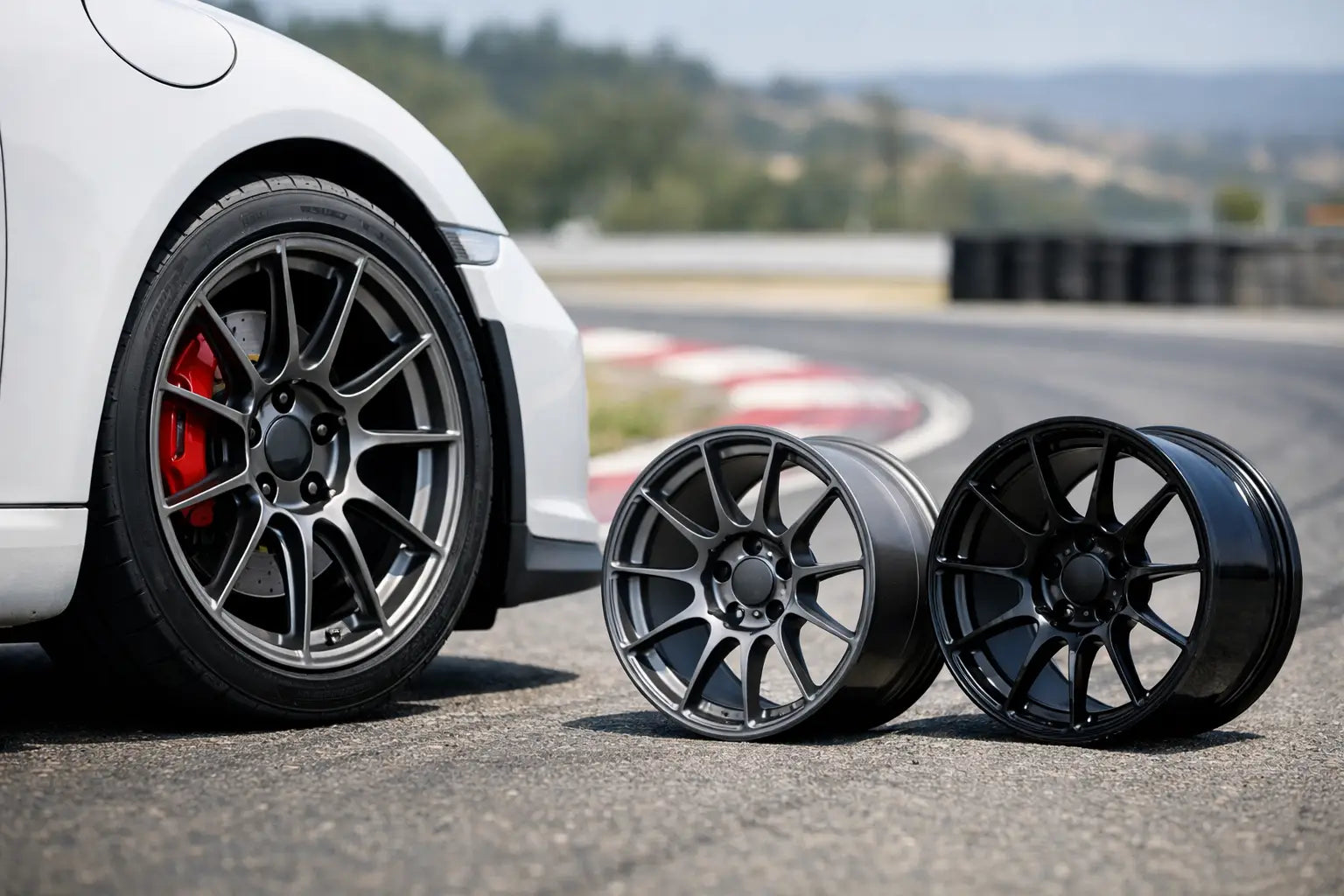
If you are choosing wheels for a car that actually gets driven hard, not just parked at a meet, an Apex wheels review needs to answer a simple question - are they worth the money over cheaper flow formed options and pricier forged rivals? For most enthusiasts, that comes down to strength, brake clearance, sensible fitments and whether the wheel still looks right on the car.
Apex has built its name by aiming squarely at the performance crowd. That means track-day BMWs, fast-road Toyota builds, time attack projects, dual-duty hot hatches and owners who care about tyre support just as much as spoke design. This is not a brand chasing fashion-first fitments. The focus is engineering-led wheel specs that solve real problems for drivers pushing grip, brake size and kerb weight.
Apex wheels review - what sets the brand apart?
The biggest reason Apex stands out is that it does not approach fitment like a generic wheel company. Instead of offering a handful of broad sizes and expecting customers to make compromises, it tends to develop platform-aware specifications. Offset, width, spoke clearance and barrel design are chosen with actual enthusiast use in mind.
That matters more than many buyers realise. A wheel can be light and still be a poor choice if it kills suspension clearance, forces unnecessary spacers or limits brake upgrades. Apex generally gets the fundamentals right. On BMW applications in particular, the brand has a strong reputation because the specs often suit square setups, wider tyres and larger performance brake packages without turning the whole job into a fitment headache.
The design language is also functional. You are not getting overly complicated show-car styling. Most Apex wheels use clean, motorsport-influenced spoke patterns that prioritise load path, brake cooling and easy cleaning. For some buyers, that restraint is a plus. If you want aggressive concavity and maximum visual drama above all else, other brands may grab you faster.
Build quality and engineering
In terms of construction, Apex covers both flow formed and forged options. That gives the brand a broader reach than companies sitting at only one end of the market. The flow formed wheels are usually where most enthusiasts enter the brand, and they tend to strike a strong balance between weight, cost and impact resistance. They are not bargain-bin cheap, but they are also not pretending to be full motorsport forged wheels at half the price.
The forged range is where Apex becomes especially interesting for harder use. These wheels are designed for buyers chasing lower unsprung mass, higher strength and more serious track durability. If you are repeatedly loading the car on slick-adjacent tyres, carrying meaningful aero or dealing with rough circuits, forged starts to make more sense.
What Apex does well is communicate the engineering side in a way enthusiasts can actually use. Load ratings, barrel shape, spoke clearance and intended use tend to be part of the conversation, not hidden details. That inspires more confidence than brands selling purely on finish options and social media photos.
There is a trade-off, though. Apex wheels are not cheap enough to be impulse buys, and some drivers will question the jump from entry-level wheels if the car mainly sees weekend road use. That is a fair concern. If your hatchback spends its life commuting and doing the occasional spirited B-road blast, you may not fully exploit what you are paying for.
Fitment is where Apex earns its reputation
Fitment is the strongest argument in this Apex wheels review. A lot of wheel brands talk about performance, then leave you sorting out offset maths, brake clearance guesswork and tyre stretch compromises on your own. Apex has built much of its credibility by being more exact.
For track and fast-road buyers, that usually means widths and offsets that let you run proper tyres, not just cosmetically wide wheels. A well-chosen Apex setup can improve front-end grip, support a square tyre arrangement and give better rotation options between events. That is real-world value, especially if you are trying to keep running costs under control.
Brake clearance is another major plus. Plenty of enthusiasts move to bigger calipers only to discover their current wheels are now the weak point in the setup. Apex generally designs around that reality. The wheels are often selected specifically because they clear more aggressive brake packages without forcing a massive diameter increase.
That said, fitment is never universal. One spec that works brilliantly on a BMW M car may be irrelevant to a front-wheel-drive Renault Sport or a modified Toyota with unusual suspension geometry. Buyers still need to check exact platform compatibility, ride height, tyre size and whether arch work is in the plan.
On-road and track performance
The best wheels disappear into the overall setup. Apex tends to do exactly that. You notice improved steering response, stronger tyre support and better confidence under load rather than some dramatic transformation that feels detached from the rest of the car.
On track, lower weight and stronger construction both matter, but not in isolation. The real gain often comes from being able to run the right width, the right tyre and the right brake package with fewer compromises. That can make the car more predictable over long sessions and more consistent when temperatures rise.
For road use, the result depends on the wheel and tyre combination you choose. If you move to a larger diameter with a stiffer sidewall tyre, ride quality may get harsher. That is not an Apex-specific issue - it is part of the broader wheel upgrade equation. If you keep the sizing sensible, the car usually feels sharper without becoming unpleasant.
Durability is another strong point. Among serious enthusiasts, Apex has a reputation for wheels that are built for use, not just display. That does not mean they are indestructible. Potholes, kerbs and off-track excursions can damage any wheel. But compared with many style-first alternatives, the engineering intent is clearer.
Design, finish and day-to-day ownership
Apex wheels look purposeful. That is their appeal. Finishes are usually understated and easy to pair with OEM+ or track-focused builds. Satin bronze, anthracite, black and similar tones suit the sort of cars these wheels are commonly fitted to.
If you want highly polished lips, intricate machining or a more premium luxury feel, Apex may come across as too functional. The brand’s strongest products are bought because they work, and happen to look right, rather than the other way round.
Cleaning and general upkeep are fairly straightforward thanks to the simple spoke layouts. That matters if you are running aggressive pads and collecting brake dust after every event. Fussy designs can look good in photos but become a chore after a few weeks of actual use.
Price and value
Apex sits in the space where buyers expect substance. You are paying more than you would for mainstream cast or lower-tier flow formed wheels, but usually less than for premium forged names with a bigger marketing tax attached.
That makes the value proposition pretty clear. If your priority is lowest possible spend, Apex is not the answer. If your priority is getting a wheel with strong engineering, proven enthusiast credibility and fitments that make sense, the pricing starts to look justified.
The forged range is where the maths gets more personal. For a dedicated track car, the higher cost can be easy to defend. For a road car doing two or three events a year, it depends how serious the rest of the build is. Money spent on tyres, brake fluid, alignment and driver coaching may deliver a bigger improvement first.
Who should buy Apex wheels?
This Apex wheels review points most strongly towards drivers who are building with intent. If you care about lap time consistency, brake clearance, tyre support and proven specs, Apex is a smart buy. They also make sense for enthusiasts chasing an OEM+ look with genuine performance value behind it.
They are less convincing for buyers shopping purely on aesthetics or those who want the cheapest route into aftermarket wheels. There are more eye-catching options, and there are cheaper options. Apex works best when the brief is function first, style second.
For European enthusiasts sourcing platform-specific performance parts, brands with this sort of fitment discipline are worth paying attention to. That is especially true when your wheel choice has to work with suspension upgrades, bigger brakes and regular hard use rather than just pass a car park test.
A good wheel should solve problems before they appear. That is where Apex earns its place - not by shouting the loudest, but by giving serious drivers fewer compromises once the car is out on the road or lined up in the pit lane.