
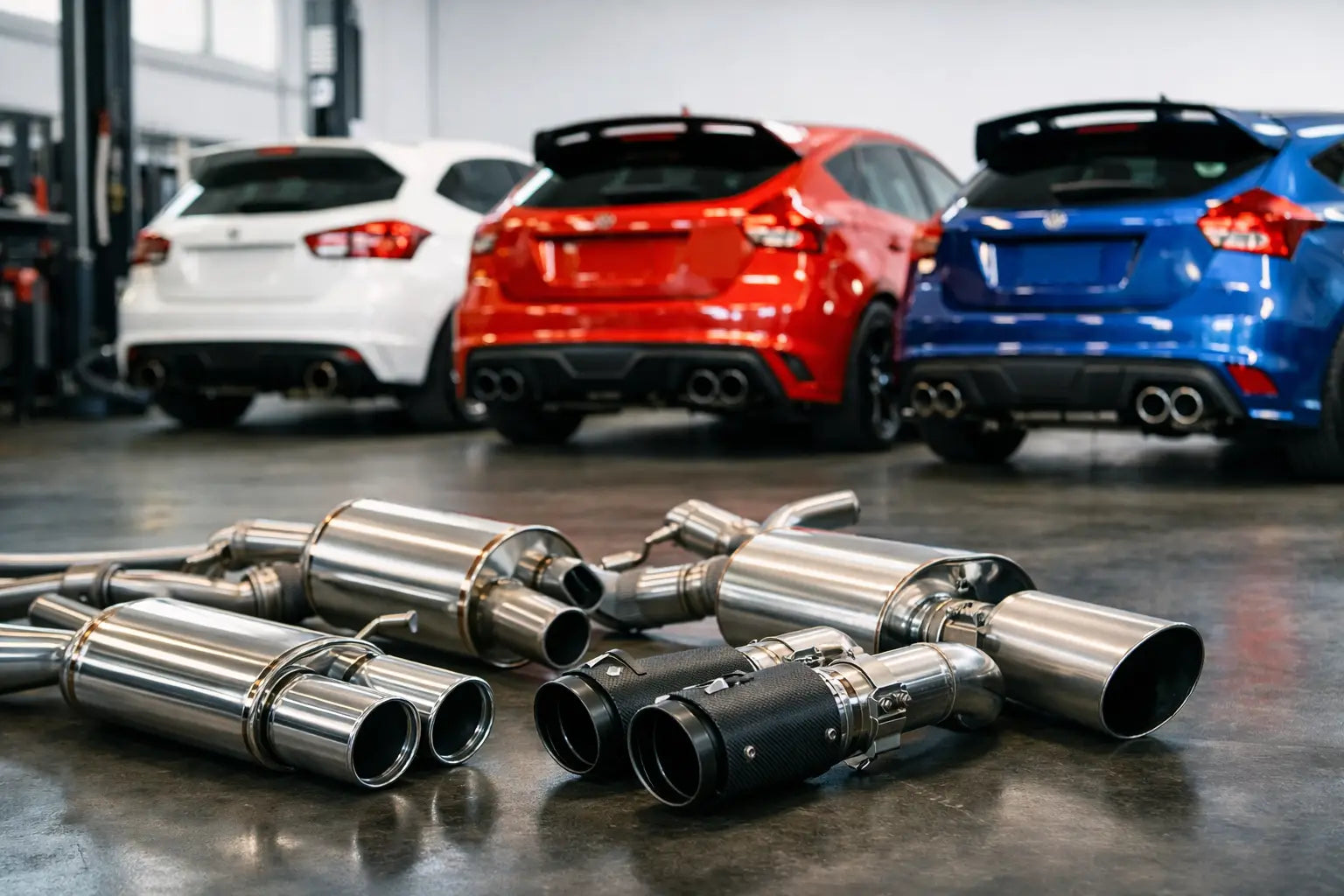
A hot hatch can gain 30 bhp and still feel oddly restrained if the exhaust does not match the rest of the build. The best exhaust brands for hot hatches do more than add volume: they sharpen throttle response, manage drone, suit modern emissions hardware and make the car sound like the performance model it was meant to be.
For a daily-driven Golf GTI, Civic Type R, i30 N, GR Yaris or Fiesta ST, the right system is rarely the loudest one. Fitment, valve control, material quality and how the system behaves at motorway speed matter just as much as the noise it makes on a B-road. Here are the brands worth considering when you want a proper upgrade rather than a noisy compromise.
What makes a hot hatch exhaust worth buying?
A good exhaust starts with the goal. A rear silencer or axle-back system is the sensible move when you want more character without changing the car’s emissions hardware. A cat-back typically gives a larger change in tone and flow, while a downpipe or sports catalyst is a more serious tuning component that can require ECU calibration and may not be road-legal in every market.
Modern hot hatches make the choice more complicated. Many use petrol particulate filters, active exhaust valves and tightly integrated ECU calibration. Removing or bypassing these parts simply to chase noise can bring warning lights, unwanted resonance, emissions problems and an MOT headache. For most road cars, a well-developed cat-back or valved rear section delivers the better result.
Material also counts. T304 stainless steel is the standard to look for on quality performance systems thanks to its corrosion resistance and long-term durability. Titanium saves weight and has a distinctive, crisp note, but its price makes most sense on a track-focused build. Tip design is personal, but pipe routing, hanger position and clearance around the rear diffuser are not. Platform-specific development is where the established brands earn their reputation.
Best exhaust brands for hot hatches
Milltek Sport
Milltek is one of the safest starting points for European hot hatch owners. Its range is broad, covering popular Volkswagen Group platforms alongside the Civic Type R, Hyundai N cars, Ford ST models and more. That coverage matters when you need an exhaust designed around a specific generation, drivetrain and factory trim rather than a one-size-fits-all universal solution.
Milltek systems usually lean towards a deeper, more purposeful tone instead of constant volume. The brand offers resonated and non-resonated choices across many applications, plus valved options for drivers who need the car civilised on the commute and more vocal when the road opens up. A resonated system is often the smarter call for a daily Mk7 or Mk8 Golf GTI, even if a non-resonated option sounds more dramatic in a short video.
Milltek is particularly strong for owners building a balanced fast-road car. It is not always the cheapest route, but proven fitment, quality stainless construction and extensive vehicle coverage make it a reliable performance-first choice.
Scorpion Exhausts
Scorpion has long been a core name in the UK performance scene, and its hot hatch systems suit drivers who want a noticeable change without stepping into full race-car territory. Its catalogue covers plenty of British favourites, including Ford ST and RS platforms, as well as Volkswagen, Honda, Hyundai and Renault applications.
The attraction is choice. Depending on the platform, Scorpion offers resonated, non-resonated, GPF-back, cat-back and valved configurations, often with several tailpipe finishes. That makes it easier to match the exhaust to the actual build. A lightly modified Fiesta ST needs different priorities from a tuned Golf R running hybrid turbo power.
Expect a sporty, assertive character. Check the specific system’s resonance control before buying, especially if your car spends long stretches at 70 mph. The right Scorpion setup can be properly involving; the wrong spec for your use can make every motorway run feel longer than it should.
Remus
Remus brings OEM-level polish to the aftermarket exhaust market. The Austrian brand is a strong fit for owners who care about build quality, refined sound and an upgrade that looks at home on a newer premium hot hatch. It is especially relevant for cars such as the Audi S3, Golf R, BMW M135i and Mercedes-AMG A-Class, although its coverage goes wider.
Many Remus systems use valve technology and offer configurable tailpipes, which works well on cars that need to cover two jobs: quiet daily transport during the week and a more engaging drive at the weekend. The sound is generally engineered rather than raw. That will appeal to owners who want a more mature exhaust note, not crackle for the sake of it.
Remus pricing can sit above some stainless alternatives, but the finish, development and integration are persuasive if your build is OEM-plus rather than stripped-out track spec.
Akrapovic
Akrapovic sits at the premium end for a reason. Its titanium systems are exceptionally light, beautifully finished and developed with serious attention to flow, acoustics and heat management. On the right car, reducing mass behind the rear axle is a genuine handling benefit, not just a specification-sheet win.
For hot hatches, Akrapovic is most compelling on higher-value or track-oriented platforms where weight, valve control and material quality justify the spend. Think Civic Type R, Golf R, GR Yaris or a carefully built M135i. The sound tends to be clean and distinctive rather than boomy, with a level of refinement that cheaper systems struggle to match.
The trade-off is simple: cost. If your budget is shared with tyres, brakes, suspension and tuning, a premium titanium exhaust may not be the first modification to buy. But if the rest of the car is already sorted, Akrapovic is one of the few exhaust upgrades that feels as special in the hand as it does on the road.
HKS
HKS remains a heavyweight for Japanese performance cars, and it is a natural choice for owners of the GR Yaris, Civic Type R and other Japanese-platform builds. The brand’s reputation comes from engineering depth across turbo systems, induction, electronics and exhausts, so its parts tend to make sense within a wider tuning plan.
HKS exhausts often favour a distinctive, controlled note over the oversized-volume approach. Their design can be particularly appealing on turbocharged cars, where the goal is to reveal more turbine and induction character without creating harshness in the cabin. Fitment and product availability vary by platform, so check the exact chassis code rather than assuming an older-generation system will transfer.
For a Japanese hot hatch with a build list that may later include intake, intercooler and ECU work, HKS is a brand with real tuning pedigree behind the badge.
Ragazzon
Ragazzon is a useful option when you want Italian-made stainless quality and a broad mix of resonated, non-resonated and valved components. It is well represented across European turbo platforms and can offer a more individual route than the most obvious mainstream choices.
Its modular approach on some applications is valuable for staged builds. You may start with a rear section, then move to a full cat-back once the car’s tune, intercooler and intake are in place. That flexibility is worthwhile, but it also means careful spec selection is essential. Combining several freer-flowing sections without considering the catalyst, GPF and calibration can make a car louder than intended.
Mongoose
Mongoose has a loyal following among Ford and Japanese tuning communities, particularly where durability, straightforward construction and a more traditional performance sound are the priority. It is often a strong value proposition for older hot hatches and enthusiast builds where the budget is focused on making the car quicker and more capable, rather than chasing premium finishes.
The brand is best approached platform by platform. On the right application, a Mongoose system delivers the no-nonsense character many owners want. On a newer, highly refined hot hatch, you may prefer a resonated or valved alternative to keep the cabin experience more controlled.
Choose the system, not just the badge
Brand reputation gets you onto the right shortlist, but the exact exhaust configuration decides whether you will enjoy living with it. Start with how the car is used. A weekend B-road car can tolerate more theatre. A daily driver, especially one covering regular motorway miles, needs resonance control and preferably retained valve functionality.
Next, consider the rest of the hardware. A stock car with a cat-back can sound excellent. Add an intake, sports cat, downpipe and aggressive overrun calibration, and the same rear system may become far louder than expected. Build the package as a whole rather than buying parts around the loudest clip you can find.
Finally, check legality and fitment for your location. Look for systems intended to retain the GPF or OPF where required, and be cautious with decats or race-only components on road cars. The best setup is one you can use hard without worrying about warning lights, clearance issues or unwanted attention.
At Torque Lab, the smart move is to shop by your exact vehicle, then compare resonated, valved and GPF-compatible options before committing. Pick an exhaust that suits the way you actually drive, and every full-throttle pull will feel like part of a properly finished build.