
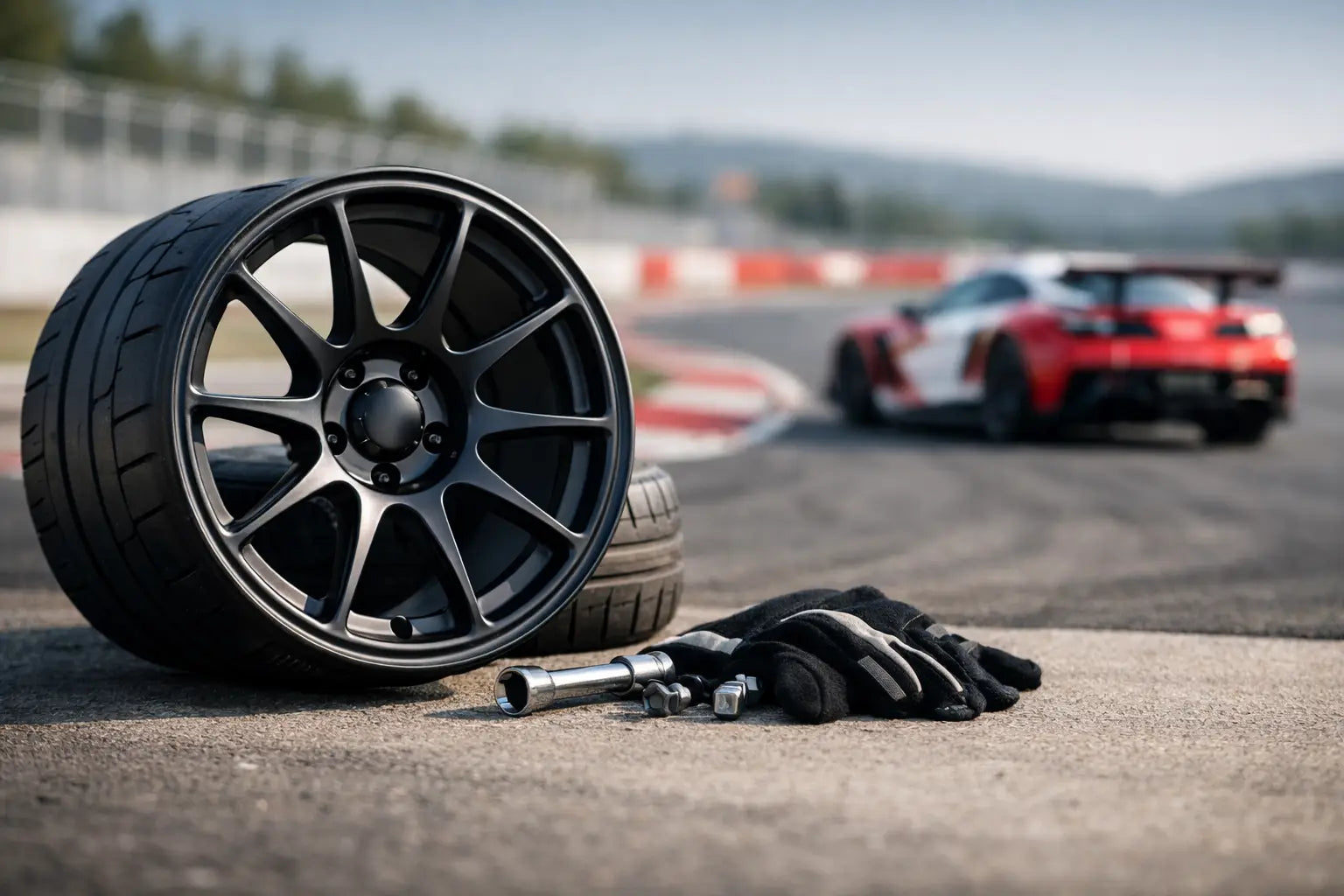
A heavy wheel tells on itself by Turn 3. The steering gets dull, the front end feels lazy on direction change, and the brakes work harder than they should. That is why the search for the best lightweight wheels for track use is not about looks first - it is about response, consistency, and getting more from the rest of your setup.
Plenty of drivers make the mistake of shopping by style, then trying to justify the weight later. On a street build, you can get away with that. On a track car or dual-duty setup, wheel choice has a direct effect on acceleration, braking, suspension control, and tire performance. If you are trying to build a car that actually works under heat and load, lightweight wheels deserve the same attention you give pads, coilovers, and alignment.
What makes the best lightweight wheels for track use?
Low weight matters, but it is not the whole story. A proper track wheel needs to balance mass, strength, brake clearance, and fitment accuracy. The lightest wheel on paper is not automatically the best option if it cracks after repeated curb strikes or forces a compromised tire size.
For track use, the real target is lower unsprung and rotational mass without sacrificing structural integrity. Reducing unsprung weight helps the suspension react faster over bumps and curbing. Reducing rotational mass makes it easier for the car to accelerate and slow the wheel assembly. You feel that everywhere - turn-in gets cleaner, transitions happen faster, and the car feels less reluctant under braking.
Construction plays a major role here. Flow formed wheels usually hit the sweet spot for most track-day drivers because they offer a strong balance of weight, price, and durability. Fully forged wheels can cut even more weight while maintaining excellent strength, but the cost climbs quickly. Cast wheels can work for occasional use, but many are simply too heavy to make sense if track performance is the priority.
Why wheel weight matters more on track than on the street
On the street, small differences in wheel weight can feel subtle. On track, where the car is repeatedly loaded in hard braking zones, quick transitions, and sustained cornering, those differences add up fast. A lighter wheel helps the suspension stay more composed over rough sections and lets the tire maintain better contact with the surface.
That matters because grip is not just about tire compound. It is also about how well the wheel and suspension let the tire do its job. Add a heavy wheel, and you ask more from the dampers, more from the brakes, and more from the drivetrain. Add a lighter one, and the whole package usually feels more awake.
There is also a heat and endurance angle. A track session exposes weak points quickly. If your setup is already pushing brake temperatures, reducing rotating mass can help ease some of that load. It will not fix a bad brake package, but it can support the system in a meaningful way.
The wheel traits that actually matter
Strength comes first. Track wheels take repeated abuse from heat cycles, hard cornering, and occasional curb contact. You want a wheel from a proven performance brand with a genuine motorsport or track-day reputation, not just something marketed as sporty.
Weight comes next, but it has to be judged in context. A 17x9 wheel that weighs 17 pounds is impressive. An 18x10 wheel at 20 pounds can also be excellent, especially if your platform needs the diameter for brake clearance. Comparing weight without considering size is pointless.
Fitment is where a lot of builds go wrong. The best wheel for your car is the one that clears your brakes, fits the fenders, works with your suspension geometry, and supports the tire width you actually want to run. Aggressive specs may look right on a parked car and still be a bad move for a track setup if they create rubbing, limit steering angle, or force too much stretch.
Brake clearance deserves more attention than many buyers give it. Big brake kits, larger OEM performance calipers, and even certain pad shapes can create clearance issues. Spacers can solve some problems, but they also change scrub radius and can complicate fitment. A wheel designed with proper spoke clearance is always the cleaner solution.
Best lightweight wheels for track builds by construction type
If you are buying with performance in mind, the market breaks down into three realistic categories.
Flow formed wheels
For most enthusiasts, this is the smart buy. Flow formed wheels are lighter and stronger than basic cast options and usually come in specs tailored to real track use. That means widths enthusiasts actually want, offsets that work on common performance platforms, and designs that clear serious brakes.
Brands with a strong reputation in this space have become popular for a reason. Wheels from companies like Apex have built trust among BMW, Volkswagen, Honda, Toyota, and Subaru owners because they focus on fitment and motorsport function rather than generic styling trends. If you want a wheel that can handle regular track days without jumping straight to forged pricing, this category is usually where you should start.
Forged wheels
Forged wheels are the premium option. They can offer the best strength-to-weight ratio on the market, and for advanced drivers chasing every advantage, that matters. If the car is seeing serious lap time work, wide tire setups, and repeated high-load sessions, forged wheels make a lot of sense.
The trade-off is obvious - cost. For many dual-purpose builds, the performance gain over a good flow formed wheel may not justify the price difference. If your budget would be better spent on tires, brake cooling, seat time, or alignment development, forged wheels may not be the first move.
Cast wheels
There are cast wheels that survive track use, but this is the category where you need to be most selective. Many cast wheels are simply too heavy, and that works against the whole point of the upgrade. If the wheel is affordable but adds weight over stock, it is not a performance part. It is just a styling change.
Sizing choices that make or break a track setup
Bigger is not always better. A lot of drivers move to a larger diameter wheel because it fills the fender well, then realize they added weight and increased tire cost without gaining much. For track use, the smallest diameter that clears your brakes is often the best answer.
Seventeen-inch wheels remain a sweet spot for many compact and midsize performance cars because they allow strong tire options, manageable cost, and lower weight. Eighteens are often necessary for newer platforms with larger brakes and can still perform extremely well if the wheel is properly designed. Nineteens rarely make sense for a dedicated track build unless the platform leaves you no other choice.
Width matters just as much as diameter. A wider wheel can better support the tire and improve front-end grip, especially on cars that need more tire to manage understeer. But extra width only helps if the suspension and body can accommodate it cleanly. If you need excessive camber or serious fender work just to make the wheel fit, the setup may not be worth the compromise for a street and track car.
Brand reputation matters more than hype
A track wheel is not the place to gamble on an unknown brand with flashy marketing and no real motorsport presence. Reputable manufacturers publish detailed specs, test their products properly, and offer fitments developed around actual enthusiast platforms. That saves time, reduces fitment headaches, and gives you a better shot at buying once.
This is where a specialist retailer earns its keep. A catalog built around real performance brands and platform-specific fitment is far more useful than endless generic options. At Torque Lab, that kind of curation is exactly the point - less junk, more parts that make sense for builds that see hard use.
How to choose the right wheel for your car
Start with your use case. If the car is a daily driver with six to eight track days a year, a strong flow formed wheel is usually the smartest answer. If it is a dedicated build with aggressive aero, sticky tires, and real pace, forged might be worth the jump.
Then work backward from your brake package and target tire size. Once those are set, choose the smallest diameter that clears, the width that properly supports the tire, and an offset that keeps the wheel where it should be without creating clearance problems. After that, compare actual weights from proven brands, not marketing claims.
Do not ignore replacement practicality either. If you bend a wheel mid-season, can you get a replacement quickly? Is the spec regularly stocked? Track cars break parts. That reality should influence what you buy.
The best lightweight wheel setup is the one that matches the rest of the build. A wheel that is slightly heavier but properly sized, brake-friendly, and durable is often the faster choice over time than an ultra-light option that creates compromises elsewhere. Build for the whole lap, not just the spec sheet.
If you are chasing the best lightweight wheels for track use, think beyond weight alone. Pick proven construction, honest fitment, and a size that helps the car work harder where it counts. The right wheel does not just save pounds - it sharpens everything the moment you leave pit lane.