
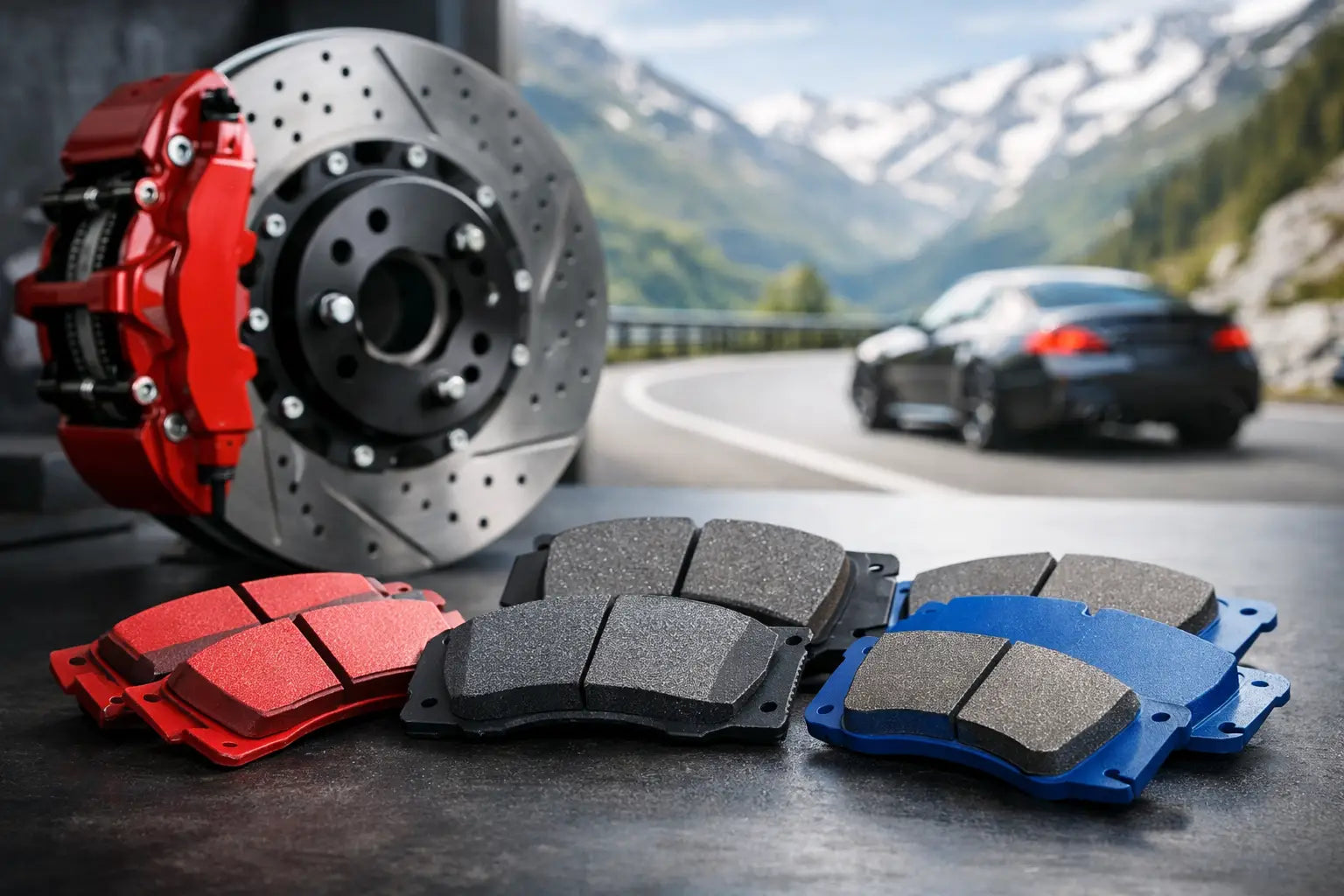
Your brake pedal tells the truth before the lap timer does. A car can have more power, sharper suspension and sticky tyres, but if the pedal goes long after three hard stops, the build is not ready. Finding the best performance brake pads Europe has to offer is therefore less about chasing the most aggressive compound and more about matching friction material to how your car is actually used.
For a daily-driven hot hatch, a weekend B-road weapon and a dedicated track car, the right answer can be completely different. Cold bite, heat capacity, pedal consistency, disc wear, noise and dust all matter. Choose the pad for the job, then build the rest of the braking system around it.
What makes a performance brake pad better?
A performance pad is designed to maintain predictable friction at temperatures that overwhelm a standard road compound. That does not automatically make it better for every car. Track-oriented materials usually need more heat before they work at their best, can be noisy at low speeds and may eat through discs faster. A quality fast-road pad, by contrast, should improve initial bite and fade resistance without making every commute feel like a race car compromise.
The key is consistency. Under repeated braking, an unsuitable pad can overheat and transfer uneven pad material onto the disc. Drivers often call this warped discs, but the judder is commonly caused by deposits and heat stress rather than a physically bent disc. A well-matched compound stays stable in its working temperature range, giving you the same pedal response at the end of a session as it did at the start.
Pad choice also affects modulation. Huge initial bite may sound ideal, yet a pad that grabs too hard can make threshold braking less controllable, particularly in a light car on road tyres. The best setup lets you build pressure confidently and release the brake cleanly as you turn in.
Best performance brake pads in Europe by use case
There is no single pad that wins every category. Start with your dominant use case, not the occasional fantasy track day.
Fast road and spirited driving
For cars that see regular commuting, wet weather and enthusiastic weekend miles, look for a fast-road compound. EBC Yellowstuff and Ferodo DS Performance are familiar names in this space because they target stronger bite and higher temperature tolerance than original-equipment pads while remaining broadly civilised.
These pads suit modified road cars with modest power increases, better tyres and occasional hard mountain-road driving. Expect some additional dust and possibly a little noise compared with factory pads, but they are a sensible step before moving to full track material. On heavier or particularly quick cars, confirm that the compound is available for your exact caliper and that the stated operating range fits the load you place on it.
Fast road with regular track days
This is where many builds need an honest compromise. If your car drives to the circuit, runs several sessions, then takes you home, a road-and-track compound can make sense. Ferodo DS2500 has long been a benchmark choice for this type of use, while EBC Bluestuff is aimed at drivers who need more track resilience without fitting dedicated race pads.
The trade-off is clear: expect more dust, more audible squeal at low speed and potentially quicker disc wear. In return, you get better resistance to fade when braking repeatedly from high speed. This category works best when paired with fresh high-temperature brake fluid and discs in good condition. Pads alone cannot compensate for old fluid boiling after a few hard laps.
Dedicated track and competition cars
A proper track compound is built for sustained heat, not school-run manners. Ferodo DS1.11, DS3000 and race-focused EBC compounds are examples of the type of material used when lap consistency matters more than quiet operation. They can deliver high friction and confidence under repeated heavy braking, but they are not a casual upgrade for a road car.
Cold performance can be reduced, noise is normal, and some compounds create significant disc wear or dust. On a competition car, those are acceptable operating costs. On a lightly used road car, they can be a frustrating and expensive mismatch. If you run slicks, aero, high power or long sessions, consider the pad as part of a complete brake package rather than the final item in a shopping basket.
Do not choose pads by brand alone
EBC Brakes and Ferodo both make respected compounds, but the logo on the box is only the first filter. The same brand can offer very different characteristics across its range. Read the compound positioning, check the pad shape and make sure the manufacturer’s intended use aligns with yours.
Vehicle mass matters as much as engine output. A 1,100 kg hatchback and a 1,800 kg turbo saloon can use the same caliper design but generate radically different brake temperatures. A heavy car on a fast circuit will often need a more temperature-tolerant pad, better cooling and carefully selected discs even if its power figure is modest.
Your tyre choice matters too. Stickier tyres create more available grip, which means you can brake harder and generate more heat. Fitting track tyres without reassessing the pads, fluid and cooling is a common weak point in otherwise well-planned builds.
Fitment comes before friction claims
The best compound is useless if the pad shape is wrong or the wear sensor arrangement does not suit your car. Manufacturers can use different front and rear calipers across model years, engine variants and optional brake packages. Performance models may have larger discs, different carrier brackets or electronic parking-brake requirements that change the rear pad entirely.
Before ordering, verify the exact vehicle, year, engine, axle and brake system. If you have upgraded calipers, shop by the caliper or pad reference rather than the original vehicle. This is especially relevant for common conversion routes using Brembo, AP Racing or Porsche calipers, where pad options can be extensive but shape identification must be exact.
Torque Lab’s vehicle, brand and part-category approach is built around that reality. A few minutes spent confirming fitment is cheaper than discovering your new pads are 2 mm too tall on installation day.
Build the system around the pad
Brake pads work with the discs, fluid, hoses, cooling and tyres. Treating them as a standalone modification leaves performance on the table.
Start with healthy discs. Measure thickness, inspect for cracking and replace heavily heat-checked or lipped discs before fitting an aggressive new compound. Plain high-quality discs are often enough for fast road use, while track cars may benefit from a disc design and cooling strategy proven for their caliper setup. Drilled discs can look the part, but repeated high-temperature use can increase the chance of cracking around the holes. For many hard-driven cars, a quality plain or slotted disc is the more practical choice.
Use fresh brake fluid with an appropriate dry and wet boiling point. Fluid absorbs moisture over time, reducing its boiling resistance and softening the pedal under heat. Braided hoses can improve pedal feel where old rubber lines flex, but they will not cure fading pads or overheated fluid. Add brake ducts when the car’s use and layout justify them, particularly on front-heavy track builds.
Also consider brake balance. Increasing front pad friction dramatically while leaving the rear axle on a mild road compound can alter how the car behaves under trail braking. Many cars remain front-biased by design, but a balanced, predictable setup is faster and safer than simply making the front brakes more aggressive.
Bed in new pads properly
Even the right pad can disappoint if it is fitted to contaminated discs or bedded in badly. Follow the pad manufacturer’s procedure first, as compounds vary. Generally, use a controlled series of medium-to-firm stops to bring the pads and discs up to temperature, then allow them to cool without sitting stationary with the pedal clamped hard.
Avoid an immediate full-send session on brand-new pads. You want an even transfer layer on the disc face, not localised deposits from one brutal stop. After bedding in, inspect the discs for even contact and listen for abnormal scraping, grinding or a persistent pull under braking.
Spend where your driving demands it
If your car mainly sees town traffic and the occasional quick road, a quality fast-road pad is usually the smart money. If track days are a regular part of the calendar, move to a road-and-track compound and budget for fluid, discs and maintenance at the same time. If the car is trailered to events or built around lap times, accept the compromises of a genuine race pad and select it for the circuit, vehicle weight and tyre package.
The right brake pad should make you trust the pedal enough to brake later, release cleaner and repeat the same stop all day. Choose for the heat you create, not the story you want the build to tell.