
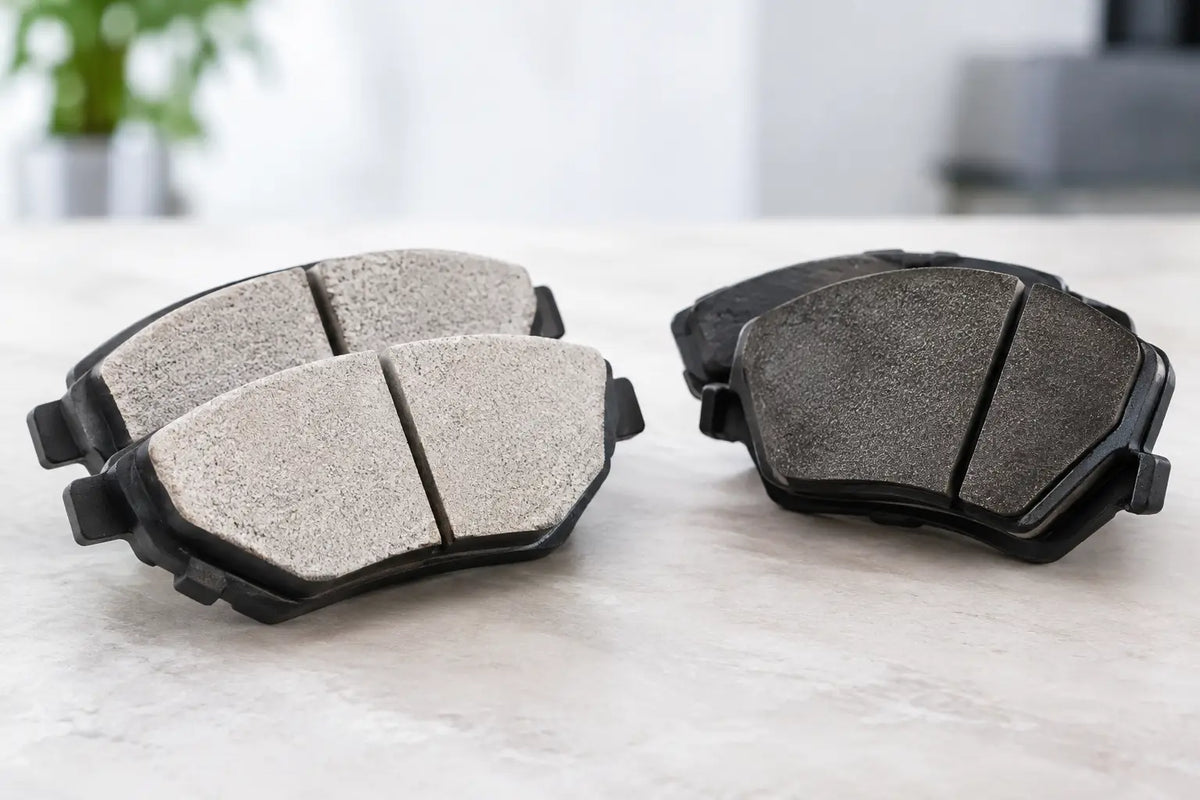
A brake pad choice can transform the way a car feels long before you add more power. The right compound gives you confidence at the end of a fast road section, makes a heavy hatchback feel more controlled, and holds up when a track session gets properly hot. When comparing ceramic versus metallic pads, though, the label on the box is only the start. Your driving, vehicle weight, tyre grip, disc choice and temperature range all matter.
For most enthusiasts, the real question is not which pad material is objectively best. It is whether you need a clean, quiet road setup, stronger cold bite for spirited driving, or a compound that will keep delivering lap after lap. Get that balance right and your brake upgrade works as a system rather than a compromise you regret every morning commute.
Ceramic versus metallic pads: the key difference
Ceramic pads use a friction material built around ceramic fibres, bonding agents and small amounts of metal. They are generally designed to run quietly, produce finer and less visible dust, and remain civilised in everyday driving. They are common on premium road cars for good reason: they offer consistent, refined braking without constantly coating your wheels.
Metallic pads contain a higher percentage of metal fibres or particles. This category includes low-metallic and semi-metallic compounds, which can behave quite differently from one another. In broad terms, metallic content helps a pad deal with heat and provides a firmer, more direct pedal feel under harder use. The trade-off is often more dust, more noise potential and greater rotor wear.
That broad description needs one major caveat. A quality ceramic performance pad can outperform a cheap metallic pad in almost every area, while a serious track-focused semi-metallic or sintered compound is in a different league from either. Always look at the specific pad's operating temperature, friction characteristics and intended use, not just the ceramic or metallic headline.
Ceramic pads for fast road builds
Ceramic pads suit drivers who want an upgrade without turning their car into a race-car project. On a daily-driven BMW, Audi, Volkswagen or Honda, they can offer a clean, smooth braking experience with low noise and less aggressive wheel dust. If you run open-spoke wheels and are tired of cleaning them after every short drive, that benefit is not trivial.
They also tend to work well from cold. That matters more than many modification lists admit. Road cars spend far more time braking at low and moderate temperatures than they do attacking a circuit. A pad that needs serious heat before it bites can feel wooden when you need it most in normal traffic.
The limitation appears when the car gets heavy, fast and repeatedly loaded. Long downhill roads, boosted street cars, towing, or repeated hard stops can push a road-oriented ceramic pad beyond its comfortable range. Once a pad overheats, friction can fall away, the pedal can feel less reassuring, and material may transfer unevenly to the disc. That is not a ceramic-specific failure, but lower-temperature ceramic compounds are less forgiving of sustained abuse than a suitable performance metallic option.
For a spirited road build, a ceramic pad is a smart choice when refinement remains part of the brief. Pair it with good-condition discs, fresh high-quality brake fluid and properly bedded-in surfaces. Do not expect a quiet, low-dust road compound to behave like an endurance racing pad after twenty minutes of flat-out circuit running.
Why metallic pads appeal to track-day drivers
Metallic pads make sense when braking temperatures are the main challenge. Their higher metal content can improve heat transfer and allow the compound to retain usable friction during repeated heavy stops. On a track-prepared Clio, Civic Type R, GT86, M3 or tuned Golf R, that extra thermal headroom can be worth far more than clean wheels.
A good metallic performance pad often gives a more positive initial response and a firm, confidence-building feel as temperatures climb. This is especially valuable once you add stickier tyres, more power or aero grip. Those upgrades increase the load placed on the brakes, and standard replacement compounds can quickly become the weak point.
The compromises are real. Metallic pads can be noisier, particularly at light pedal pressure or when cold. They commonly produce darker, more abrasive dust, and some compounds are harder on brake discs. None of that makes them a poor choice. It simply means they should be selected for the job. A car that sees regular track days can live happily with these traits; a silent daily commuter may not.
There is also a difference between a fast-road metallic pad and a dedicated circuit compound. A full track pad may need heat before it works at its best, can squeal loudly on the road, and may be unsuitable or impractical for normal street use. If your car drives to the circuit, runs sessions and drives home, choose a dual-purpose compound rather than chasing the most aggressive option available.
Bite, modulation and pedal feel
Drivers often talk about brake pads in terms of bite, but bite is only half the story. Initial bite is the response you feel when the pad first contacts the disc. Metallic compounds often deliver a sharper first hit, while ceramic pads can feel smoother and more progressive. Neither characteristic is automatically quicker.
Modulation is your ability to finely adjust braking force with your foot. For fast road driving and wet conditions, a progressive pad can be easier to place accurately. For late braking on track, a pad with strong, repeatable response can make it easier to build confidence at high speed. The best choice depends on whether you value a relaxed pedal in daily traffic or a more assertive response at the limit.
Pedal feel is not created by pads alone. Old fluid, flexing rubber lines, worn caliper seals, overheated discs or poor bleeding can make even the best pad feel disappointing. Before blaming the compound, make sure the rest of the system is ready for the work you expect from it.
Dust, noise and disc wear are part of the cost
Ceramic pads usually win the convenience battle. Their dust is often lighter in colour, less noticeable and less likely to cling aggressively to wheels. They also tend to be quieter, although any pad can make noise if the hardware is worn, the shims are missing or the bedding-in process is skipped.
Metallic pads ask more from the owner. Expect darker dust and plan to clean wheels more frequently. Depending on the compound, disc wear may increase too. This matters on vehicles with costly two-piece discs or larger performance brake packages, where replacing rotors is not a minor service item.
Do not treat rotor wear as a reason to avoid performance pads altogether. A pad that survives heat and prevents fade can protect you from a much bigger problem than a shorter disc service life. The sensible approach is to match disc material and pad compound, inspect both regularly, and budget for consumables honestly if you drive hard.
How to choose the right brake pad compound
Start with how the car is actually used, not how you hope it will be used once or twice a year. A daily-driven car with occasional B-road runs needs a different answer from a weekend track build. Be honest about vehicle mass too. A heavy, powerful saloon can overwhelm a mild road pad more easily than a lightweight hatchback.
Consider your tyres and existing hardware. Stickier tyres let you brake harder, raising pad and disc temperatures. Bigger brakes add thermal capacity, but they do not remove the need for the correct friction material. Fresh performance brake fluid is essential for regular hard use, because a pad upgrade cannot stop fluid from boiling.
For most road cars, a quality ceramic or fast-road low-metallic pad is the sensible middle ground. For occasional track days, look for a reputable dual-purpose performance compound with a clearly stated operating range. For dedicated circuit use, prioritise temperature stability, repeatability and disc compatibility over noise or dust.
Bedding in matters as much as the box label
New pads and discs need a controlled bedding-in process. The goal is to establish an even transfer layer of pad material on the disc face, rather than glazing the pads with a handful of panic stops outside the workshop. Follow the pad manufacturer's procedure, use progressively firmer stops, and allow the brakes to cool as instructed.
If you change compound, particularly from a street pad to a track compound, inspect or refresh the discs where needed. Different materials can leave incompatible transfer layers, causing judder, inconsistent bite or premature wear. This is one of the small details that separates a brake upgrade that feels exceptional from one that feels unpredictable.
Torque Lab customers building for road, track or both should choose pads as part of a complete braking plan. Start with the use case, verify fitment for your exact caliper and disc setup, then give the compound the fluid, cooling and bedding procedure it needs to perform. The right pad will not just stop the car harder - it will make every fast mile feel more deliberate.