
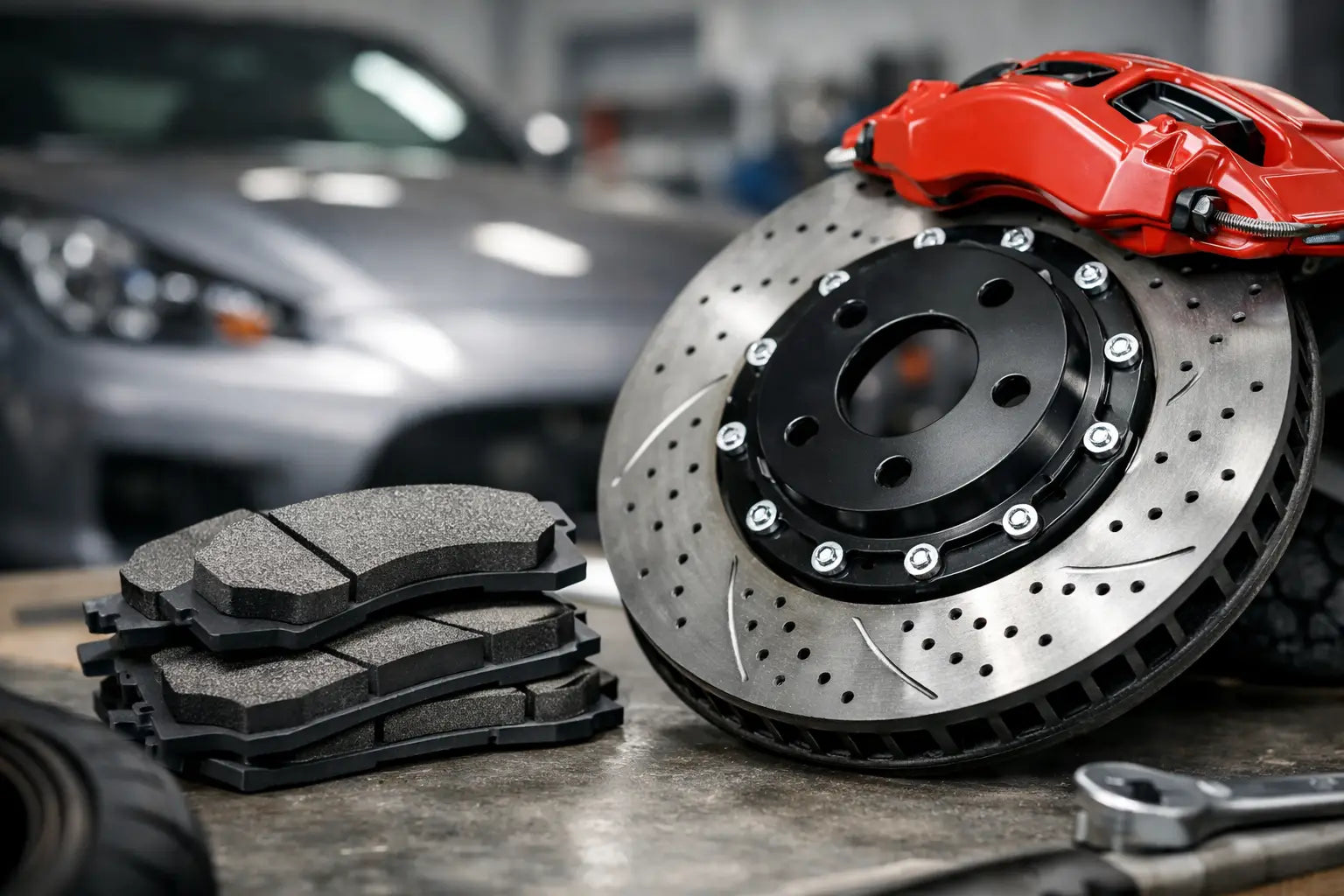
A proper fast-road brake pad has a difficult job. It needs to bite on the first stop out of the driveway, tolerate repeated hard braking on a B-road or track day, and avoid turning the car into a squealing, dust-covered chore. This Ferodo DS2500 pad review looks at why the compound has remained a default upgrade for tuned road cars and occasional circuit builds.
The short version is simple: DS2500 pads are still excellent for a performance road car that sees enthusiastic driving and a few track sessions. They offer confident cold response, a firmer and more consistent pedal under heat than standard pads, and generally civilised manners for their capability. They are not the answer for every dedicated track car, though, and choosing them without considering fluid, discs and cooling can leave performance on the table.
Ferodo DS2500 Pad Review: What They Are Built For
The DS2500 sits in Ferodo's fast-road and light track-day territory. It is aimed at drivers who want a serious step up from OEM friction material without accepting the warm-up demands, noise and disc wear often associated with race-focused compounds.
That positioning matters. Many modified cars gain power long before they gain braking consistency. A remap, intake and exhaust can make a hot hatch or turbo saloon much quicker between corners, but factory pads are often the first component to fade when the pace rises. The DS2500 addresses that weak point with stronger bite and much better resistance to the soft, long-pedal feeling that appears after repeated heavy stops.
Ferodo is widely associated with motorsport, and the DS2500 has earned its reputation through years of use on everything from light Hondas and Renaultsport models to heavier BMW, Audi and Volkswagen platforms. It is not a fashionable new release. It is a proven compound that remains relevant because it works in the real conditions enthusiast cars face.
Pedal Feel and Cold Bite
Cold performance is one of the DS2500's strongest selling points. Unlike a full race pad, it does not need a hard out-lap before it becomes trustworthy. The first few applications feel positive enough for normal road use, which is exactly what a dual-purpose build needs.
Once warm, the pedal response becomes more decisive. The pad delivers a reassuring initial bite, but it is not usually so aggressive that smooth threshold braking becomes difficult. That makes it a strong match for drivers learning to brake later and harder on circuit, as well as for experienced owners who want repeatable feedback through the pedal.
The character will vary with the car and brake system. A lightweight front-wheel-drive hatch on fresh discs can feel sharp and eager, while a heavier turbocharged four-wheel-drive car may feel more like it has gained consistency than outright aggression. Either way, the improvement over tired OEM pads is normally obvious.
It is worth setting expectations correctly. Brake pads do not create magic stopping distances if tyre grip is the limiting factor. Quality tyres, correct pressures, healthy suspension and a well-maintained braking system determine how much of the pad's potential reaches the road. What DS2500 pads often improve most is confidence: the same braking effort produces a more stable, repeatable response when the car is being driven properly.
Heat Resistance on Road and Track
For fast-road use, the DS2500 has plenty of temperature capacity. It handles spirited mountain roads, motorway pulls followed by heavy braking, and repeated hard use far better than a standard replacement pad. On a typical track day, it can also perform very well, particularly in lighter cars with sensible session lengths.
The limitation arrives when heat input becomes relentless. A heavy car, high power output, sticky track tyres and long sessions create a different demand. Add a circuit with repeated high-speed stops and the pad can be pushed beyond its comfort zone. When that happens, fade resistance and feel may deteriorate compared with a more track-specific Ferodo compound.
This is not a flaw. It is the trade-off that keeps DS2500 usable on the road. If your car is a stripped, caged track build running semi-slicks, aggressive aero and regular full-day circuit use, choose a pad designed for that job. Ferodo's harder circuit compounds are better suited to sustained abuse, although they typically demand more temperature and make greater compromises in everyday driving.
For the owner doing two or three track days each year in a road-registered car, DS2500 is often the sensible middle ground. It gives you a pad you can live with between events, rather than a race pad you tolerate.
The rest of the braking package matters
Pads alone cannot solve boiled fluid, cracked discs or inadequate cooling. Before fitting DS2500s for circuit use, check disc condition and thickness, inspect caliper slides and pistons, and replace old brake fluid with a high-temperature performance fluid. Braided lines can improve pedal consistency on some older systems, but they do not replace fluid maintenance or proper bleeding.
Brake cooling becomes particularly valuable on heavier and more powerful platforms. If repeated track use is part of the plan, ducts, quality discs and regular fluid changes can extend pad life and keep the pedal stable deeper into a session. Spend the budget across the system rather than expecting one friction upgrade to carry everything.
Noise, Dust and Disc Wear
No performance pad is completely free of compromises. DS2500 pads can produce more dust than many original-equipment pads, especially after hard driving. The dust is usually manageable, but white or silver wheels will need more regular cleaning than they would with a low-dust commuter compound.
Noise is generally reasonable after correct bedding-in, but it is not guaranteed to be silent. Pad shape, caliper design, shims, disc condition and the way the car is used all influence squeal. Some installations remain near-OEM quiet; others may make an occasional noise at low speed or when cold. That is normal territory for a high-performance road pad, not evidence that the pads are automatically faulty.
Disc wear is also a sensible consideration. DS2500 is not known as an especially savage disc-eater compared with dedicated race materials, yet harder use always increases wear across pads and rotors. Pairing the pads with quality plain or lightly grooved discs, rather than cheap unknown rotors, is a smart route for most fast-road builds.
Bedding In DS2500 Pads Properly
A rushed bedding-in process is one of the easiest ways to spoil a new brake setup. The aim is to transfer an even layer of pad material onto the disc face, then let the system cool without holding the pedal down while everything is extremely hot.
Follow Ferodo's instructions for the exact application, but the practical approach is controlled progressive braking rather than repeated emergency stops. Start with several moderate stops to bring the pads and discs up to temperature. Follow with firmer decelerations, allowing enough road between each one to avoid parking the car with hot pads clamped to the discs. Then drive gently to cool the system.
Do not judge a fresh set during the first few miles. Initial bite and feel can change noticeably as the surfaces bed together. If vibration, severe noise or uneven braking appears after bedding, inspect the installation, disc condition and caliper operation before blaming the compound.
Who Should Buy Ferodo DS2500 Pads?
The DS2500 is a strong choice for a tuned daily driver, weekend B-road car or road-legal track-day machine. It suits owners who value usable cold performance as much as heat resistance, and who want a recognised upgrade rather than a generic "sport" pad with unclear performance claims.
It makes particular sense when the car is still driven to work, used for weekend trips or taken on wet roads. In those situations, a dedicated race compound can be overkill. DS2500 gives you meaningful braking headroom without making every low-speed journey feel like part of a pit-lane routine.
It is less suitable for a heavy, repeatedly tracked build on semi-slicks, or for drivers chasing lap times every month. If the car regularly overheats DS2500s, do not keep fitting the same pad and hoping for a different result. Move to a circuit compound and upgrade the surrounding hardware where needed.
Fitment remains critical. Pad compounds can share a name while pad shapes, thicknesses and backing plates differ across calipers and model years. Check the exact vehicle, axle, brake package and caliper before ordering. Torque Lab's vehicle-focused catalogue approach is useful here, particularly on platforms with multiple factory brake options.
For the enthusiast who wants one set of pads to make a road car feel properly prepared, Ferodo DS2500 remains hard to dismiss. Match it with good discs, fresh fluid and tyres worthy of the chassis, then use the extra confidence where it counts: later braking, cleaner corner entry and more enjoyable miles.