
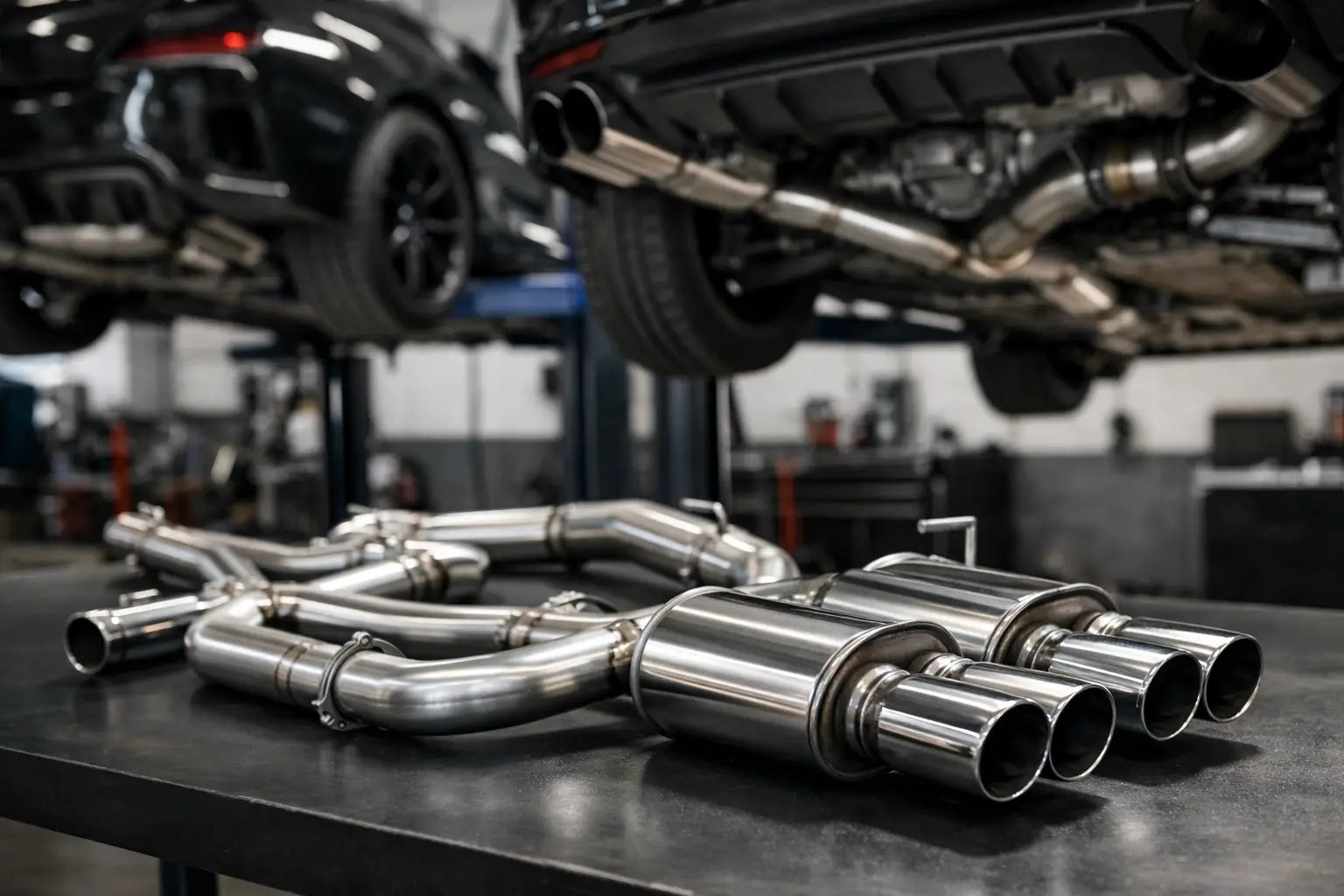
A cat-back exhaust can make a car feel properly yours from the first cold start. Get it right and you gain a sharper exhaust note, cleaner-looking tailpipes and, on the right setup, better flow to support later modifications. Get it wrong and you may end up with motorway drone, awkward fitment or a system that does not suit how the car is actually used. Knowing how to choose cat back exhaust starts with the car's job, not the biggest bore diameter or loudest sound clip.
A cat-back system replaces the exhaust components after the catalytic converter. Depending on the platform, that normally means the centre section, resonator, rear silencer and tailpipe sections. Because the catalyst remains in place, it is usually a more straightforward road-car upgrade than a decat or downpipe, but fitment, noise and approval still need proper attention.
Start with the build objective
Be honest about where the car spends its time. A daily-driven Golf GTI, an occasional-use BMW M car and a stripped-out Civic track build can all benefit from an exhaust upgrade, but they need very different systems.
For a fast-road car, refinement should be near the top of the brief. You want a deeper, more purposeful note under throttle without a constant low-frequency boom at 2,000 to 3,000rpm. This is where a resonated cat-back is often the smart choice. It may not be the loudest option on paper, but it is the one you will still enjoy after a two-hour drive.
For track days, flow, weight and clearance may matter more. A lighter system with reduced silencing can suit a dedicated track car, particularly if it will run other supporting modifications. Be realistic about circuit noise limits, though. An exhaust that sounds brilliant in the paddock can end a session early if it fails a static or drive-by noise test.
If your target is a show-focused build, tailpipe design and rear-valance compatibility become part of the decision. A quality system should still fit and perform properly, but exhaust tip diameter, finish and position can make or break the rear-end look.
How to choose cat back exhaust by sound
Sound is subjective, but the hardware behind it is not. The main question is not simply whether you want the car louder. It is which frequencies you want more of, and when you want to hear them.
A resonated system uses an additional resonator to calm harsh frequencies and reduce cabin drone. It normally delivers a more mature, OEM-plus character. This makes it a strong fit for turbocharged four-cylinder cars that are driven every day, especially where a non-resonated exhaust can become boomy at cruising speed.
A non-resonated system removes or reduces that sound control. It is usually louder, more aggressive and more likely to bring pops, crackles and turbo noise to the foreground. That can work well on a weekend car, but it is not automatically the performance choice. The power difference between resonated and non-resonated versions is often modest. Your ears will notice the bigger change.
Valved exhausts offer the broadest operating range. With valves closed, they can keep cold starts and long journeys civilised; with valves open, they deliver the full character of the system. They cost more and add mechanical and electronic complexity, but for a car that does everything, they can be worth it.
Do not buy on video clips alone. Microphone placement, camera compression, intake modifications and the surrounding environment change what you hear. Seek out footage of the exact engine, preferably with both exterior acceleration and in-cabin cruising. Owner feedback about drone is often more useful than a rev clip outside a workshop.
Confirm exact vehicle fitment first
A cat-back exhaust is not a universal tube-and-box upgrade. The right system is built around a specific chassis, wheelbase, engine, drivetrain and bumper design. A hatchback and estate version of the same model may use different lengths. A quattro or xDrive car may need different routing from a front-wheel-drive equivalent. Facelift models can also have changed rear valances or exhaust layouts.
Check the full vehicle specification before ordering: make, model, generation, year, engine code or power output where relevant, transmission, drivetrain and body style. If the car has an aftermarket diffuser, a tow bar, lowered suspension or a rear brace, check clearance as well. Wide tailpipes that look spot-on with the factory bumper may foul an aftermarket valance.
Pay attention to connection type. Some systems are designed to bolt directly to the original front pipe; others require cutting the standard exhaust and using a sleeve clamp. Neither is inherently poor, but you need to know which installation you are taking on. A direct-fit, bolt-on layout is typically easier to reverse and easier to fit cleanly at home.
Quality manufacturers such as Milltek, HKS and other platform-focused brands publish detailed application data for a reason. Match the part to the car, not just the engine family or a photo that looks similar.
Choose material for use, climate and budget
Most worthwhile cat-back systems use stainless steel, but the grade matters. T304 stainless steel offers excellent corrosion resistance and is a strong long-term choice, particularly for cars driven through wet winters or exposed to salted roads. It costs more, but it is a sensible investment when you plan to keep the car.
T409 stainless steel is common on many good-quality performance systems. It is durable and more affordable, though it can develop surface discolouration over time. That does not necessarily mean it is failing. For a regularly used fast-road car, it can represent very good value.
Titanium systems are the premium option for weight-conscious builds. They are dramatically lighter and have a distinctive, crisp tone, but the price is substantial. They make most sense where every kilogram matters or where the material itself is part of the build brief.
Also inspect the details. Mandrel-bent pipework maintains a consistent internal diameter through bends, supporting smoother gas flow. Properly finished welds, strong flanges, quality clamps and well-positioned hangers matter as much as the headline pipe size. A cheap system that rattles against the rear beam is not a bargain.
Do not chase pipe diameter blindly
Bigger pipework is not always better. Exhaust diameter needs to suit engine displacement, induction type, state of tune and intended power level. On a lightly modified turbo car, a well-designed system with sensible diameter and efficient silencers can support strong gains without sacrificing low-speed response or refinement.
An oversized system can make a naturally aspirated engine sound hollow or lose the crisp character you wanted. On a turbocharged engine, it may offer little practical benefit at standard power while adding noise and cost. Think about the next stage of the build. If a larger turbo, upgraded intercooler and calibration are genuinely planned, choosing a system that supports that target avoids buying twice.
The cat-back is only one part of the exhaust path. If the restrictive point sits in the downpipe, catalyst or factory front section, fitting a freer-flowing rear system will not transform power figures by itself. Expect the most obvious change to be sound, with performance gains varying by platform and supporting hardware.
Road legality and real-world usability
Retaining the catalytic converter does not give every cat-back system automatic approval for every road. Noise regulations, inspection requirements and type-approval rules vary across European markets. A modified exhaust must not create excessive noise, and systems intended for road use may carry relevant approval markings for the application.
Check the product description and documentation before purchase, especially if the car is used on public roads every day. If you select a non-resonated or valved option, consider cold-start volume, neighbours, early departures and regular motorway miles. The best exhaust is not the one that wins the car park. It is the one that makes you want to drive the car more.
Plan the installation properly
Even a direct-fit system benefits from a careful installation. Replace tired rubber mounts where needed, use new clamps or gaskets if supplied, and align the tailpipes before fully tightening everything. Exhausts expand when hot, so clearance that looks generous on a cold ramp can disappear under load.
After a few heat cycles, recheck clamp torque and tip alignment. If there is a rattle, address it early rather than accepting it as part of modified-car life. A correctly fitted cat-back should sit securely, clear heat shields and suspension components, and look centred in the bumper openings.
Choose the system that suits the car you drive now, while leaving room for the build you are genuinely planning. A proven, vehicle-specific exhaust with the right sound level will add more to every journey than an oversized system chosen purely for the spec sheet.