
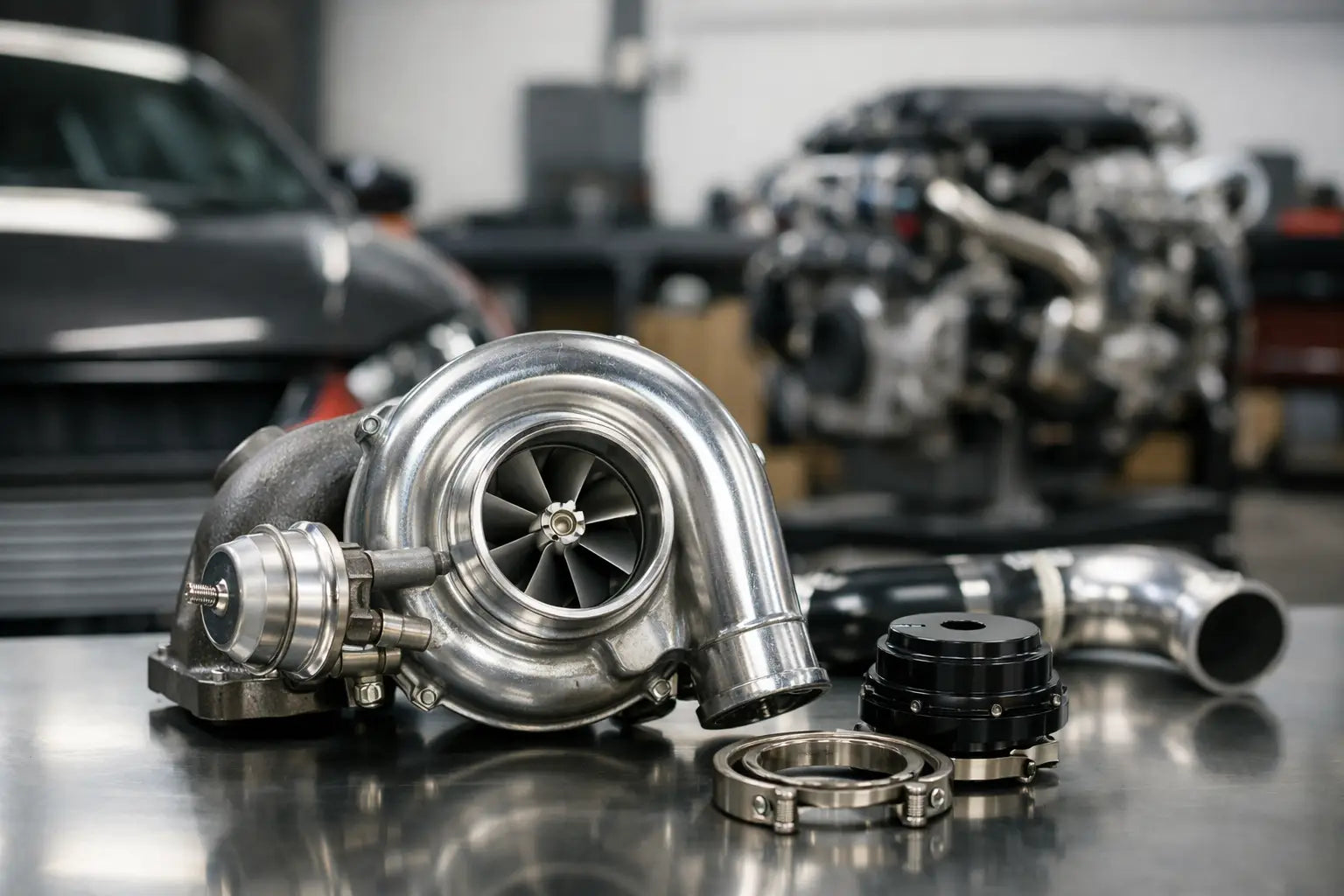
Spend five minutes in any tuning group and you’ll see the same question come up: is Pulsar worth buying, or is it just another budget turbo brand with flashy specs and mixed results? That’s exactly why a proper Pulsar Turbo Systems review matters. For a lot of street and track builds, the decision is not between cheap and expensive - it’s between spending smart and spending twice.
Pulsar Turbo Systems sits in an interesting spot in the market. It is not positioned like a top-tier, premium-priced motorsport name, but it is also not trying to live in the disposable, no-name eBay tier. That middle ground is where a lot of enthusiasts shop, especially when the build budget has to cover more than just the turbo. Fueling, cooling, tuning, exhaust backpressure, and driveline strength all compete for the same money.
Pulsar Turbo Systems review: where the brand fits
Pulsar’s appeal is simple. The catalog is broad, compressor and turbine options are easy to understand, and the pricing makes modern turbo sizing accessible to people building real street cars, drift cars, and grassroots track cars. You’ll find direct-fit and universal options, journal bearing and ball bearing units, plus the kind of frame sizes that suit everything from responsive 300 horsepower setups to much bigger power goals.
That matters because most buyers are not chasing dyno-sheet bragging rights alone. They want a turbo that actually suits the car. A K-series Honda, EA888 Volkswagen, 2JZ Toyota, N54 BMW, or turbocharged Miata build all need different things from the same basic upgrade category. Pulsar wins attention because it gives builders options without instantly pushing them into premium-brand pricing.
Still, price is only part of the story. What people really want to know is whether the hardware backs up the spec sheet.
Build quality is better than the price suggests
The biggest surprise with Pulsar for many buyers is that the product usually looks and feels more serious than expected. Machining tends to be clean, castings are generally decent, housings look well finished, and the overall presentation is far ahead of the bargain-bin turbo market. On first inspection, they do not come across like throwaway parts.
That does not automatically put them on the same level as the most proven premium turbo manufacturers. Tolerances, balancing consistency, long-term QC, and batch-to-batch repeatability are where established high-end brands usually earn their reputation. But for the money, Pulsar often lands in a spot that feels credible rather than compromised.
The newer generations and revised product lines have helped the brand’s image too. A lot of the skepticism around brands in this bracket comes from older market assumptions, when affordable turbochargers were much more of a gamble. Today, many enthusiasts are finding that modern mid-market hardware is far more usable than people want to admit.
How they perform on the street and track
Performance is where any review gets real. A turbo can look great out of the box, but if spool is lazy, boost control is unstable, or top-end power falls off early, none of the cosmetic details matter.
In general, Pulsar turbos tend to perform close to expectations when the setup is matched properly. That last part matters more than the badge. If you choose a sensible A/R, size the turbo for your engine’s airflow, and support it with proper fueling and calibration, these units can make strong, usable power. Spool characteristics are usually competitive for the frame size, and many users report that response is better than expected, especially on newer ball bearing options.
On the street, that often translates into a setup that feels lively rather than peaky. On a track car, it can mean a broader, more manageable powerband instead of a turbo that only wakes up when you’re already past the corner exit. That is good news for drivers who care more about usable torque and repeatable lap pace than headline peak numbers.
Where some trade-off can show up is thermal management and efficiency at the outer edge of the map. Push any turbo beyond the range it really wants to operate in, and you’ll see heat rise, power gains flatten, and reliability margins shrink. Pulsar is no different. If your goal is absolute efficiency at a very high power level with constant abuse, there are premium options with deeper motorsport pedigree for a reason.
Reliability depends on the build, not just the turbo
This is the part a lot of reviews get wrong. Turbo reliability is rarely just about the turbo. Oil feed quality, drain angle, crankcase ventilation, tuning, exhaust heat, boost control strategy, and even engine condition can make a good unit look bad in a hurry.
That said, Pulsar’s reputation on reliability is mixed but improving. Plenty of builders run them successfully for long periods on street cars and occasional competition use. Others have had failures, usually tied to overspeed, oiling issues, poor install practices, or combinations that were simply too aggressive for the hardware.
That puts Pulsar in a category where setup discipline matters. If you want a turbo that can survive mediocre installation, questionable tuning, and repeated abuse with huge safety margin, you are shopping in a different price bracket. If the rest of the combo is dialed in, Pulsar units can hold up well enough to make them a valid option.
For buyers, the practical takeaway is simple: budget for the whole system. A cheaper turbo on a properly engineered setup is a smarter move than a premium turbo paired with weak fueling, high backpressure, and no thermal control.
Fitment and product range are a big part of the value
One reason Pulsar keeps showing up in build discussions is catalog depth. There are options for common enthusiast platforms, and there are enough frame, flange, and housing choices to build around specific goals instead of forcing a one-size-fits-all solution.
That flexibility matters if you are piecing together a custom setup or upgrading from an entry-level turbo to something with more headroom. It also matters if you are trying to stay within packaging limits on tighter engine bays. Compressor cover style, wastegate configuration, and turbine housing size can make or break a build before the engine ever sees boost.
This is also where buyer experience matters. The right turbo on paper can still be the wrong turbo for your manifold, downpipe, intercooler routing, or powerband target. Enthusiasts who treat the selection process seriously usually get better results from brands like Pulsar than those who buy based on social media clips and compressor inducer size alone.
Who should buy Pulsar and who should skip it
If you are building a performance street car, a weekend drag setup, a drift car, or a budget-conscious track project, Pulsar makes sense more often than some people admit. It is especially appealing when you want modern turbo sizing and respectable performance without nuking the entire budget on one component.
If your build is heavily budgeted around supporting mods, that can actually make Pulsar the smarter choice. Spending less on the turbo can free up money for injectors, a fuel pump, proper engine management, oil cooling, a better intercooler, and dyno time. Those parts usually do more for the finished car than buying the most expensive turbo you can afford and compromising everywhere else.
If, on the other hand, your car is a high-stakes competition build, a professional-level endurance car, or a setup where failure cost is massive, the calculus changes. In that space, premium brands justify their pricing through validation, support, consistency, and long-term confidence under repeated punishment. That does not make Pulsar bad. It just means the risk tolerance is different.
Final verdict on this Pulsar Turbo Systems review
Pulsar is not magic, and it is not junk. That’s the honest middle ground. The brand offers strong value, better-than-expected build quality, and real performance potential when the turbo is sized correctly and the rest of the package is done right.
For enthusiasts who actually understand that a turbocharger is one part of a complete forced induction system, Pulsar can be a smart buy. For people expecting premium-brand durability at half the price while cutting corners everywhere else, it probably won’t be. Buy for the build you’re actually doing, not the one you talk about online, and this brand starts making a lot more sense.