
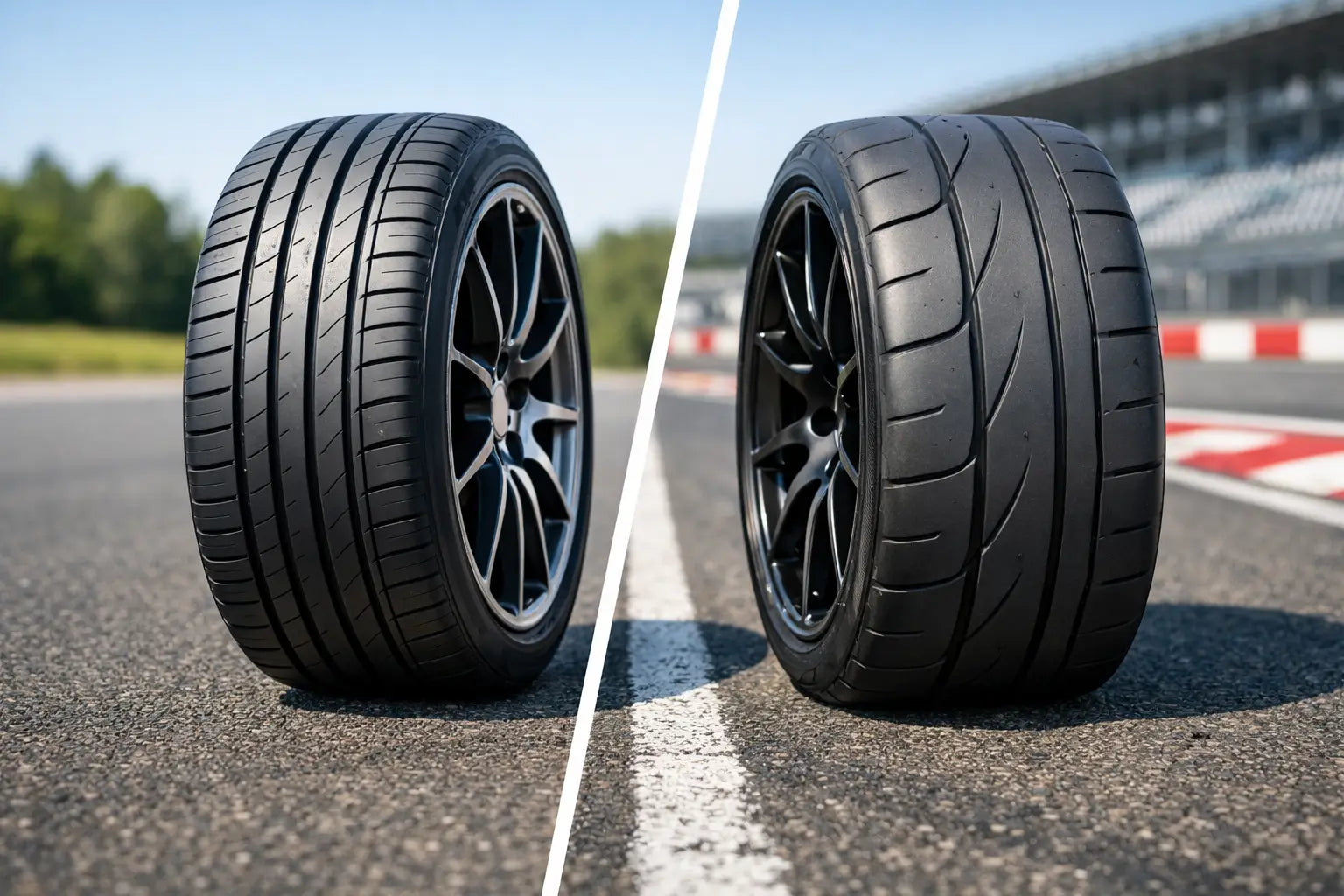
You feel it by the second hard lap. The car starts moving around more, braking zones stretch, and the steering loses that crisp bite you had on the out lap. That is usually where the summer tyres vs track tyres debate stops being theoretical and becomes expensive, obvious, and very real.
For performance road cars, tyre choice is one of the biggest changes you can make without touching power. A good tyre can sharpen turn-in, improve traction out of slower corners, and give your brakes a chance to work properly. A bad match can leave a well-built car feeling vague, greasy, and unpredictable. The catch is simple: summer tyres and track tyres are built for different jobs, even when both look aggressive and both claim serious grip.
Summer tyres vs track tyres: the real difference
The shortest version is this. Summer tyres are designed to work on the road across a wider range of temperatures, surfaces, and weather conditions. Track tyres are designed to deliver more dry grip and resist heat better when you are repeatedly loading the car hard on circuit.
That sounds straightforward, but the trade-off is where it gets interesting. A proper road-focused summer tyre needs to cope with cold mornings, standing water, rough tarmac, motorway miles, and the occasional enthusiastic B-road session. It has to be quiet enough, stable enough, and safe enough to live with every day.
A track tyre can be far more single-minded. It will usually use a stickier compound, a stiffer construction, and a tread pattern with less void area. That means more rubber on the surface and more support under load. The result is stronger lateral grip, sharper steering response, and better consistency once temperatures rise. The downside is just as predictable - more noise, faster wear, worse wet behaviour, and less tolerance for low temperatures.
What summer tyres do well
A quality summer tyre is not just a compromise tyre. For a fast road car, it is often the best all-round option by a clear margin.
On the road, you rarely get long, repeatable heat cycles like you do on track. You get short bursts of acceleration, a few committed corners, and then traffic, roundabouts, or a speed camera. That suits summer tyres. They come up to working temperature quickly, they deal with changing conditions well, and they offer enough compliance to keep the car stable over poor road surfaces.
They also clear water much better than track-focused rubber. In British conditions, that matters. Even in July, a dry morning can turn into a wet afternoon without warning. A summer tyre with proper grooves and a road-biased compound will inspire more confidence than a semi-slick when the surface turns greasy.
For daily-driven hot hatches, fast estates, tuned saloons, and weekend road cars, summer tyres often make the car faster where it actually spends most of its life. A tyre that works every day is worth more than one that only shines in one narrow window.
What track tyres do better
Once you start pushing hard for sustained sessions, track tyres pull away. They are built to survive repeated heat, repeated load, and repeated punishment without falling apart in feel after a few laps.
The big gain is not always headline grip. It is consistency. A normal summer tyre can feel great for one or two hard laps, then start to overheat. The tread blocks move around more, the compound gets greasy, and braking stability drops. Track tyres are better at holding their shape and maintaining performance when the car, brakes, and surface are all generating serious temperature.
That makes a huge difference if you run regular track days, time attack sessions, hill climbs, or sprint events. The car feels more precise on turn-in, more planted through long loaded corners, and more trustworthy under repeated heavy braking. If you have upgraded pads, fluid, suspension, or alignment, track tyres also let those parts do their job properly.
Summer tyres vs track tyres on wet roads
This is where people get caught out.
Many track tyres are road legal, but road legal is not the same thing as good in standing water. Less tread means less water evacuation, and stiffer compounds can struggle when the road is cool and soaked. That can lead to aquaplaning earlier, less traction on painted surfaces, and a much narrower margin if you have to react quickly.
Summer tyres are generally safer and easier to trust in mixed weather. They are designed for wet braking, motorway stability, and everyday road temperatures. If your car is used for commuting, weekend driving, and the occasional blast, this matters more than lap-time fantasy.
There are exceptions, of course. Some track-oriented road tyres are more forgiving than others. But if your local weather is unpredictable and your car is not trailered, you should take wet performance seriously rather than treating it as a minor inconvenience.
Heat cycles, wear, and cost
Track tyres do not just wear faster. They age differently.
A road tyre is designed for mileage and repeated use across varied conditions. A track tyre may still have visible tread left while already losing some of its best performance after repeated heat cycles. For regular circuit use, that is part of the game. For mostly road use, it can make the tyre poor value.
Then there is basic wear rate. If your car has aggressive alignment, decent power, and a driver who uses the loud pedal properly, track tyres can disappear quickly. Add a few motorway miles and some cold starts, and you are spending premium money to use a tyre outside its ideal window.
Summer tyres usually make more financial sense for mixed use. They last longer, behave better in more conditions, and ask less of the driver. If you do one or two track days a year, you might be happier accepting some fade in ultimate grip rather than committing to the cost and compromise of a track setup.
Steering feel and sidewall behaviour
One reason enthusiasts love track tyres is the immediacy. The car responds faster because the tyre deforms less under load. Steering inputs feel cleaner, and the front end tends to bite harder.
That sharpness is addictive, especially on a sorted chassis. Think Civic Type R, M140i, GR Yaris, Megane RS, GT86, Golf GTI Clubsport - cars that reward precision. But sidewall stiffness can also make the ride busier and the breakaway more abrupt. On a smooth circuit, that is fine. On broken road surfaces, it can make the car feel nervous instead of alive.
Summer tyres usually deliver a more progressive response. You may give away some front-end aggression, but you gain communication and compliance where public roads are uneven, dirty, and far from predictable.
Which tyre suits your car and use?
If your car is a daily driver with occasional spirited road use, buy a strong summer tyre. If you attend track days regularly and care about repeatable pace more than comfort or wet-road manners, a track tyre starts to make sense.
The grey area is the dual-use car. That is where many enthusiasts land. In that case, be honest about how the car is really used, not how you imagine using it. If you do six track days a year and drive to each one, a road-legal track tyre could be a smart call. If you do one circuit event, ten Sunday blasts, and thousands of road miles, a top-tier summer tyre is probably the better tool.
Wheel setup matters too. Many experienced drivers keep separate road and track wheels. It costs more upfront, but it protects your road manners, lets you run the right compound for the job, and makes tyre management much easier. It also means you can choose sizes and sidewall profiles that suit each use rather than forcing one setup to do everything badly.
Don’t ignore the rest of the setup
Tyres never work alone. Alignment, brake temperatures, damper control, and even tyre pressures will decide whether a summer or track tyre actually performs as expected.
A car with poor geometry can destroy a great tyre in one event. A heavy front-wheel-drive hatch with standard pads and too much pressure in the fronts will make almost any tyre feel average after a few hard laps. Likewise, a well-aligned road car on quality summer tyres can embarrass a badly set up car on expensive track rubber.
This is why tyre choice should match the whole build. There is no point fitting serious track tyres if the car still rolls heavily, cooks its brakes, or runs factory alignment that shreds the outer shoulders.
Summer tyres vs track tyres: the smart buy
The smart buy is the tyre that matches your real pace, real mileage, and real weather.
If you want one set of tyres for fast road driving, summer tyres are usually the answer. They offer the best balance of grip, wet security, noise, wear, and usability. If your weekends revolve around circuit time and you are already building the car around that goal, track tyres justify themselves quickly.
For plenty of enthusiasts, the answer is not choosing a side forever. It is starting with a strong summer tyre, learning the car, then stepping into a dedicated track setup when your driving and usage actually demand it. That progression usually saves money, saves frustration, and makes each upgrade feel worthwhile.
The best tyre is not the most aggressive one in the group chat. It is the one that lets your car work properly every time you turn in.