
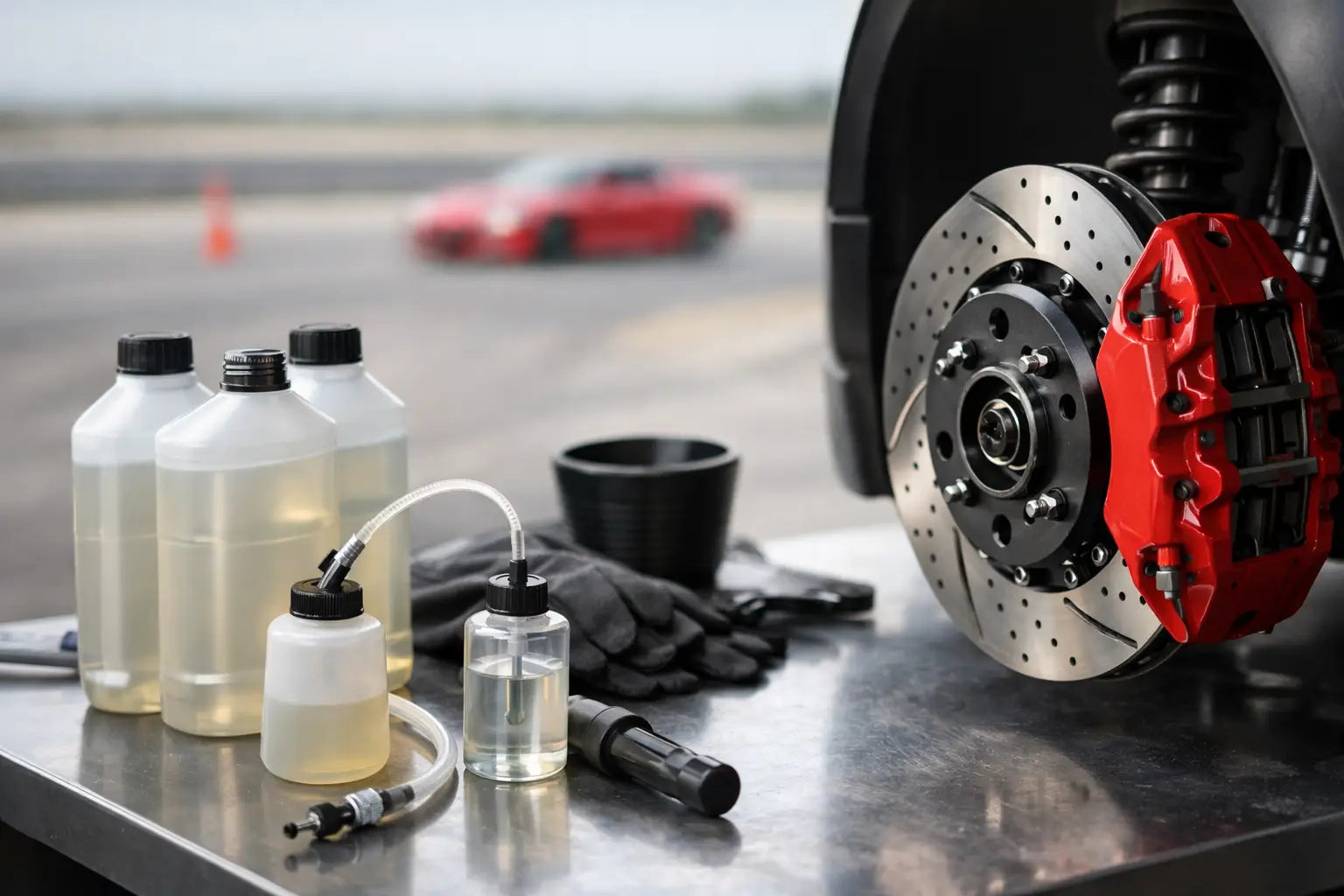
You usually notice bad brake fluid at the worst possible moment - halfway through a session, the pedal goes longer, confidence drops, and your braking points start moving backward. That is exactly why a track day brake fluid upgrade belongs near the top of any real track prep list. Before bigger calipers, before chasing aggressive pad compounds, fresh high-temp fluid is one of the cheapest ways to make a car more consistent when heat starts building.
Brake fluid does not add headline power, and it is not the glamorous part of a build. But on track, consistency matters more than spec-sheet bragging rights. If your fluid cannot handle repeated heat cycles, the rest of your brake setup is already working with a handicap.
Why a track day brake fluid upgrade matters
Street driving rarely exposes the braking system to sustained heat. A hard stop on the road is one thing. Repeated heavy braking from triple-digit speeds, lap after lap, is something else entirely. That is where ordinary fluid starts to show its limits.
Brake fluid is hygroscopic, which means it absorbs moisture over time. As water content rises, the wet boiling point drops. Once the fluid gets hot enough to boil, you can get vapor in the system. Vapor compresses. Fluid does not. That difference is why the pedal suddenly feels soft or inconsistent when a system is overheated.
On a novice car with stock pads and tires, you might get away with more than expected for a session or two. On a heavier car, a faster car, or anything on sticky tires, the demands climb fast. More grip means more speed carried into the braking zone, and that means more heat dumped into the fluid. The better the rest of your setup gets, the less sense it makes to leave old fluid in the lines.
What actually changes after a brake fluid upgrade
A proper track day brake fluid upgrade is mostly about heat resistance and repeatability. The goal is not to make the pedal magically harder on the first stop around town. The real benefit shows up after repeated hard use when a lower-grade or old fluid would start falling off.
With the right fluid and a proper bleed, you get a pedal that stays predictable deeper into the session. That gives you cleaner threshold braking, better confidence on turn-in, and fewer mid-day surprises. It also reduces the chance of cooking seals and stressing other brake components because the whole system is being asked to operate within a safer temperature window.
There is a trade-off, though. Many high-performance fluids need more frequent replacement than basic street fluid if the car sees regular track use. That is not a flaw. It is part of running parts chosen for higher operating demands.
Dry boiling point vs wet boiling point
If you are comparing brake fluids, you will usually see two numbers that matter most: dry boiling point and wet boiling point. Dry boiling point reflects fresh fluid straight from a sealed container. Wet boiling point reflects fluid after it has absorbed a defined amount of moisture.
Both matter. Dry boiling point gives you an idea of outright high-temp capability. Wet boiling point is often the more realistic measure once the fluid has been in the car for a while. For dedicated track cars that get frequent service, dry numbers matter a lot. For dual-purpose street and track cars, wet boiling point deserves just as much attention because the fluid may stay in the system longer between flushes.
If you daily drive your car and do a few events per year, chasing the highest possible dry number without thinking about maintenance can be the wrong move. A slightly less extreme fluid with strong wet performance and sensible service intervals may suit your use better.
DOT ratings and what they do not tell you
DOT 3, DOT 4, and DOT 5.1 fluids are glycol-based and generally compatible within the same system, though a full flush is always the smart move when upgrading. DOT 5 is different - silicone-based and not what you want for most track-day cars. It is not typically used in performance braking setups where pedal feel, heat handling, and compatibility are priorities.
For most enthusiasts, a quality DOT 4 performance fluid is the sweet spot. That is where you find many proven track-day options from respected brake brands. The DOT rating gives a baseline, but it does not tell the full story. Two DOT 4 fluids can perform very differently under hard use, so brand reputation and actual boiling point data matter more than the label alone.
How to choose the right fluid for your car
Start with honest use, not fantasy use. If your car does two beginner events a year on street tires, you probably do not need the most expensive race fluid on the shelf. If you run advanced sessions in a heavy turbo car on aggressive pads and 200-treadwear tires, you need something with real thermal headroom.
Vehicle weight matters. Brake cooling matters. Tire grip matters. Driver pace matters. A lightweight hot hatch and a tuned all-wheel-drive sedan do not ask the same things of the brake system. Neither do a novice and a driver consistently braking at the limit.
It also helps to look at the rest of the setup. Fluid is one piece of the package. Pads with too little temperature capability will still fade. Old rubber lines can still feel vague. Worn rotors and poor cooling can still push heat where you do not want it. A track day brake fluid upgrade works best when the rest of the system is healthy and matched to the job.
When fresh fluid is enough and when it is not
Sometimes the answer is simple: your current fluid is old, moisture-loaded, and overdue. In that case, even moving to a solid performance DOT 4 and bleeding the system properly can transform the car. Plenty of track-day issues blamed on pads or rotors are really basic maintenance problems.
Other times, fluid alone will not fix the issue. If you are boiling quality fluid repeatedly, that points to a bigger heat management problem. You may need better pads, more cooling, a more track-focused rotor, or improved driving technique. Riding the brakes, over-braking, and carrying unnecessary speed into corners can overload even a decent setup.
That is the key distinction. Fluid can raise the ceiling, but it cannot compensate for a mismatched brake package.
Bleeding, flushing, and common mistakes
The upgrade only works if the old fluid is actually out of the system. Topping off the reservoir with premium fluid while old fluid remains in the calipers is not a real upgrade. Heat is generated at the brakes, so that is where the best fluid needs to end up.
A proper flush should push clean new fluid through the whole system until the old fluid is gone. On cars that see track use, many owners bleed the brakes before each event or at least on a regular schedule throughout the season. That may sound excessive to a street-only driver, but it is cheap insurance compared with the cost of a ruined session or a trip into the runoff.
Another common mistake is using an opened bottle that has been sitting around. Brake fluid absorbs moisture from the air, so once a bottle is opened, its performance starts heading in the wrong direction. For track prep, fresh sealed containers are the way to go.
What to expect on track
Do not expect a dramatic difference on the out lap. Expect the car to stay composed later in the day, especially in hotter conditions or longer sessions. That is where the value shows up.
The pedal should remain more consistent, your braking markers should stop wandering, and you should spend less mental energy wondering whether the next stop will feel the same as the last one. For any driver trying to build pace, that consistency is worth more than another cosmetic mod or a part chosen just because it looks serious on paper.
If you are building a dual-purpose car, this is one of the smartest early upgrades because it supports every future brake modification. Better pads, better tires, and more speed all increase heat load. Quality fluid gives the system a stronger foundation from day one.
Building a smarter brake package
The best results come from matching fluid, pads, rotors, and tires to how the car is actually used. That is the enthusiast approach - not buying the most extreme part in every category, but choosing components that work together. A well-sorted car with quality brake fluid, proper pad compound, and routine maintenance will usually outperform a poorly matched setup full of expensive parts.
That is also why product choice matters. Proven brands with real motorsport history tend to publish useful data, maintain quality control, and offer fluids designed for repeat abuse rather than marketing hype. If you are shopping performance parts through a specialist catalog like Torque Lab, the advantage is not just convenience. It is being able to choose from brands enthusiasts already trust when the car is driven hard.
A track day does not usually punish the weakest part on the car first. It punishes the part you ignored because it seemed too basic to matter. Brake fluid is often that part. Get it right before your next event, and you give yourself a better pedal, better confidence, and a car that keeps showing up lap after lap.