
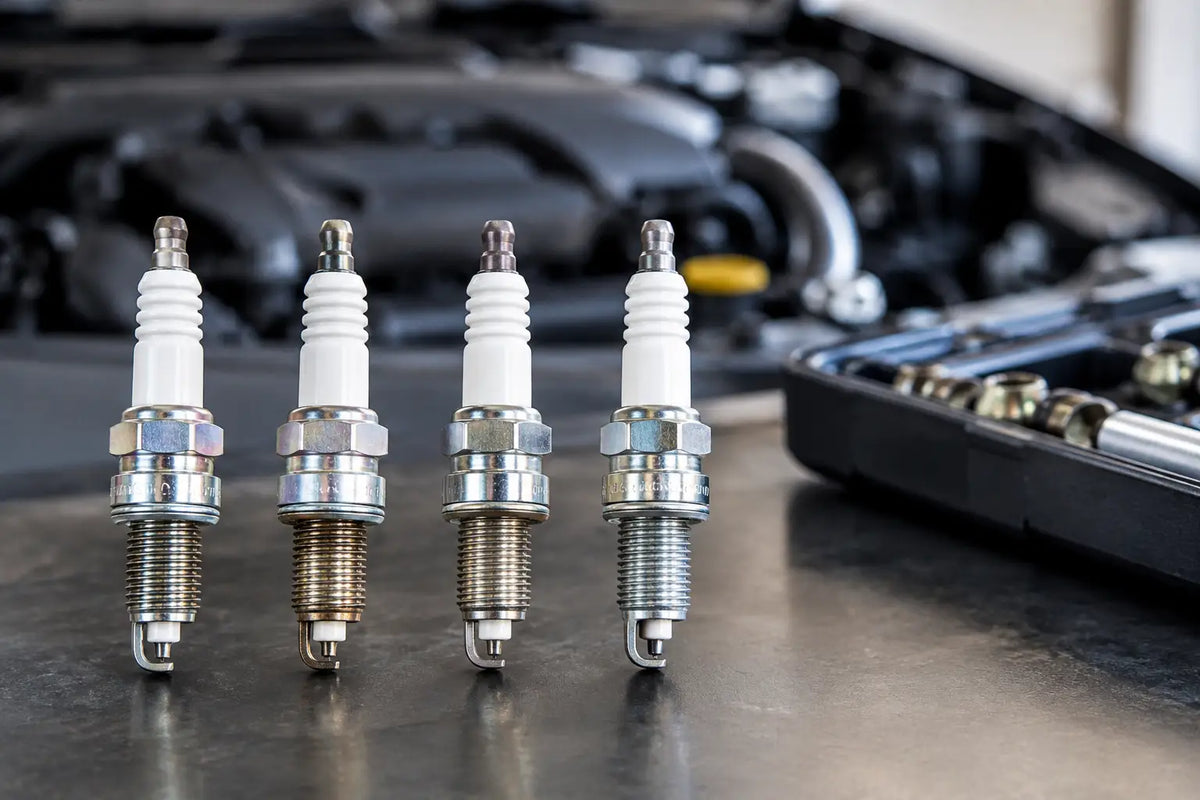
A plug that works perfectly in a standard Golf GTI, Civic Type R or BMW turbo six can become the weak point once boost, ignition timing and cylinder pressure go up. Tuned engine plugs are not a glamour modification, but choosing the right set can be the difference between clean, repeatable pulls and a misfire that appears just as the car reaches peak torque.
Spark plugs sit at the sharp end of the combustion process. They must fire consistently under heat, pressure and vibration, while also shedding enough heat to avoid becoming a source of pre-ignition. That is why plug choice belongs in the same conversation as mapping, fuelling, intercooling and coil health - not as an afterthought once the tune is already loaded.
What tuned engine plugs actually need to do
A spark plug has two jobs that can pull in opposite directions. Its centre electrode must stay hot enough to resist fouling during normal running, but the plug also needs to transfer heat away from the firing tip quickly enough under hard load. More boost, more ignition advance, sustained high rpm and hotter intake temperatures all place greater demand on that balance.
The “heat range” describes how rapidly a plug moves heat from its firing end into the cylinder head. A colder plug transfers heat away faster. It does not create a colder spark and it does not lower combustion temperatures across the engine. It simply reduces the likelihood of the plug tip retaining excessive heat during aggressive operation.
That makes a colder heat range a common choice for tuned turbo cars, supercharged applications and naturally aspirated engines that spend serious time at high rpm. But colder is not automatically better. Fit a plug that is too cold to a lightly modified road car and it may struggle to self-clean in traffic, leading to carbon deposits, rough running and poor cold-start behaviour.
Heat range follows the build, not the badge
There is no universal answer to whether your engine needs one step colder, two steps colder or the original specification. The correct choice depends on the platform, tune calibration, boost level, fuel quality, compression ratio, injector setup and how the car is actually used.
A conservative stage-one tune on a modern direct-injection turbo engine may only require an OE-spec plug with a slightly tighter gap. A car running higher boost, an upgraded turbo and repeated track sessions may benefit from a colder plug. An ethanol blend can offer greater knock resistance, but it can also support more aggressive cylinder pressures - another reason plug specification should follow the complete calibration rather than one modification in isolation.
Use the engine builder’s, tuner’s or vehicle specialist’s recommendation as the starting point. Proven platform knowledge matters here. Plug heat ranges are not directly comparable between manufacturers, so “one step colder” should always refer to a specific compatible plug for your engine, not a guess based on numbering alone.
Signs the plug may be too hot or too cold
A plug that is too hot can show signs of overheating, such as a very pale or blistered insulator nose, electrode wear or evidence of detonation-related damage. In a severe case, an overheated plug can contribute to pre-ignition, which is far more expensive than a fresh set of correctly specified plugs.
A plug that is too cold may collect dry, sooty deposits during short journeys and low-load use. The engine may feel less crisp at low speed, idle quality can suffer, and misfires may become more likely before the plug reaches its intended operating temperature.
Plug reading can be useful, but do not treat it as a standalone diagnosis. Modern fuels, additives, direct injection and short-running engines can make old-school visual interpretation less clear-cut. A fault-code scan, data logs and an inspection of coils, fuelling and boost control provide a far more reliable picture.
Plug gap matters as much as heat range
As cylinder pressure rises, it becomes harder for the spark to jump the electrode gap. A wide gap can deliver excellent flame-kernel exposure on a standard engine, but may be difficult for the ignition system to fire reliably once boost and torque have increased. The result is often a misfire under load - typically felt as hesitation, a sudden breakup in acceleration or a flashing engine-management light.
Reducing the gap lowers the voltage needed to spark under pressure. This is why many modified turbo platforms use a tighter gap than factory specification. However, closing it too far can reduce spark exposure and may compromise combustion quality at lower load. It is a calibration decision, not a race to make the gap as small as possible.
Do not assume plugs arrive set correctly for your build. Even plugs sold as pre-gapped should be checked against the recommendation for your exact engine and tune. Use a proper wire-style gap tool rather than forcing a feeler blade through a fine-wire electrode. Avoid levering against the centre electrode, especially on iridium plugs, where the small tip is easily damaged.
Copper, platinum or iridium plugs?
Electrode material affects service life, firing characteristics and price, but it does not replace choosing the right heat range and gap.
Copper-core plugs are often favoured on older and heavily modified engines because they conduct heat well and are relatively affordable to replace regularly. Their conventional electrodes wear faster, so they suit owners who are happy to inspect and change plugs as part of routine maintenance.
Platinum and iridium plugs use fine, durable precious-metal centre electrodes. They generally offer long service life and consistent firing performance, which is why they are common in modern OE applications. For many tuned street cars, a correctly specified iridium plug is the sensible option. It combines dependable everyday behaviour with the ability to handle increased demands when matched to the right heat range and gap.
The trade-off is cost and care. Fine-wire plugs should not be aggressively cleaned, regapped without the correct tool, or reused after a serious misfire investigation if there is any visible electrode damage. Saving money on a questionable plug is false economy when it sits inside a tuned engine.
Installation details that prevent avoidable problems
Before fitting new plugs, check that the part number matches the exact engine code, not just the model name. Manufacturers often use different plug lengths, seat types and heat specifications within the same vehicle range. A plug that physically threads in is not necessarily the right plug.
Install into a cold engine where possible, particularly with aluminium cylinder heads. Start every plug by hand to avoid cross-threading, then tighten to the manufacturer’s torque specification using the correct socket. Torque matters because it affects both sealing and heat transfer from the plug shell into the head.
Do not add anti-seize compound unless the plug or vehicle manufacturer specifically calls for it. Many modern plugs have plated threads, and lubricant can alter the torque relationship, making overtightening more likely. A small amount of dielectric grease inside the coil boot can be appropriate where specified, but it belongs on the boot, not on the electrode or plug threads.
If you are fitting colder plugs as part of a larger power package, inspect the coils and coil boots at the same time. Weak coils can mimic a plug issue, and a tighter plug gap can sometimes mask an ignition system already nearing its limit. On high-boost builds, upgraded coils or a proven ignition solution may be needed alongside the correct plugs.
When should modified cars change their plugs?
Factory service intervals are written for factory power, factory heat load and ordinary road use. A tuned engine should normally see shorter inspection and replacement intervals, particularly if it runs elevated boost, ethanol fuel, launch control, frequent full-throttle pulls or track days.
There is no single mileage figure that suits every build. A mildly tuned daily driver on quality fuel may only need plugs checked at regular service intervals. A hard-used track car or big-turbo street build should have them inspected more often, especially after changes to the map, boost target or fuelling. Keep a note of the plug part number, gap and mileage when they were installed. That simple record makes diagnosis far easier later.
Misfires under load, poor fuel economy, difficult starting and uneven idle all justify inspection, but do not replace plugs blindly and assume the job is done. Check for oil in the plug wells, damaged coil boots, boost leaks, lean fuelling and fault codes. The plug is often the messenger, not the root cause.
The right plugs will not add headline horsepower on their own. What they deliver is just as valuable: stable ignition when the engine is working hardest, protection against heat-related trouble and confidence that your tune can perform as intended. Choose by engine code, power level and use case, then keep the installation and service interval as serious as the rest of the build. Torque Lab’s performance-first catalogue makes it easier to source proven, platform-appropriate components without treating a critical ignition part as an afterthought.